A rooftop unit can be easy to forget about right up until a sales floor gets too warm, an office turns stuffy, or tenants start calling about uneven temperatures. Modesto rooftop HVAC service is about more than getting air moving again. It is about protecting your building, avoiding business disruption, and making sure the system has the capacity to handle Central Valley heat when it matters most.
For business owners and property managers, a rooftop HVAC problem rarely arrives at a convenient time. A unit can struggle through a hot afternoon, fail after hours, or show warning signs that are easy to miss from the ground. Fast, professional service helps you make a clear decision: repair the immediate issue, schedule maintenance to prevent a repeat problem, or plan a replacement before the next breakdown forces your hand.
Why Rooftop HVAC Systems Need Specialized Attention
Packaged rooftop units are common on retail spaces, offices, restaurants, warehouses, and other commercial properties because they keep major equipment out of occupied areas. That design saves indoor space, but it also exposes equipment to sun, wind, dust, rain, and seasonal temperature swings.
Modesto summers put constant pressure on cooling equipment. When a rooftop unit runs for long stretches, small problems can grow quickly. A worn belt, dirty coil, failing capacitor, damaged contactor, or refrigerant issue can reduce cooling performance and increase strain on other components. The result may be warm zones, short cycling, unusual noise, rising energy use, or a complete shutdown.
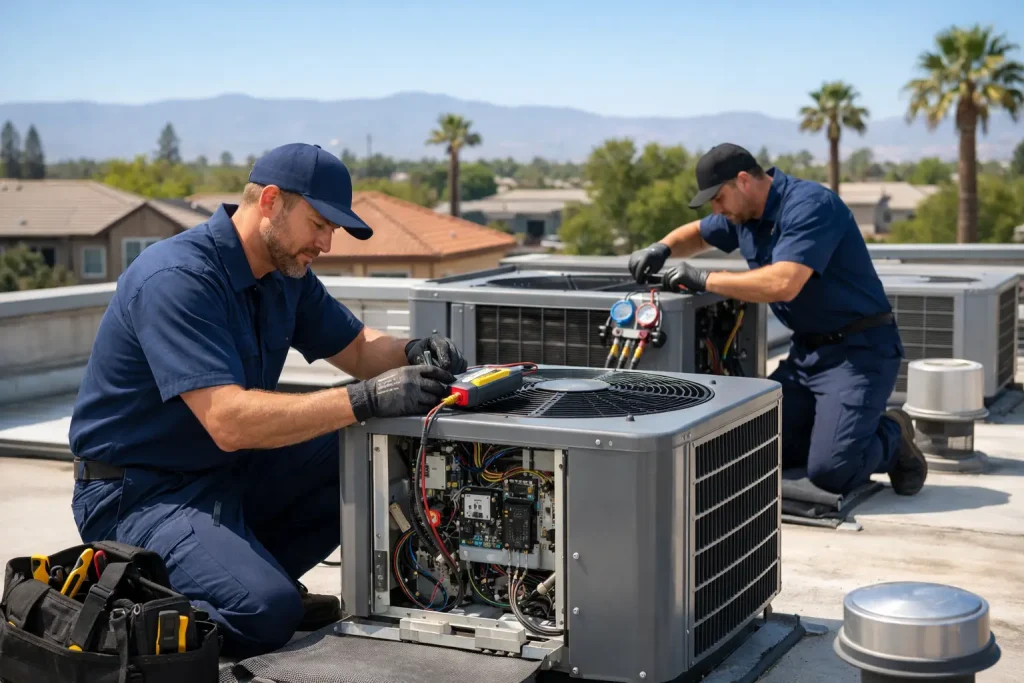
Roof access also creates a safety and diagnostic challenge. The issue may not be visible from inside the building, and the unit should not be treated as a simple do-it-yourself project. Certified HVAC technicians can safely inspect the equipment, identify the source of the failure, and explain the repair in practical terms.
When to Call for Modesto Rooftop HVAC Service
Do not wait for a full outage if your system is already sending warnings. A rooftop unit that is still running but no longer maintaining a comfortable temperature may be working harder than it should. Delaying service can turn a manageable repair into a more extensive problem, especially during high-demand weather.
Call for service when you notice inconsistent cooling or heating, weak airflow, water around interior ceiling areas, unusual rattling or grinding sounds, frequent cycling, unfamiliar odors, or a sudden jump in utility costs. For property managers, repeated comfort complaints from one suite or area deserve attention even if the rest of the building seems fine.
Some situations call for immediate action. If your business loses cooling during extreme heat, a unit will not start, or your building occupants are affected by poor indoor conditions, 24/7 emergency HVAC support can help restore control quickly. Restaurants, medical-adjacent offices, retail spaces, and occupied commercial buildings often cannot wait until the next business day to address a system failure.
What a Professional Rooftop Unit Visit Should Accomplish
A good service call starts with listening. Occupant complaints, the timing of the issue, recent changes in performance, and thermostat behavior can all help point technicians in the right direction. From there, the equipment needs a thorough inspection rather than a quick assumption.
Technicians evaluate the system’s operation, electrical components, airflow, safety controls, filters, condenser and evaporator conditions, drainage, and refrigerant performance as appropriate. They should also look for signs of weather exposure, loose panels, blocked airflow, worn moving parts, and developing concerns that could affect the unit later.
The goal is not to overwhelm you with technical language. It is to give you a clear picture of what failed, what needs attention now, and what can be planned. If a repair is the sensible choice, you should know why. If the unit is aging or repeatedly breaking down, you should receive straightforward guidance about replacement options, efficiency, and the expected fit for your property.
Maintenance Protects More Than the Equipment
Emergency repairs are sometimes unavoidable, but routine maintenance is one of the best ways to reduce surprise breakdowns. Rooftop units operate out of sight, which makes scheduled care especially valuable. A maintenance visit gives technicians the chance to find loose connections, dirty components, airflow restrictions, and wear before they interrupt your operations.
For a commercial property, maintenance also supports more consistent comfort across the building. That matters when employees need a productive workspace, customers need a comfortable place to shop, or tenants expect reliable building systems. A unit that is serviced regularly is more likely to operate efficiently and is less likely to be pushed into failure by an avoidable issue.
The right maintenance schedule depends on your equipment, building use, operating hours, and environment. A lightly used office may have different needs than a busy retail location or a property with high occupant traffic. Your HVAC provider should recommend a practical service plan based on the system’s condition, not a one-size-fits-all schedule.
Filters, Coils, and Airflow Matter
Restricted airflow is one of the most common causes of poor HVAC performance. Dirty filters can make the system work harder, while dirty coils can limit heat transfer and reduce cooling capacity. These issues may seem minor, but they can contribute to longer run times, uneven temperatures, and unnecessary wear.
Property teams can help by keeping scheduled filter changes and rooftop access records organized. The hands-on inspection, cleaning, testing, and repairs should be handled by qualified technicians who can evaluate the entire system safely. A filter change alone does not confirm that the rest of a rooftop unit is operating correctly.
Repair or Replace? Make the Decision With Real Information
There is no automatic rule that an older rooftop unit must be replaced. If the system has been reliable, the repair is reasonable, and the equipment still meets the building’s needs, repair may be the best short-term and long-term decision.
Replacement becomes worth discussing when repairs are becoming frequent, cooling capacity no longer matches demand, efficiency has noticeably declined, or critical components are failing on an aging unit. Business needs can change, too. A remodeled space, new equipment that produces heat, added occupants, or altered hours can leave an existing system undersized even if it still technically runs.
A professional recommendation should account for the unit’s age and condition, repair history, energy use, building load, and the practical effect of downtime. Energy-efficient equipment can improve operating performance, but the best choice depends on proper sizing and installation. Bigger is not always better. An oversized system can cycle too often and create its own comfort and efficiency concerns.
Choose a Local Team That Is Ready When Conditions Change
Commercial HVAC service is not just about the equipment on the roof. It is about communication, access coordination, dependable arrival, and respect for the people inside the building. Property managers need updates they can share with owners and tenants. Small business owners need clear answers without pressure or confusing sales talk.
YourK AC provides residential and commercial heating and cooling support with certified technicians, transparent recommendations, and 24/7 emergency availability. Whether your rooftop unit needs urgent repair, seasonal maintenance, or a thoughtful replacement plan, the focus should stay on restoring reliable comfort with a solution that fits your property.
When your rooftop system starts showing signs of trouble, acting early gives you more options. A prompt inspection can protect comfort, help prevent interruptions, and keep a small equipment issue from becoming the thing everyone in the building is talking about.