
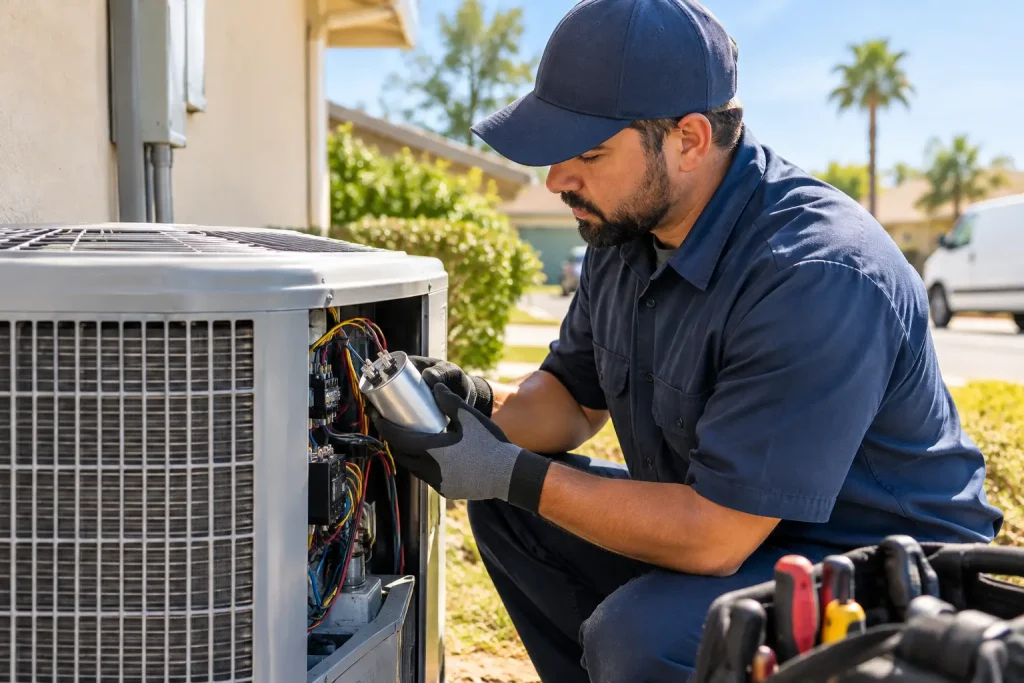
Your AC may sound like it is trying to start but never quite gets going: a steady hum from the outdoor unit, warm air from the vents, or a fan that starts only after a delay. Those are stressful symptoms in Central Valley heat, and they often lead homeowners to ask when to replace an HVAC capacitor. A failing capacitor is a common AC issue, but the same warning signs can also point to other problems. The fastest path back to reliable cooling is a professional diagnosis rather than a guess.
What an HVAC Capacitor Does
A capacitor is a small electrical component inside your air conditioner. It stores and releases energy to help the compressor and fan motors start and continue running efficiently. Think of it as the short burst of power your system needs to get key components moving.
Most central air conditioners use a capacitor in the outdoor condenser unit. Some systems have a dual-run capacitor, which supports both the compressor and the condenser fan. Because this part handles high electrical demand every time the cooling cycle starts, it can wear down over time.
Heat, frequent cycling, electrical fluctuations, age, and long summer run times can all shorten a capacitor’s service life. That does not mean every AC problem is a capacitor problem. A worn contactor, failing motor, refrigerant issue, thermostat problem, or damaged wiring can create similar symptoms.
When to Replace an HVAC Capacitor: Common Warning Signs
A capacitor generally needs replacement when it no longer tests within its required rating or shows visible signs of failure. Homeowners usually notice the system behavior first.
The outdoor unit hums but does not start
If you hear humming from the outside unit but the fan and compressor do not fully start, the capacitor may not be delivering the power needed to start the motors. Turn the system off rather than letting it continue to strain. Repeated start attempts can put added stress on other expensive components.
Your AC is blowing warm air
When the outdoor unit cannot run correctly, it cannot remove heat from inside your home. The indoor blower may still push air through the vents, but that air will not feel cool. Warm air can have several causes, so it should be inspected rather than assumed to be a capacitor issue.
The condenser fan is slow, intermittent, or not moving
A slow-spinning outdoor fan is a strong sign that something is wrong. The fan may run inconsistently, stop after starting, or fail to start at all. Since the fan helps release heat from the system, continuing to run the AC in this condition can lead to overheating.
Your system is taking longer to cool the house
A capacitor can weaken before it fails completely. During that stage, your AC may start slowly, cycle oddly, or struggle to keep up on hot afternoons. Longer cooling times also occur with dirty coils, airflow restrictions, refrigerant concerns, and aging equipment, which is why a complete service check matters.
You notice clicking, buzzing, or a burning smell
Clicking can come from normal system operation, but repeated clicking or buzzing from the outdoor unit deserves attention. A burning odor, smoke, or a breaker that trips calls for immediate action. Shut the system off and request professional service. Electrical components can retain a dangerous charge even after power is disconnected.
The capacitor looks swollen or damaged
During an inspection, a technician may find that a capacitor is bulging at the top, leaking oil, corroded, or damaged by heat. These are clear indicators that replacement is needed. The component’s appearance alone is not the full diagnosis, though. A technician should also test its electrical performance and identify anything that may have caused the failure.
Why You Should Not Replace a Capacitor Yourself
Online videos can make capacitor replacement look like a quick repair. In reality, HVAC capacitors store high-voltage electricity and can remain hazardous after the unit is turned off. The outdoor condenser also contains sensitive electrical parts that must be matched, tested, and handled correctly.
Using the wrong capacitor rating or overlooking the underlying cause can create more trouble than it solves. For example, a failing condenser fan motor can overload a new capacitor. An electrical connection issue can also damage replacement components. A trained HVAC technician can safely test the capacitor, inspect the motors and controls, and replace the part only when it is the right repair.
How a Technician Confirms the Problem
A proper AC diagnostic visit is more than swapping a part based on symptoms. The technician begins by checking whether the system is receiving proper power and whether the thermostat is calling for cooling. They then inspect the outdoor unit, electrical connections, contactor, capacitor, fan motor, compressor operation, and overall cooling performance.
The capacitor is tested against the microfarad rating printed on its label. If it falls outside the acceptable range, it may be unable to support reliable startup and operation. The technician should also look for the reason the part failed, especially if the system has had repeat capacitor problems.
This approach helps avoid unnecessary repairs. A capacitor may be the answer, but it is not the answer to every humming condenser, warm vent, or stopped fan.
Can You Keep Running the AC With a Weak Capacitor?
It depends on the exact condition, but continuing to operate an AC with a suspected weak capacitor is usually not a good bet. If the system starts and cools intermittently, it may fail completely at the next cooling cycle. More concerning, a struggling motor or compressor may draw excessive power and experience additional wear.
If your AC is making unusual noises, blowing warm air, tripping a breaker, or refusing to start, turn it off at the thermostat. If there is an electrical burning smell or visible smoke, avoid touching the equipment and seek prompt help. Waiting for a convenient time can turn a smaller component failure into a larger repair situation.
Is a Failed Capacitor a Sign You Need a New AC?
Usually, no. A single failed capacitor does not automatically mean your entire air conditioner is at the end of its life. Capacitors are replaceable parts, and replacing one can restore normal operation when the rest of the system is in good condition.
The bigger picture matters when failures keep returning or when the system also has major issues such as a failing compressor, recurring electrical problems, poor cooling performance, or frequent breakdowns. System age, maintenance history, repair history, and efficiency goals all affect whether repair or replacement makes more sense.
For homeowners and property managers, the useful question is not simply whether the capacitor failed. It is whether the system can be repaired reliably and whether there are signs of a larger issue that should be addressed before the next heat wave.
Preventing Surprise Capacitor Failures
No maintenance plan can guarantee that an electrical component will never fail, but regular AC service can catch warning signs before a total shutdown. A technician can inspect electrical parts, clean the condenser area, check airflow, and confirm that the system is operating within normal limits.
You can help by keeping leaves, grass clippings, and stored items away from the outdoor unit. Change or clean the indoor air filter on schedule, because poor airflow can make the entire system work harder. If the unit begins humming, short-cycling, or cooling unevenly, do not wait for a complete failure to have it checked.
For dependable troubleshooting and repair, YourK AC can inspect the system, explain what is happening in clear terms, and recommend the appropriate next step. A capacitor may be a small part, but acting early when your AC starts showing warning signs can help protect comfort when you need it most.