
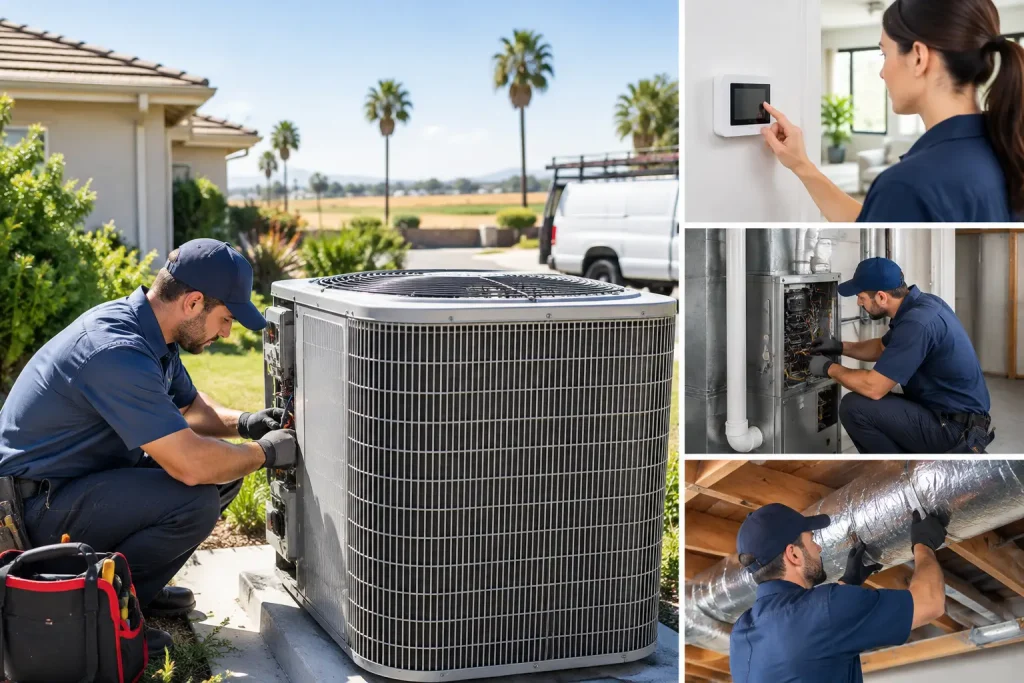
A Modesto summer can make a home feel uncomfortable fast, especially when the AC runs for hours without bringing indoor temperatures down. The best ways to improve home cooling are often simple at first: reduce heat entering the house, help conditioned air move freely, and make sure the AC system is not working against avoidable problems. When those steps do not restore comfort, a prompt professional inspection can prevent a small issue from turning into a complete breakdown.
Start With the Airflow Your AC Needs
Your air conditioner cannot cool rooms effectively if it cannot move enough air. A clogged return filter is one of the most common reasons a system runs longer, delivers weaker airflow, and struggles during hot afternoons. Check the filter regularly and replace it when it looks dusty or dirty. Homes with pets, frequent open windows, or heavy summer use may need more frequent filter changes.
Keep supply vents open and clear of furniture, rugs, curtains, and storage. Closing vents in unused rooms may seem like a way to force more cold air elsewhere, but many central systems are designed to operate with balanced airflow. Too many closed vents can increase pressure in the ductwork and put extra strain on the equipment.
Take a look at the return vents as well. These larger grilles pull indoor air back to the system to be cooled again. If a sofa, bookcase, or pile of boxes blocks a return, the entire home can feel less comfortable. Clear space around it so air can circulate normally.
Watch for uneven cooling
A room that stays warm while the rest of the house cools down may point to more than a closed vent. It could involve duct leakage, insulation gaps, a thermostat location, airflow imbalance, or an AC system that needs service. Upstairs rooms and west-facing bedrooms often feel warmer because they gain more heat from the roof and afternoon sun, but a major difference between rooms deserves attention.
Keep Outdoor Heat From Taking Over
Your AC removes heat from inside the home. The less heat that enters in the first place, the easier and less expensive that job becomes. Close blinds or curtains on windows that receive direct afternoon sun. Room-darkening coverings can be particularly helpful in bedrooms where heat builds up late in the day.
Check doors and windows for obvious gaps. Worn weatherstripping and damaged seals allow hot outdoor air to slip in while cooled air escapes. Sealing minor gaps is a practical comfort improvement, especially in older homes. It also helps the system maintain a steadier temperature instead of repeatedly catching up.
Ceiling fans can make occupied rooms feel cooler by moving air across the skin. They do not lower the actual room temperature, so turn them off when no one is using the room. During summer, set the fan to rotate counterclockwise to create a downward breeze.
Use Your Thermostat With a Plan
Constantly moving the thermostat down when the house feels warm does not make most central AC systems cool faster. It simply tells the equipment to run longer, which can waste energy and lead to an overly cold house once it catches up. Set a comfortable temperature and give the system time to respond.
A programmable or smart thermostat can help establish a schedule around your household routine. Raising the setting modestly when everyone is away reduces demand during the hottest part of the day. Have the home return to your preferred setting shortly before people arrive, rather than asking the AC to recover all at once after a long, hot afternoon.
Thermostat placement matters, too. A thermostat near a sunny window, kitchen, exterior door, or warm electronics may read higher than the rest of the house. That can cause short cycling or unnecessary runtime. If temperature readings seem inconsistent, ask an HVAC technician to assess the placement before relocating anything.
Give the Outdoor Unit Room to Work
The outdoor condenser releases the heat that was removed from your home. When it is crowded by weeds, leaves, grass clippings, or stored items, it cannot reject heat as efficiently. Keep the area around the unit clear and avoid leaning objects against it.
Do not cover the condenser while it is operating. Avoid spraying it with harsh cleaners or attempting to take it apart. The coil, electrical components, and refrigerant system require care, and damage can create a larger repair issue. If the unit is visibly dirty, making unusual sounds, or repeatedly shutting off, professional service is the safer next step.
Schedule Maintenance Before a Small Issue Grows
Some cooling problems are hidden until the first major heat wave. A maintenance visit gives a technician the opportunity to inspect the system’s operation, check electrical components, evaluate airflow, and identify wear that could affect reliability. Regular care is especially valuable for older equipment or systems that have already struggled in previous summers.
Maintenance will not make an undersized or failing system perform like a new one, but it can help it operate closer to its intended capacity. It also gives you clearer information about what the system needs, rather than guessing why the house is warm.
For property managers, scheduled maintenance can reduce surprise calls from tenants during peak heat. For homeowners, it provides a chance to address minor concerns before comfort becomes an urgent issue.
Know When Home Cooling Needs AC Repair
Household adjustments have limits. If you have a clean filter, open vents, reasonable thermostat settings, and a clear outdoor unit but the AC still cannot cool properly, the cause may be inside the system. Refrigerant concerns, a failing capacitor, frozen evaporator coil, blower problem, damaged ductwork, or thermostat malfunction can all affect cooling performance.
Call for service if you notice warm air from the vents, weak airflow throughout the house, ice on refrigerant lines, water around the indoor equipment, burning or electrical odors, loud new noises, or an AC that cycles on and off frequently. Turn the system off if you smell burning, see smoke, or hear severe mechanical noise. Continuing to run equipment with those symptoms can cause additional damage.
YourK AC provides residential cooling support for homeowners and property managers in Modesto and nearby Stanislaus County communities. A technician can diagnose why the system is underperforming, explain the condition in clear terms, and recommend a practical repair path without treating every problem as a replacement decision. For urgent loss of cooling, 24/7 emergency HVAC service is available at (209) 604-0405.
Consider Replacement Only When It Makes Sense
An aging AC unit does not automatically need to be replaced. A repair may be the sensible option when the issue is isolated and the rest of the system is in good condition. Replacement becomes worth discussing when repairs are recurring, cooling is consistently uneven, energy use has climbed without another clear explanation, or the equipment can no longer meet the home’s needs.
The right decision depends on the system’s condition, repair history, efficiency, and how long you expect to remain in the property. A professional assessment should give you enough information to compare the immediate repair with the longer-term cost and reliability of replacement.
Comfort does not have to be a mystery. Start with airflow, shade, thermostat habits, and basic outdoor-unit clearance. If your AC still falls behind, acting early gives you the best chance of restoring a cool, dependable home before the next hot spell settles in.