
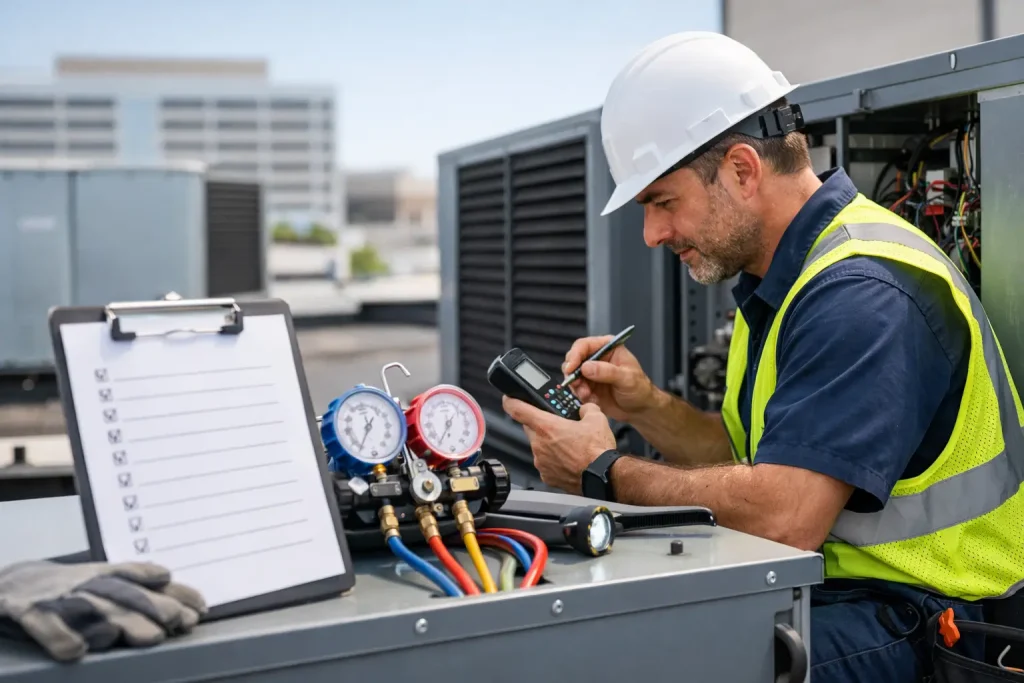
A failing rooftop unit usually does not send a polite warning. It shows up as hot offices, tenant complaints, rising utility bills, and a repair call you did not budget for. A solid commercial hvac maintenance checklist helps property managers and business owners stay ahead of those problems instead of reacting when comfort, equipment, and operations are already at risk.
If you manage a small office, retail space, restaurant, church, or mixed-use property, maintenance is less about checking boxes and more about protecting uptime. The right plan keeps airflow consistent, catches wear early, and helps you avoid emergency service during the hottest and coldest days of the year. In a place like Modesto, where summer heat can put serious strain on cooling equipment, that matters.
Why a commercial HVAC maintenance checklist matters
Commercial systems work harder than many people realize. They often run longer hours, serve multiple zones, and deal with changing occupancy, outdoor air demands, and indoor air quality concerns. That means small issues can turn into expensive ones fast.
A neglected filter can reduce airflow and increase strain on the blower motor. A dirty condenser coil can force the system to run longer just to maintain temperature. A minor refrigerant issue can hurt efficiency for weeks before anyone notices comfort problems. None of these problems start as major failures, but they can end that way.
Routine maintenance gives you a chance to catch those issues early. It can lower the odds of breakdowns, improve energy performance, extend equipment life, and make budgeting easier. It also helps you spot when repair costs are starting to outweigh the value of keeping an older system going.
What should be on a commercial HVAC maintenance checklist?
The best commercial hvac maintenance checklist covers more than the thermostat and air filter. It should reflect the age of the equipment, the type of building, the number of units, and how heavily the system is used. A restaurant, for example, has very different HVAC demands than a small professional office.
Air filters and airflow
Filters should be inspected regularly and replaced on schedule, but schedule is only part of the story. A building with heavy foot traffic, construction dust, or poor indoor air quality may need more frequent replacement than a cleaner, lower-use space.
Restricted airflow affects comfort first, but it also affects system health. When airflow drops, equipment has to work harder to deliver the same result. That can increase wear on motors, reduce efficiency, and make temperature issues harder to diagnose.
Thermostats and controls
Controls should be checked for accuracy, programming, and communication with the system. A thermostat that is off by a few degrees may not seem like a big deal, but in a commercial space, that can lead to comfort complaints, wasted energy, and unnecessary runtime.
For buildings with multiple zones, this step becomes even more important. If one area is constantly too hot while another is too cold, the issue may be a control problem rather than a major equipment failure.
Coils, drains, and condensate lines
Evaporator and condenser coils should be inspected and cleaned as needed. Dirty coils reduce heat transfer, which means the system loses efficiency and can struggle to keep up during peak demand.
Drain pans and condensate lines also need attention. Clogs can cause water damage, microbial growth, and shutdowns. In commercial buildings, a drain issue can affect ceilings, walls, flooring, and tenant spaces, so this is not a small item.
Electrical components
Wiring, connections, capacitors, contactors, relays, and breakers should be inspected for wear or damage. Loose electrical connections can create intermittent problems that are easy to miss until they become service calls.
This is one area where routine inspection pays off quickly. Electrical parts often show signs of wear before they fail completely. Catching those signs early can help you avoid a no-cooling or no-heat situation during business hours.
Motors, belts, and moving parts
Blower motors, fan motors, bearings, and belts should be checked for wear, alignment, and proper operation. Belts that are loose or worn can affect airflow and put additional stress on other components.
Not every system uses belts, so the checklist should match the equipment. That is why a generic maintenance sheet is only a starting point. A useful checklist has to fit the actual system on your property.
Refrigerant and cooling performance
Refrigerant levels, pressures, and overall cooling performance should be evaluated by a qualified technician. Low refrigerant does not just mean weaker cooling. It can signal a leak, increase operating costs, and damage major components if ignored.
This is also where maintenance becomes more than visual inspection. Performance testing helps confirm whether the unit is operating as designed or slowly losing capacity.
Safety controls and heating components
If your system includes gas heat or packaged heating and cooling, heat exchangers, burners, ignition systems, and safety controls should be inspected before colder weather sets in. Even in areas where cooling gets more attention, heating problems still matter when temperatures drop.
A seasonal approach makes sense here. Cooling checks should happen before summer, and heating checks should happen before winter. Year-round properties usually need both.
How often should commercial HVAC maintenance be done?
For many commercial properties, twice-yearly service is the baseline – once before cooling season and once before heating season. That works well for standard office or retail environments with average system demand.
But it depends on the building. Facilities with long operating hours, high occupancy, kitchen exhaust, server rooms, or sensitive comfort requirements may need more frequent visits. Monthly filter checks are common, and some sites benefit from quarterly inspections.
Older systems also deserve closer attention. When equipment is aging, maintenance can help you stretch useful life, but it can also reveal when repairs are becoming too frequent to justify.
A checklist is only useful if someone actually follows it
This is where many properties run into trouble. They have a maintenance list on file, but nobody is tracking completion dates, filter changes, recurring issues, or performance trends. The result is inconsistent service and surprise breakdowns.
A better approach is to treat maintenance as part of building operations, not a side task. Keep records for each unit. Note model and serial information, service dates, filter sizes, repair history, and any comfort complaints tied to specific zones. That history helps technicians diagnose problems faster and helps you make better repair-versus-replacement decisions.
It also creates accountability. If the same issue keeps returning, you can see that pattern instead of paying for repeated short-term fixes.
What maintenance can staff handle, and what should go to a professional?
Some basic tasks can be handled in-house, depending on your staff and property setup. That may include checking thermostat settings, replacing accessible filters, keeping outdoor units clear of debris, and watching for obvious warning signs like unusual noise, weak airflow, or water around equipment.
More technical work should be left to trained HVAC professionals. Electrical testing, refrigerant checks, motor diagnostics, control calibration, and internal component inspection require the right tools and experience. In commercial settings, guessing can get expensive fast.
There is also a liability issue. If untrained staff damage equipment or miss a safety problem, the cost can go far beyond a repair bill. Professional maintenance gives you a clearer picture of system condition and reduces the chance of avoidable mistakes.
Signs your current maintenance plan is not enough
If your building has frequent hot and cold spots, rising energy bills, repeat service calls, or units that seem to fail during peak weather, your current plan may be too light or too inconsistent. Maintenance should reduce surprises. If it is not doing that, something needs to change.
Another common sign is deferred service. If inspections keep getting pushed back because the equipment seems to be working, the property is relying on luck. That can hold for a while, then fail at the worst possible time.
For local businesses in Modesto, that timing matters. When outdoor temperatures spike, delays in service can affect staff comfort, customer experience, and even business hours. Fast response helps, but avoiding the emergency in the first place is usually the better outcome.
Building a maintenance plan that fits your property
A strong checklist should match the real demands of the building. That means looking at occupancy, hours of use, equipment age, number of zones, past repair history, and seasonal load. A one-size-fits-all plan may look organized on paper, but it often misses what matters most.
For some properties, the priority is energy savings. For others, it is tenant comfort, equipment longevity, or reducing after-hours emergency calls. Most want all of the above, but the balance can vary. That is why practical maintenance planning starts with how the building actually operates.
If you are managing multiple units or an older system, it helps to work with a local HVAC team that can track condition over time and recommend service based on patterns, not guesswork. That kind of consistency is what turns maintenance from a recurring expense into a real operational advantage.
The best time to tighten up your HVAC maintenance plan is before your system proves it is overdue.
Comments are closed.