
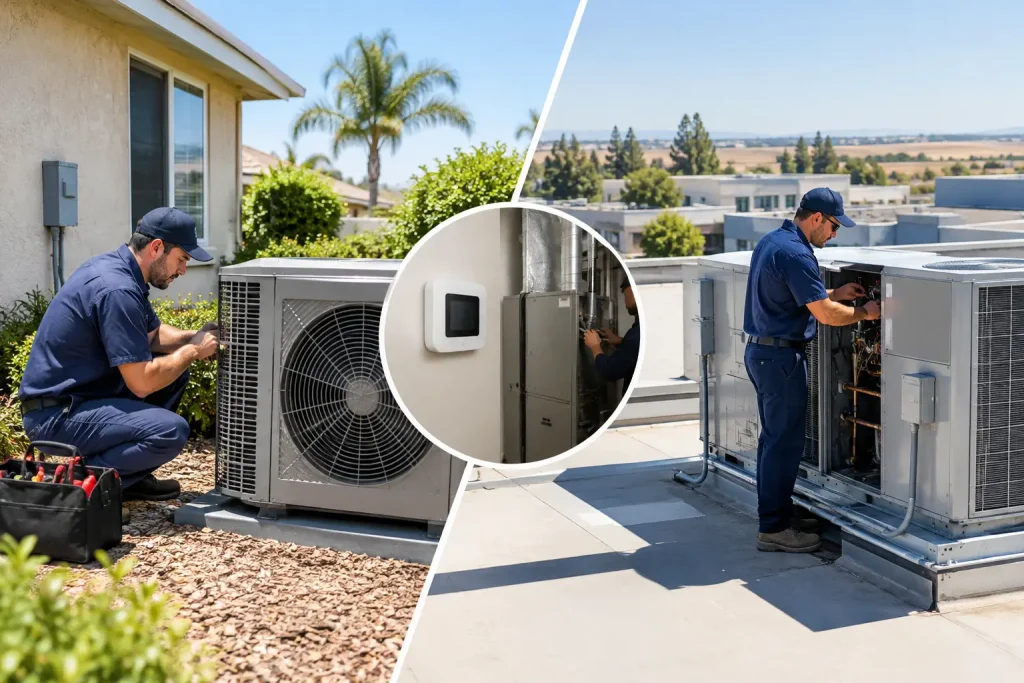
A heat pump vs air conditioner decision usually comes up at the worst possible time: the AC is struggling through a Modesto summer, a repair is needed, or an aging system is ready to be replaced. Both systems can keep your home cool. The bigger question is whether you also want the same equipment to handle your heating needs.
For many homeowners, an air conditioner paired with a furnace remains a practical, dependable setup. For others, an electric heat pump can provide efficient year-round comfort in one system. The right answer depends on your existing equipment, your home’s electrical setup, your comfort preferences, and the condition of the system you already own.
Heat pump vs air conditioner: the core difference
An air conditioner moves heat out of your home to lower indoor temperatures. It works with an indoor air handler or furnace blower to circulate cooled air through your ductwork. When winter arrives, the air conditioner does not provide heat. Your furnace, or another separate heating system, takes over.
A heat pump cools your home in much the same way during summer. The difference is that it can reverse its operation in cooler weather. Instead of moving heat out, it collects available heat from the outdoor air and transfers it indoors.
That means a heat pump can provide both heating and cooling. It does not create heat by burning fuel the way a gas furnace does. It runs on electricity and moves heat from one place to another.
This distinction matters when you are replacing a complete HVAC system. If you are only replacing a failed outdoor cooling unit while your furnace is in good shape, a traditional air conditioner may be the more straightforward choice. If both your heating and cooling equipment are near the end of their service life, comparing a heat pump with a new AC and furnace combination makes more sense.
How each system performs in Central Valley weather
Cooling performance is often comparable
Homeowners sometimes assume a heat pump is less capable of cooling than an air conditioner. That is not generally the case. A properly selected and professionally installed heat pump can cool a home effectively during hot weather, just like a central air conditioner.
System sizing, airflow, duct condition, insulation, thermostat settings, and maintenance have a major effect on real-world comfort. A high-efficiency system that is poorly sized or installed will not perform the way it should, regardless of whether it is a heat pump or air conditioner.
If your current AC runs continuously, blows warm air, freezes up, or leaves rooms unevenly cooled, the issue may be repairable. A technician should diagnose the cause before anyone assumes replacement is necessary.
Heating is where the choice changes
Modesto and nearby communities have hot summers and generally mild winters compared with colder parts of the country. Those conditions can be favorable for heat pump heating. Because winter temperatures are often moderate, a heat pump may operate efficiently for much of the heating season.
Still, a heat pump may need supplemental heat during colder stretches, depending on the system design and outdoor conditions. Some homes use electric auxiliary heat. Others use a dual-fuel setup that combines a heat pump with a gas furnace, allowing the furnace to assist when needed.
A gas furnace may still be appealing if your household prefers gas heat, already has a newer furnace, or wants strong heating output during cold mornings. There is no one-size-fits-all winner. The best setup is the one that matches the home and how you use it.
Energy use, operating costs, and installation considerations
A heat pump can reduce reliance on a gas furnace because it handles both heating and cooling with electricity. Whether that lowers your total utility costs depends on local electricity and gas rates, the efficiency of the equipment being replaced, your home’s condition, and your heating habits.
An air conditioner has a simpler role: cooling only. If you already have an efficient, reliable furnace, replacing only the AC may require less work and lower the upfront scope of the project. It can also preserve a system arrangement that you already know works well for your household.
When comparing estimates, look beyond the equipment name. Ask what is included with the installation, whether ductwork or airflow concerns have been identified, how the system capacity was determined, and whether the thermostat and electrical components are compatible. A clear proposal should explain the recommended solution in plain language, not pressure you toward the most expensive option.
A heat pump installation may require electrical upgrades in some homes, particularly when replacing gas heating entirely. That does not automatically rule out a heat pump, but it is a real planning factor. Your HVAC contractor should assess the existing system and explain any necessary work before installation begins.
When repairing your AC is the smarter move
Replacement is not the answer to every cooling problem. If your air conditioner has been reliable, the repair is reasonable, and the system is not near the end of its expected service life, repairing it can be the practical choice.
Common issues such as a failed capacitor, worn contactor, clogged drain line, thermostat problem, dirty coil, or airflow restriction can affect cooling performance without requiring a new system. Refrigerant issues and compressor problems can be more involved, but even then, a diagnosis should come before a replacement decision.
Consider a repair first when the issue is isolated, the equipment has been maintained, and the repair will restore safe, dependable operation. Consider replacement more seriously when breakdowns are becoming frequent, major components are failing, comfort problems persist, or your heating and cooling equipment are both aging.
Property managers may also want to weigh reliability and tenant comfort heavily. Repeated emergency calls, inconsistent cooling across units, and downtime during hot weather can make a planned replacement easier to manage than another short-term repair.
Questions to ask before choosing a new system
The equipment decision should start with your home, not with a sales pitch. A qualified HVAC professional should inspect the current system and discuss what has changed since it was installed. A home addition, new windows, insulation upgrades, occupancy changes, or duct modifications can all affect what size and type of equipment makes sense now.
Ask whether your existing furnace is worth keeping. If it is relatively new and operating properly, an air conditioner replacement may be a sensible path. If both the AC and furnace are aging, a heat pump or a complete matched system may offer a cleaner long-term solution.
Also ask how each option will handle your specific comfort priorities. Do you want to reduce gas use? Do you prefer the feel of furnace heat? Is quiet operation important? Are some rooms always warmer than others? These details help shape a recommendation that fits the property instead of treating every home the same.
Maintenance still matters after installation
Heat pumps and central air conditioners both need regular service to keep cooling efficiently. Filters should be checked regularly, outdoor equipment should be kept clear of debris, and professional maintenance can catch developing issues before they interrupt comfort.
For a heat pump, maintenance is especially valuable because the equipment works through both the cooling and heating seasons. For an AC and furnace combination, each piece of equipment needs its own seasonal attention.
If your system is not cooling as it should, do not wait for a small warning sign to become a midsummer breakdown. YourK AC can inspect the problem, explain what is causing it, and help you decide whether a targeted repair or a replacement plan is the better next step. The most useful choice is not simply the newest equipment. It is the system that keeps your home comfortable, fits your budget, and gives you confidence when the temperature climbs.