
A failed air conditioner during a Central Valley heat wave can disrupt more than comfort. It can send employees home, frustrate customers, create tenant complaints, and put a property manager in a difficult position. Commercial HVAC service contracts are designed to make those situations less frequent and easier to manage when they do happen.
For a small office, retail space, rental property, or other commercial building, a service contract is not simply a promise that every future repair is covered. It is an ongoing plan for inspections, maintenance, documentation, and priority support. The right agreement helps you make informed decisions before a minor issue becomes an urgent call.
What Commercial HVAC Service Contracts Usually Include
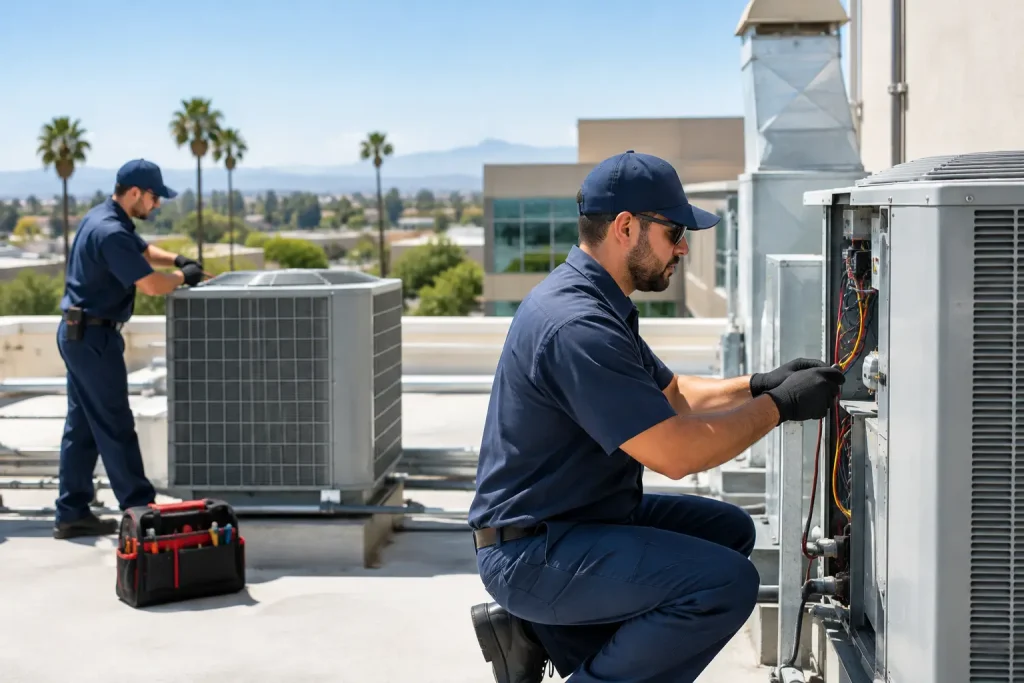
Most commercial service contracts center on scheduled preventive maintenance. A technician visits at planned intervals to inspect the equipment, clean key components, test operation, and identify signs of wear. The exact checklist should match the type of system serving the building, whether that is a split system, packaged unit, rooftop unit, heat pump, or a combination of equipment.
During a typical maintenance visit, the technician may check filters, electrical connections, thermostat operation, condensate drainage, blower performance, refrigerant-related concerns, and the overall heating and cooling cycle. Cleaning and inspection matter because dirt, restricted airflow, loose connections, and drainage problems can all affect comfort and equipment performance.
A well-written agreement should state how often visits occur and what is performed during each one. In many commercial properties, spring cooling maintenance and fall heating maintenance make sense. Buildings with long operating hours, heavy foot traffic, sensitive equipment, or multiple tenants may need a more frequent schedule.
The contract may also include service records and recommendations. That documentation is useful for property managers who need a clear history of what was inspected, what was repaired, and what may need attention later. It can also make budgeting less reactive when an older system starts showing its age.
Maintenance Is Not the Same as Repair Coverage
This distinction prevents many misunderstandings. Routine maintenance is intended to reduce avoidable breakdowns and keep equipment operating as reliably as possible. It does not mean a compressor, motor, control board, or other major component can never fail.
Some commercial HVAC service contracts include discounted repair rates, priority scheduling, or reduced service-call charges. Others focus only on preventive visits. Parts and labor may be billed separately, especially when a repair is outside the planned maintenance scope.
Ask for the terms in plain language. You should know whether emergency calls are included, whether after-hours service is handled differently, and whether replacement parts are covered or billed separately. A transparent contract is better than one that sounds comprehensive but leaves the most likely costs unclear.
It also depends on the condition of your equipment. A newer, well-maintained unit may need a straightforward maintenance plan. An aging system with recurring failures may require more frequent inspections and a realistic conversation about repair versus replacement. A service contract can help you monitor an older unit, but it cannot turn worn-out equipment into a dependable long-term solution.
Why Planned Service Matters for Commercial Properties
Commercial systems often work harder than residential equipment. A store may run cooling through hot afternoons and weekends. An office may have uneven temperatures caused by occupancy, computers, sunlight, or interior rooms with limited airflow. A rental property may have a manager coordinating comfort concerns for several tenants at once.
When maintenance is scheduled, small warning signs are easier to catch. That might include a clogged drain line, a dirty coil, a weak capacitor, damaged insulation, unusual system cycling, or airflow that has gradually declined. None of these signs should be ignored just because the system is still producing cool air.
Planned service also gives property managers a better chance to schedule repairs at less disruptive times. Waiting until the system stops on the hottest day of the year leaves fewer options. It can mean a more urgent decision, greater inconvenience for occupants, and added pressure on your team.
There is no maintenance plan that eliminates every breakdown. Weather, equipment age, usage patterns, and component failures all play a role. But regular professional attention gives you more visibility into the system and more time to respond before comfort becomes a business problem.
What to Look for Before Signing a Contract
A commercial contract should fit the building, not just the equipment count. Before agreeing to a plan, make sure the provider understands how the property is used, when it is occupied, and which comfort issues create the biggest disruption.
Start by reviewing the equipment covered. Verify the number of units, their locations, approximate ages, and whether the agreement includes both heating and cooling equipment. If a rooftop unit or equipment serving a shared space has access requirements, those details should be addressed before the first scheduled visit.
Next, look closely at the visit schedule. Twice-yearly maintenance is common, but it is not automatically right for every property. A lightly used office may have different needs than a busy restaurant-adjacent retail space or a property with multiple zones. The contractor should be able to explain why the recommended schedule makes sense.
You should also understand the communication process. Find out how service findings are reported, who receives recommendations, and how repair approval works. For property managers, clear communication can prevent delays when an owner, tenant, or facilities contact needs to authorize work.
Finally, ask how urgent issues are handled. Priority service can be valuable, but the contract should explain what priority means rather than relying on vague language. If your building depends on reliable cooling for employees, residents, customers, or temperature-sensitive operations, response expectations deserve a direct conversation.
Red Flags in a Commercial HVAC Agreement
An agreement should make operating costs more predictable, not harder to understand. Be cautious when a contract does not provide a clear maintenance scope, leaves exclusions undefined, or uses broad language that can be interpreted in several ways.
Another concern is a plan that recommends replacement without documenting the system condition or repair history. Replacement may be the right choice when a unit is unreliable, inefficient, or costly to keep repairing. Still, you should receive a practical explanation of what is wrong, what repair would address, and why replacement is being considered.
It is also reasonable to question a one-size-fits-all agreement. Commercial properties vary widely. A small storefront with one unit should not necessarily receive the same plan as a multi-tenant building with several systems and different operating schedules.
When a Service Contract May Not Be the Best Fit
Not every commercial property needs a formal contract immediately. If you manage a small building with newer equipment, limited hours, and a reliable maintenance history, scheduling seasonal service as needed may be sufficient for now.
Even then, skipping maintenance altogether is rarely a good trade-off. Waiting for a breakdown may appear less expensive in the short term, but it leaves you with less information about system condition and fewer chances to address developing problems early.
A contract becomes more valuable when multiple people rely on the building, equipment is aging, the property has a history of comfort complaints, or an unexpected shutdown would interrupt daily operations. It can also help when a property manager needs records and a consistent service process across the year.
A Better Way to Plan for Repairs
A service contract should support good decisions, not force them. After each visit, review recommendations based on urgency. Safety and active performance problems should be addressed promptly. Issues likely to cause a near-term breakdown deserve planning. Improvements that can wait should be documented and budgeted rather than treated as an emergency.
If a commercial air conditioner is already blowing warm air, short cycling, leaking water, making unusual noises, or failing to keep the space comfortable, do not wait for the next maintenance visit. Those symptoms call for a professional diagnosis. YourK AC can assess the issue, explain the findings clearly, and help property managers determine the most practical next step.
The best commercial HVAC service contract is one that gives you clarity: what will be maintained, what is excluded, how concerns are reported, and how your property will be supported when comfort cannot wait. That clarity makes it easier to protect your equipment, your budget, and the people who rely on your building every day.