
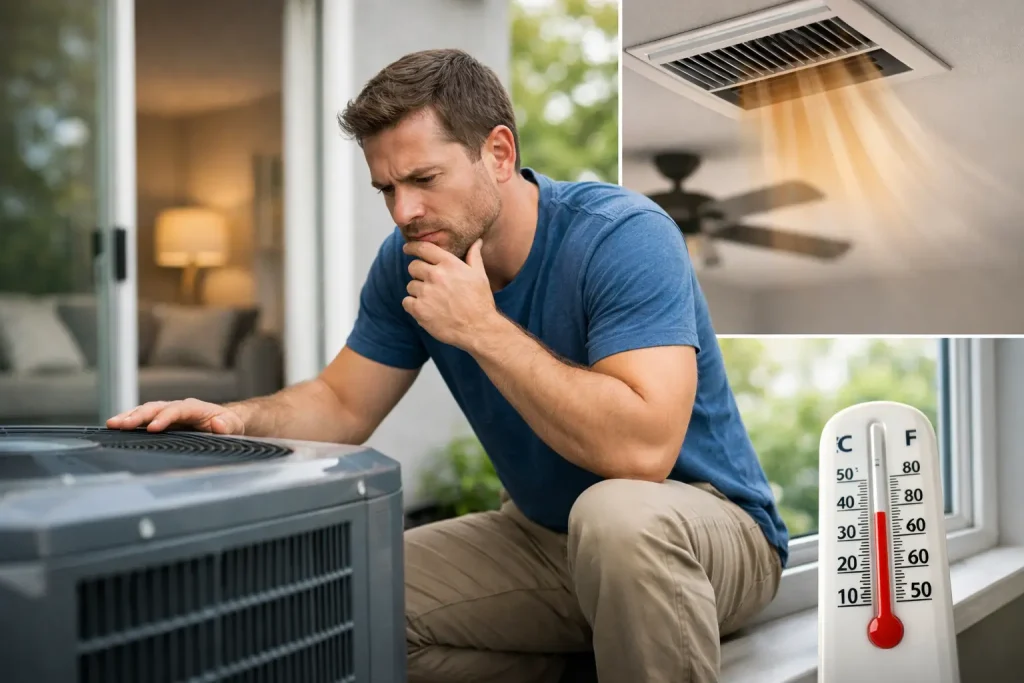
When your air conditioner is running all afternoon and the house still feels warm, frustration sets in fast. If your air conditioner is not cooling house temperatures the way it should, the problem may be simple, or it may be a sign your system needs professional repair before it gets worse.
In Modesto heat, this is not something most homeowners want to troubleshoot for long. You want cool air, a clear answer, and a fix that does not waste your time or money. The good news is that a few common issues cause most cooling problems, and some of them can be identified quickly.
Why an air conditioner is not cooling the house
An AC system can fail to cool for different reasons, but the main pattern is usually the same. The system is running, yet it cannot remove enough heat from the home to reach the thermostat setting.
Sometimes the issue is airflow. Sometimes it is low refrigerant, a dirty outdoor unit, a frozen evaporator coil, or an electrical part that is starting to fail. In other cases, the AC is technically working, but it is undersized, poorly maintained, or struggling during extreme temperatures.
That is why this problem is not always a one-answer situation. Two homes can have the same symptom and completely different causes. A clogged filter is a quick fix. A failing compressor is not.
Start with the fastest things to check
Before assuming the system has failed, check the thermostat. Make sure it is set to cool, the fan is on auto, and the temperature is set lower than the current room temperature. It sounds basic, but incorrect settings are one of the first things technicians look at because they are easy to miss.
Next, look at the air filter. A dirty filter restricts airflow, makes the system work harder, and can keep cool air from circulating properly. In some cases, reduced airflow can even cause the indoor coil to freeze, which makes cooling even worse.
Then check the vents around the house. Closed or blocked supply vents can create uneven cooling and make rooms feel warmer than they should. If furniture, curtains, or stored items are blocking airflow, move them and see whether circulation improves.
Finally, step outside and inspect the condenser unit. If it is packed with leaves, dirt, grass clippings, or debris, it may not be able to release heat effectively. Turn off power to the unit before cleaning around it, and keep the area clear. If the coil itself looks heavily coated, deeper cleaning is usually better left to a technician.
Signs your AC problem is more than a simple fix
If the thermostat is set correctly, the filter is clean, and airflow is still weak or warm, the problem is likely inside the system. One common warning sign is warm air coming from the vents even though the outdoor unit is running. That can point to refrigerant issues, compressor trouble, or electrical faults.
Another red flag is ice on the refrigerant lines or indoor coil. People often assume ice means the system is cooling extra well, but it usually means the opposite. Frozen components typically signal restricted airflow, refrigerant problems, or both.
Short cycling is another issue to watch. If the AC turns on and off too often without completing a full cooling cycle, it may be overheating, dealing with a sensor problem, or struggling with electrical components. This does not just affect comfort. It also increases wear and can raise your utility bill.
If your energy costs suddenly spike without a clear reason, that matters too. An inefficient system can keep running without cooling effectively, which means you are paying more for worse performance.
When an air conditioner not cooling house comfort points to repair
A homeowner can handle basic checks, but most true cooling failures need a trained HVAC technician. If your air conditioner is not cooling house comfort levels after the simple steps above, professional diagnosis is usually the fastest route to a real solution.
Refrigerant is a good example. Low refrigerant does not mean the system just needs a refill like topping off a tank. Refrigerant runs in a sealed system. If levels are low, there is usually a leak that needs to be found and repaired first. Adding more without fixing the leak is only a temporary patch.
Capacitor and contactor failures are also common, especially during heavy summer use. These parts help the motors and compressor start and run correctly. When they weaken, the system may hum, struggle to start, or run without delivering proper cooling.
Dirty evaporator coils can also reduce performance dramatically. This is not always visible to the homeowner, but it can restrict heat transfer and reduce the system’s ability to cool the air passing through it. The same goes for blower motor issues. If the blower cannot move enough air, even a cold system will not cool the home properly.
It may not be a breakdown – it may be a system mismatch
Not every cooling problem comes from a failed part. Sometimes the AC system is simply not matched well to the property or current demand.
If your system is older, it may have lost efficiency over time and now struggles to keep up on the hottest afternoons. If it was installed too small for the square footage, sun exposure, or layout of the home, it may run constantly and still fall short. That is especially common in additions, older homes with weak insulation, or buildings with leaking ductwork.
Duct leaks can be a hidden cause of poor cooling. If cooled air is escaping into attics, crawl spaces, or wall cavities, your system can run hard while living spaces stay warm. Uneven temperatures from room to room often point in this direction.
There is also the issue of outdoor heat load. On very hot Central Valley days, even a healthy AC can run longer than usual. But longer run times are different from no meaningful cooling. If your home is barely dropping in temperature, that is not something to ignore.
What to do when the house is getting hotter
If the indoor temperature keeps climbing, do not keep forcing the system without checking for warning signs. If you see ice, hear unusual noises, smell something burning, or notice the unit tripping breakers, shut it down and call for service. Continuing to run a failing system can turn a manageable repair into a more expensive one.
If there are no severe warning signs but cooling is weak, keep blinds closed, avoid using heat-producing appliances, and check whether ceiling fans can help move air temporarily. That will not solve the AC problem, but it can reduce strain while you wait for service.
For homeowners and property managers, speed matters here. A small issue caught early can often be repaired the same day. Waiting can mean more discomfort, more system damage, and less availability during peak service hours.
How to avoid the same problem next month
The most effective way to prevent repeat cooling issues is regular maintenance. AC systems collect dirt, electrical parts wear down, refrigerant problems develop slowly, and small airflow restrictions build over time. A system can look fine from the outside while performance drops week by week.
Routine service helps catch those problems before they shut the system down during the hottest stretch of summer. It also gives you a better sense of whether you are dealing with a repairable issue or an aging unit that is becoming unreliable.
For many property owners, that is the real value of maintenance. It is not just about efficiency. It is about avoiding emergency calls, protecting indoor comfort, and getting honest guidance before a full breakdown forces the decision.
If your AC is running but the house still will not cool, trust what the system is telling you. Quick checks can rule out the obvious, but when the problem sticks around, a fast, professional repair is usually the shortest path back to comfort. In Modesto, that peace of mind matters, and YourK AC knows how quickly a warm house can become an urgent problem.
Comments are closed.