
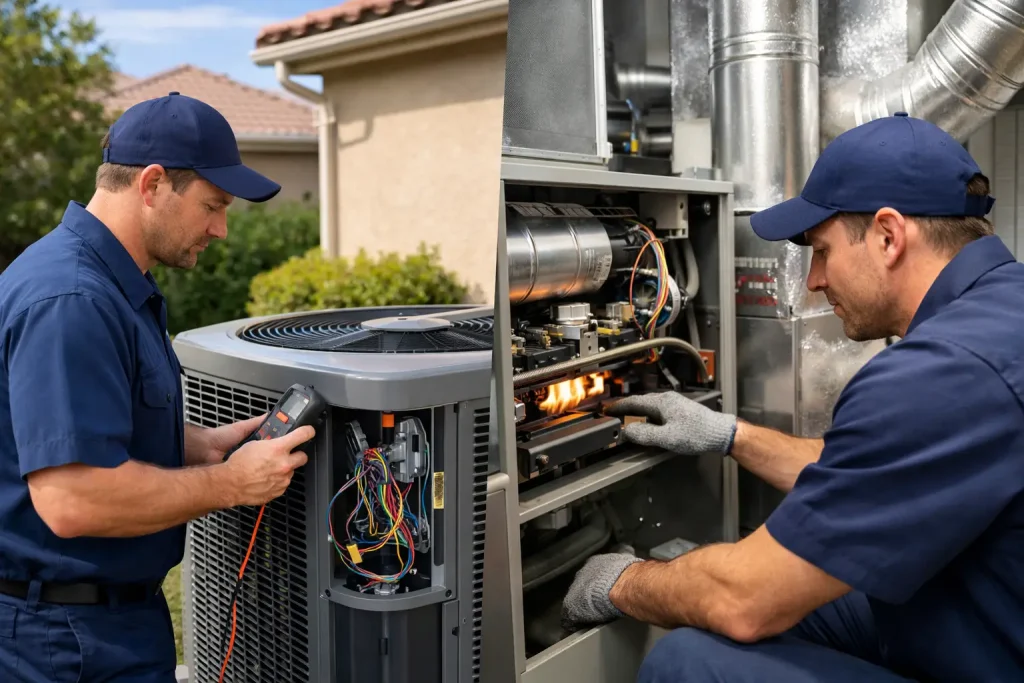
A heating system decision can feel urgent when your current unit is noisy, unreliable, or leaving rooms cold. In the heat pump vs furnace conversation, the right answer depends on more than the equipment itself. Your home’s existing setup, comfort preferences, cooling needs, and long-term energy goals all matter.
For many Modesto-area homeowners, a heat pump is worth a close look because it provides both heating and air conditioning in one system. A furnace remains a strong choice for homes with natural gas service and a dependable central AC system. The best fit is the one that delivers reliable comfort without creating unnecessary replacement work or surprises down the road.
How a Heat Pump and Furnace Heat Your Home
A furnace creates heat by burning natural gas or using electricity, then moves that warm air through your ductwork. Gas furnaces are common in Central Valley homes and can produce very warm air quickly. They are designed specifically for heating, so they need a separate air conditioning system to cool your home in summer.
A heat pump does not generate heat in the same way. During winter, it pulls available heat from outdoor air and transfers it inside. During summer, it reverses that process and moves indoor heat outside, functioning as your air conditioner. Even cool outdoor air contains usable heat, which is why modern heat pumps can work effectively through many California winters.
This difference matters because Modesto has hot summers and generally moderate winters. A properly sized heat pump can handle year-round comfort for many local homes while reducing the need for separate heating and cooling equipment.
Heat Pump vs Furnace: The Biggest Differences
Comfort and heating performance
Furnaces usually deliver hotter air from the vents. If you are used to that strong, immediate blast of warmth on a cold morning, a gas furnace may feel more familiar. A well-maintained furnace can heat a home quickly and perform reliably during colder stretches.
Heat pumps typically provide steadier, lower-temperature heat over longer cycles. The air may not feel as hot at the register, but the home can remain consistently comfortable when the system is properly sized and installed. Rather than judging performance by vent temperature alone, pay attention to how evenly the system holds your thermostat setting from room to room.
On rare near-freezing nights, a heat pump may need supplemental electric heat or a dual-fuel backup system, depending on the equipment and design. This is one reason a professional load calculation matters. Choosing equipment based only on square footage can leave you with uneven comfort or higher operating costs.
Cooling capability
A furnace cannot cool your home by itself. If you choose a furnace, you will also need a compatible central air conditioner or another cooling solution. For a homeowner replacing both aging heating and cooling equipment, that can be a major factor in the decision.
A heat pump handles both jobs. One outdoor unit and one indoor air handler or coil system provide cooling in summer and heating in winter. That can simplify replacement planning, especially when an older furnace and AC are nearing the end of their service life at the same time.
Energy use
Because a heat pump transfers heat instead of creating it through combustion, it can be highly efficient in mild winter weather. That makes it especially appealing in climates where winter temperatures do not stay below freezing for extended periods.
A high-efficiency gas furnace can also be a smart option, particularly for homeowners who already have natural gas service and prefer gas heat. The operating-cost difference between a heat pump and furnace depends on local utility rates, your insulation, thermostat habits, duct condition, and how efficiently the equipment is installed. There is no honest one-size-fits-all answer.
An HVAC professional should review your current energy use, home layout, and equipment condition before recommending either option. A system that looks efficient on paper can underperform if ducts leak, airflow is restricted, or the equipment is oversized.
Installation considerations
Replacing a furnace may be more straightforward when your home already has a gas line, venting, compatible ductwork, and a working AC system. If the air conditioner is still in good condition, a furnace replacement may allow you to address the immediate heating issue without replacing everything at once.
A heat pump installation may require updates to the electrical capacity, thermostat, indoor coil, refrigerant lines, or air handler. These are not reasons to rule out a heat pump. They are reasons to have the full system inspected before making a decision. Good installation work protects comfort, efficiency, and equipment life.
When a Furnace Is the Better Choice
A furnace can make the most sense when your home has dependable gas service, your current central AC is in good shape, and you only need to replace the heating side of the system. It can also be a good fit for homeowners who strongly prefer fast, high-temperature heat.
Furnaces are familiar to many property owners, and technicians can often diagnose common issues quickly. Regular maintenance remains essential. A dirty filter, worn ignition component, faulty blower motor, or airflow issue can make a furnace less efficient and less dependable when you need it most.
For commercial spaces or larger homes, the decision may involve more than comfort. Occupancy schedules, zoning, existing rooftop equipment, and business operating hours can all affect whether a furnace replacement or a heat pump system is more practical.
When a Heat Pump Is the Better Choice
A heat pump is often a strong option if you are replacing both your heating and cooling systems, want one system for year-round temperature control, or want to reduce reliance on gas for space heating. It is especially worth considering in Modesto’s climate, where summer cooling is a major part of annual HVAC use and winters are usually manageable for modern heat pump equipment.
Heat pumps can also be a practical choice for homes without natural gas service. Instead of relying on electric resistance heat, which can use considerably more electricity, a heat pump offers a more efficient way to heat many homes.
The key is proper design. The outdoor unit, indoor equipment, refrigerant setup, ductwork, and thermostat must work together. A heat pump that is too large may short-cycle and leave humidity control issues during cooling season. One that is too small may struggle during colder weather. Professional sizing is not an optional detail.
Consider a Dual-Fuel System for Added Flexibility
Some homes do not need to choose strictly between a heat pump and furnace. A dual-fuel system pairs an electric heat pump with a gas furnace. The heat pump handles heating during mild weather, while the furnace takes over when outdoor temperatures drop enough that gas heat becomes the better option.
This setup can provide efficient heating for much of the year while preserving the quick, high-output warmth of a furnace when conditions call for it. It is not necessary for every property, but it can be worth discussing if you want flexibility and are replacing both major components.
Do Not Let an Old System Make the Decision for You
A breakdown does not automatically mean you need a complete replacement. In some cases, a repair is the sensible choice, especially when the system is relatively new and the issue is isolated. In other cases, repeated repairs, inconsistent comfort, rising energy use, and aging equipment point toward replacement as the more dependable path.
Before approving a new system, ask for a clear explanation of what is failing, what condition the rest of the equipment is in, and whether your ducts and airflow support the proposed solution. You should understand why a furnace, heat pump, or dual-fuel system fits your property before work begins.
Maintenance also affects the decision. Both furnaces and heat pumps need routine service to stay reliable. Filters should be changed regularly, airflow should be checked, and seasonal tune-ups can catch small issues before they become a no-heat call or a summer AC emergency.
Get a Recommendation Based on Your Property
The right system is not always the newest option or the one your neighbor installed. It is the system that matches your home, your existing equipment, and how you use the space. A qualified technician can inspect the current system, check ductwork and electrical requirements, and explain the trade-offs in plain language.
If your heater is failing, your AC is aging, or you are ready to plan a more efficient replacement, YourK AC can help you evaluate the options without pressure. A clear assessment now can help you avoid another uncomfortable night later and choose heating and cooling equipment that is ready for the seasons ahead.