
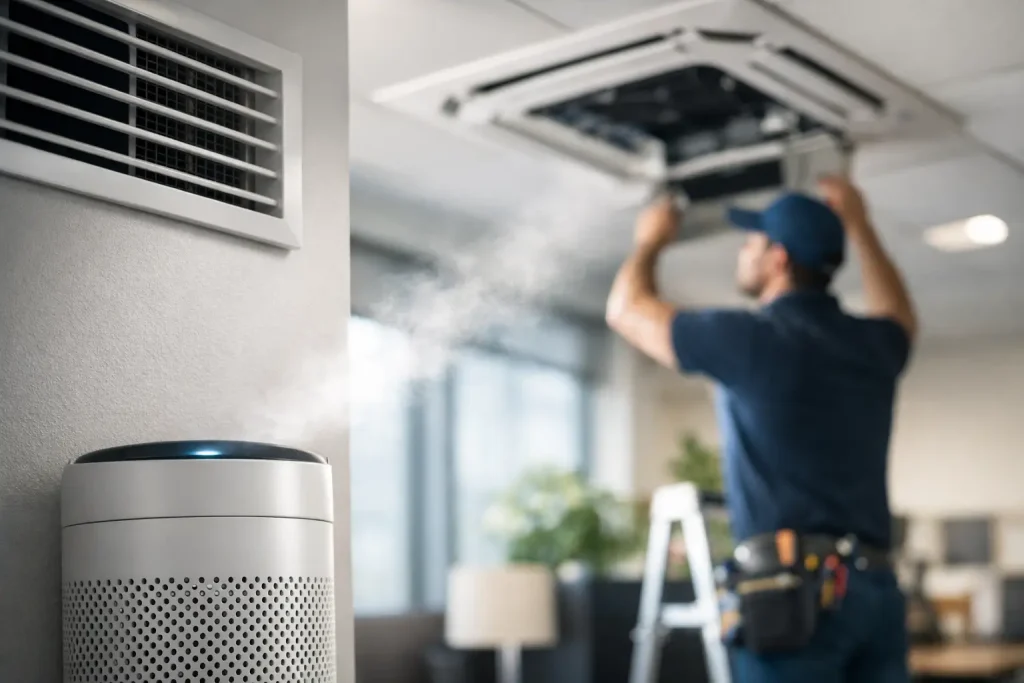
That layer of dust on the vent cover, the stale smell that never quite leaves, the rooms that feel stuffy even when the AC is running – those are often signs your home or building has an air quality problem, not just a temperature problem. Indoor air quality HVAC solutions are designed to handle both, because the same system that heats and cools your property also moves the air you breathe every day.
For homeowners, property managers, and small business owners in Modesto, that matters more than people think. Long cooling seasons, dusty outdoor conditions, older ductwork, and tightly sealed buildings can all work against clean indoor air. If your space feels uncomfortable, triggers allergies, or seems harder to keep fresh, the issue may not be solved by lowering the thermostat.
What indoor air quality HVAC solutions actually address
Indoor air quality problems usually show up in practical ways first. You may notice more dust on furniture, lingering cooking smells, uneven airflow, humidity issues, or family members complaining about dry throats, congestion, or headaches. In commercial spaces, poor air quality can also affect employee comfort and how customers experience the space.
The cause is not always one thing. Sometimes it is a clogged filter restricting airflow. Sometimes it is leaky ductwork pulling in dust from unconditioned areas. In other cases, excess humidity, poor ventilation, or a system that is oversized or overdue for maintenance can all contribute.
That is why good HVAC-based air quality improvements are not about adding random accessories. The right solution depends on what is happening inside the property and how the current system is performing.
The most effective HVAC solutions for indoor air quality
A better filter is often the first step, but it is rarely the whole answer. Air filtration matters because it captures airborne particles before they keep circulating through the system. Standard filters can help with larger dust and debris, while higher-efficiency media filters can capture smaller particles that affect comfort and cleanliness.
There is a trade-off, though. A filter that is too restrictive for your system can reduce airflow and make the unit work harder. That is why filter upgrades should match the equipment, not just the label on the box.
Air purification systems can add another layer of protection. Depending on the setup, these systems can help reduce airborne contaminants, odors, and certain particles that basic filters miss. They can be a strong option for households with pets, allergy concerns, or frequent indoor odor issues. In a business setting, they can also help maintain a fresher indoor environment without relying on temporary fixes like sprays or plug-ins.
Ventilation improvements are another major piece of the puzzle. Many properties hold air inside too well, which sounds efficient until stale air starts building up. Controlled ventilation brings in fresh outdoor air in a way that works with the HVAC system instead of against it. This can help reduce stuffiness and improve overall indoor freshness, especially in buildings where windows stay closed most of the year.
Humidity control is just as important. Air that is too dry can irritate skin, eyes, and sinuses. Air that is too humid can make the space feel sticky, encourage musty smells, and contribute to mold concerns. Whole-home humidifiers and dehumidifiers can help balance moisture levels across the property rather than treating one room at a time.
Ductwork also plays a bigger role than most people realize. If ducts are leaking, dirty, or poorly designed, clean conditioned air may not be reaching the rooms the way it should. At the same time, contaminants from attics, crawl spaces, or wall cavities can get pulled into circulation. In those cases, sealing, repairing, or modifying the duct system can improve both air quality and comfort.
Why maintenance matters as much as equipment
Some indoor air quality issues are not caused by missing equipment at all. They come from neglected HVAC systems. Dirty coils, clogged drain lines, worn blower components, and overdue filter changes can reduce performance and affect the air moving through the property.
Routine maintenance helps catch those problems early. It also keeps the system operating the way it was designed to, which supports better airflow, more consistent temperatures, and cleaner circulation. If a building already has air quality accessories installed, maintenance is what keeps them effective.
This is one reason many air quality complaints show up during extreme weather. When your heating or cooling system is running hard, any weakness in airflow, filtration, or humidity control becomes more noticeable. A tune-up may not solve every problem, but it often reveals where the real issue starts.
Choosing indoor air quality HVAC solutions for your property
The best approach depends on the property, the people using it, and the symptoms you are dealing with. A family with pets and allergy concerns may need better filtration and purification. A rental property with uneven airflow and tenant complaints may need duct sealing and maintenance. A small business with stale indoor air may benefit more from ventilation improvements than from a premium filter alone.
Age matters too. Older systems may need upgrades that newer units can support more easily. In some cases, adding indoor air quality equipment to an aging HVAC system makes sense. In others, if the equipment is near the end of its service life, replacement may be the smarter long-term move.
That is where working with a local HVAC professional makes a difference. You want solutions based on inspection and performance, not guesswork. A trustworthy contractor should explain what is causing the problem, what options fit your system, and where spending more does or does not make sense.
Signs it is time to act
If you are constantly dusting, replacing portable air fresheners, or dealing with rooms that feel stale no matter how much the system runs, it is worth taking a closer look. The same goes for recurring allergy irritation indoors, visible dirt around supply vents, musty odors, or humidity that feels hard to control.
For commercial properties, complaints from employees or customers should not be ignored. Poor indoor air can affect comfort, concentration, and the overall feel of the space. Even if the HVAC system is still heating and cooling, that does not mean it is supporting healthy, balanced airflow.
A lot of people wait until there is a major breakdown to think about the system. But air quality issues often build slowly. Addressing them early can prevent bigger comfort problems and help the system run more efficiently over time.
A practical path forward in Modesto
In Modesto and surrounding communities, HVAC systems deal with heavy seasonal demand, dust, and long stretches of closed-window living. That makes clean airflow, filtration, and humidity control more than a nice extra. They are part of keeping a property comfortable and usable throughout the year.
The most effective indoor air quality HVAC solutions start with identifying the actual problem. Maybe you need a filter upgrade. Maybe the ductwork is leaking. Maybe your space needs better ventilation or humidity control. Sometimes the answer is simple. Sometimes it takes a more complete system adjustment.
What matters is getting a solution that works with your heating and cooling system, your budget, and your day-to-day needs. A local team like YourK AC can help identify those issues and recommend practical improvements without turning a straightforward problem into a complicated sales pitch.
Cleaner indoor air is not about chasing perfection. It is about making your home or business feel fresher, healthier, and easier to live or work in – one smart HVAC improvement at a time.