
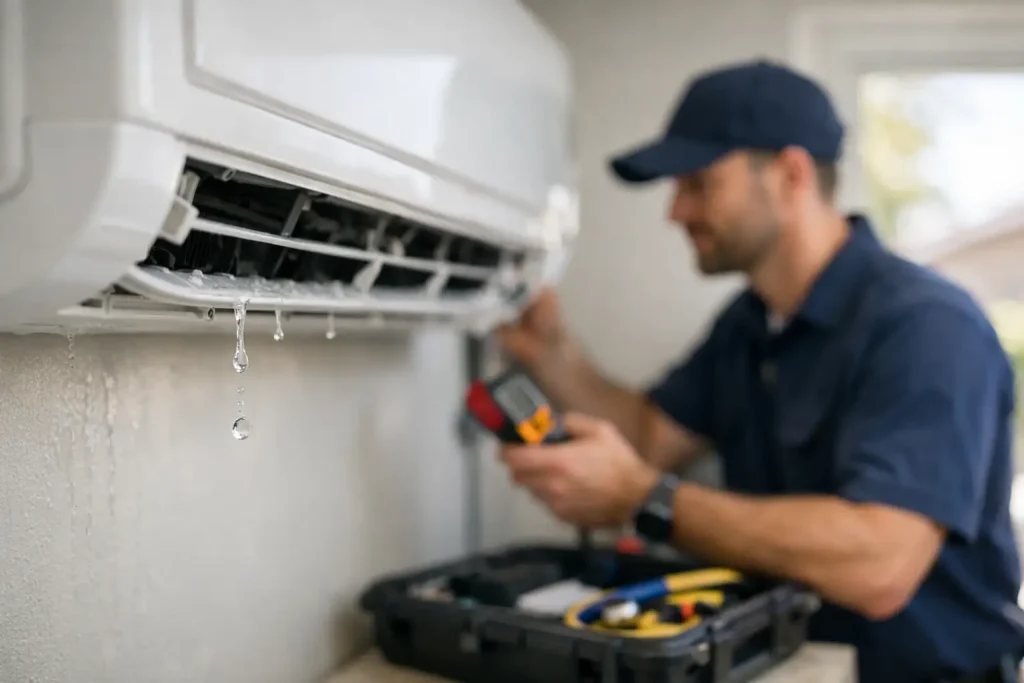
A puddle under an indoor AC unit can turn a hot afternoon into a bigger concern fast. If you are asking, “why is AC dripping water,” the short answer is that your system is not draining condensation where it should. The longer answer matters because the source can range from a simple clogged drain line to a problem that can damage ceilings, walls, flooring, or the equipment itself.
Your air conditioner naturally creates water as it cools your home. Warm indoor air passes over the cold evaporator coil, moisture in that air condenses, and the system is designed to carry that water safely outside through a condensate drain. When water shows up inside instead, something in that process has gone wrong.
Why Is AC Dripping Water Inside?
The most common cause is a clogged condensate drain line. Dust, dirt, algae, and other buildup can collect in the line over time. Once the line is restricted, water backs up into the drain pan and can overflow around the indoor unit.
This is especially common during Modesto’s hottest stretches, when an AC system runs for long periods and produces more condensation than usual. A minor buildup that went unnoticed in spring can become a visible leak once the system is working hard every day.
A clogged drain line is often repairable, but it should not be ignored. Repeated overflow can stain drywall, encourage mold growth, damage insulation, and create costly repairs outside the HVAC system.
A Dirty Air Filter Can Contribute
A severely dirty air filter can restrict airflow across the evaporator coil. Without enough warm air moving over the coil, the coil may get too cold and freeze. When it later thaws, the melting ice can create more water than the drain system can handle, leading to dripping or overflow.
Replacing a dirty filter is a safe homeowner maintenance task and may help prevent future issues. However, if you see ice on refrigerant lines or near the indoor coil, turn the cooling system off and schedule service. Continuing to run a frozen system can put unnecessary strain on the compressor and may point to a deeper airflow or refrigerant issue.
The Drain Pan May Be Damaged
The condensate drain pan sits beneath the evaporator coil and catches water before it enters the drain line. Older systems may have a rusted, cracked, or improperly positioned pan. If the pan is damaged, it can leak even when the drain line is clear.
Some systems have a primary pan and a secondary safety pan. Water in a secondary pan is a warning sign, not something to brush off. It usually means the primary drainage path is not working correctly and needs attention before water reaches the ceiling or surrounding structure.
The Condensate Pump Could Have Failed
Not every HVAC system drains by gravity. Some installations use a condensate pump to move water to an appropriate drain location. If that pump loses power, becomes blocked, or fails mechanically, water may collect and spill near the air handler or furnace cabinet.
A failed pump may make the leak seem sudden, even if your AC has otherwise been cooling normally. This is a job for an HVAC technician, who can determine whether the pump, drain tubing, float switch, or another part of the drainage setup is responsible.
Low Refrigerant Can Freeze the Coil
Low refrigerant is another reason an evaporator coil can freeze. As refrigerant levels drop, the coil’s temperature can fall below freezing. Moisture freezes on the coil, then melts after the system cycles off or is shut down. That water can overwhelm the drain pan and create a leak.
Refrigerant does not get “used up” under normal operation. If your system is low, there may be a leak that needs to be found and repaired. Adding refrigerant without addressing the cause is not a lasting solution, which is why professional diagnosis matters.
Installation or Ductwork Issues Can Also Matter
An air handler that is not level may not drain correctly. A poorly routed condensate line, disconnected drain fitting, or inadequate drain trap can also interfere with water flow. In some cases, poorly insulated ductwork can sweat and drip, which can look similar to an AC leak but has a different cause.
These issues are less obvious from the outside, but a trained technician can identify where the moisture is coming from and recommend the right repair. That prevents guesswork and helps protect your property from repeat water damage.
What to Do When Your AC Is Leaking Water
Start by protecting the area around the unit. Move valuables, rugs, and furniture away from the water if you can do so safely. Use towels or a shallow container to limit damage, but avoid removing panels or trying to access internal electrical components.
Next, turn the thermostat from cooling to off if water is actively leaking from the indoor unit. This stops the system from producing more condensation and helps prevent further overflow. If you see ice, hear unusual noises, smell something musty or burning, or notice water near electrical equipment, leave the system off until it has been inspected.
You can check the air filter and replace it if it is visibly dirty. You can also look around the indoor unit for obvious signs of where the water is collecting. Beyond that, it is best to call an HVAC professional. Drainage problems can have more than one cause, and clearing a symptom without finding the reason behind it can lead to another leak soon after.
When an AC Water Leak Is an Emergency
Not every drip requires an after-hours call, but some situations should be handled quickly. Water leaking through a ceiling, spreading into walls, pooling near electrical components, or coming from a system that repeatedly freezes needs prompt attention. The same is true for businesses, rental properties, and multi-unit buildings where a small leak can affect tenants, inventory, or neighboring spaces.
A leak during extreme heat creates another trade-off. You need cooling, but running a system with a frozen coil or overflowing pan can make the repair more complicated. A technician can assess whether the issue is limited to drainage or whether airflow, refrigerant, or equipment condition is involved.
YourK AC provides 24/7 emergency HVAC service for homeowners and businesses that need a dependable response when a cooling problem cannot wait. The goal is simple: identify the cause, stop the water, and help restore safe, reliable comfort.
How to Help Prevent AC Drips in the Future
Regular maintenance is the best way to reduce the odds of a surprise leak. During a professional AC tune-up, technicians can inspect the condensate drain, check the drain pan, test the pump when applicable, verify airflow, and look for signs of coil freezing or refrigerant problems.
Homeowners and property managers can also stay ahead of common issues by replacing filters on schedule and paying attention to changes in system performance. Weak airflow, inconsistent cooling, higher humidity indoors, musty odors, or water marks near the indoor unit are all reasons to schedule service before a small concern becomes an active leak.
A Water Leak Is a Signal, Not Just a Mess
AC condensation is normal. Water dripping inside your home or business is not. Whether the cause is a blocked drain, frozen coil, broken pump, or worn drain pan, acting early can protect your space and help keep your system running when you need it most.
If the drip has already started, shut the system off, protect the area, and have the source checked by a qualified HVAC technician. Fast attention now can keep a manageable AC repair from becoming a larger property damage problem.