
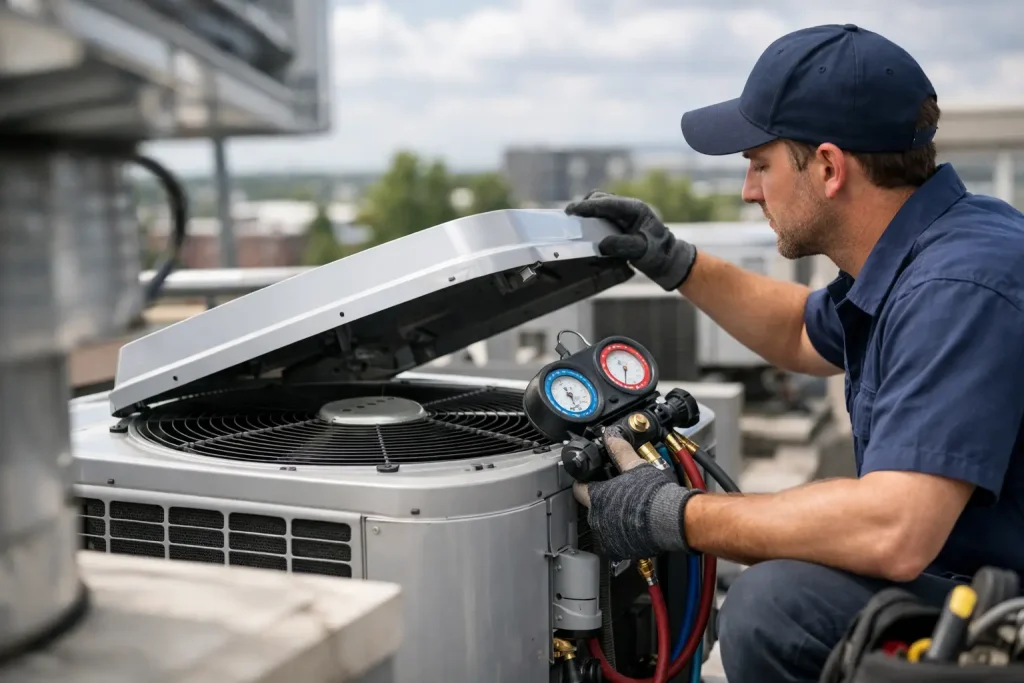
When your AC quits during a Modesto heat wave or your heater struggles on a cold morning, regular maintenance stops feeling optional. If you’re asking how often should HVAC be serviced, the short answer is twice a year for most homes and many small commercial properties – once before cooling season and once before heating season.
That schedule works because your HVAC system does two hard jobs under very different conditions. Your air conditioner gets pushed in long, hot stretches, while your furnace or heat pump has its own wear pattern when temperatures drop. Servicing both sides before peak use gives you the best chance of catching small issues before they turn into expensive repairs, comfort problems, or emergency calls.
How Often Should HVAC Be Serviced for Most Properties?
For most homeowners, one spring AC tune-up and one fall heating tune-up is the safest and most cost-effective plan. That twice-yearly schedule gives a technician time to inspect electrical components, test system performance, clean critical parts, check refrigerant levels when needed, and spot wear before the system is under real stress.
For property managers and small business owners, the same rule usually applies, but usage matters more. If the system runs longer hours, serves multiple occupants, or supports equipment that generates extra heat, it may need more attention. A small retail space, office, or rental property with heavy seasonal use can benefit from more frequent filter changes and periodic checkups between major tune-ups.
There are exceptions. A newer system in a mild-use property may seem fine with less service for a while. But “seems fine” is where people get caught off guard. HVAC problems often build slowly – weak airflow, dirty coils, a drifting thermostat, a worn capacitor – until the first really hot or cold day exposes them.
Why Twice-a-Year Service Usually Makes Sense
HVAC systems do not fail all at once. Most breakdowns start with strain, dirt buildup, neglected filters, or parts that have been weakening for months. Routine service is less about doing something dramatic and more about preventing the chain reaction.
A spring visit helps prepare the cooling system for summer demand. In Modesto and nearby areas, summer is not the time to find out your outdoor unit is clogged, your capacitor is fading, or your refrigerant charge is off. Those issues reduce efficiency first, then performance, then reliability.
A fall visit does the same for heating. Furnaces, heat pumps, and other heating systems need clean components, proper airflow, and safe operation checks before colder weather arrives. This is especially important for gas heating, where safety testing matters just as much as comfort.
There is also the energy side. A serviced system usually runs more efficiently than a neglected one. That does not mean every tune-up creates dramatic savings, but over time, clean and properly adjusted equipment generally works with less strain. Less strain often means lower utility bills and fewer surprise repairs.
It Depends on the System You Have
If you are wondering how often should HVAC be serviced in your specific situation, the type of equipment matters.
Central air conditioners and furnaces should typically be serviced once each season they are used most. If you have both, that means two visits a year.
Heat pumps usually deserve special attention because they handle both heating and cooling. Since they often run year-round, they can benefit from twice-yearly maintenance even more than traditional split systems. They simply do not get much downtime.
Ductless mini-splits also need routine care, especially if they run in multiple zones or stay on for long hours. Indoor heads collect dust faster than many owners realize, and reduced airflow can affect both comfort and efficiency.
Packaged rooftop or commercial light-duty units may need a tighter schedule depending on operating hours, occupancy, and indoor air quality demands. A business cannot always afford to wait for symptoms.
Signs Your HVAC System Needs Service Sooner
Even if you stay on a regular schedule, some issues should not wait until the next seasonal appointment. If your system is making unusual noises, cycling too often, blowing weak air, producing uneven temperatures, or causing a sudden jump in utility costs, it needs attention sooner.
Strange smells are another sign. A musty odor may point to moisture or buildup in the system. A burning smell can indicate electrical trouble. If heating equipment smells like gas, that is urgent and should be treated as a safety issue right away.
Poor airflow is one of the most common warning signs people ignore. Many assume the system is “still working,” but weak airflow often means the equipment is already under strain. That could be a filter issue, blower problem, coil buildup, duct restriction, or something more serious.
The same goes for frequent thermostat adjustments. If rooms never seem to feel right, or the system runs constantly without reaching the set temperature, maintenance or repair is likely overdue.
What Happens During HVAC Maintenance
A proper service visit is more than a quick glance at the unit. It should include inspection, cleaning, testing, and adjustments based on the equipment type and season.
For cooling service, a technician may inspect the condenser, clean coils, check electrical connections, test capacitors and contactors, inspect drains, examine blower performance, and confirm the system is cooling properly. Refrigerant is not something that should just “run low” without a reason, so if levels are off, that can point to a leak or another problem that needs diagnosis.
For heating service, the visit may include checking ignition components, burners, heat exchangers, safety controls, airflow, thermostat operation, and overall system performance. Gas systems also need attention to safe combustion and venting.
The exact checklist varies, but the goal is always the same – keep the system reliable, efficient, and safe before peak demand hits.
What if You Skip Service?
Some systems will keep running for a long time with little attention. That is true. But they usually do not run at their best, and the risk builds quietly.
Skipping service can lead to higher operating costs, more wear on major components, reduced indoor comfort, and a shorter equipment lifespan. It can also turn a minor fix into a bigger repair. Replacing a worn electrical part during maintenance is very different from dealing with a complete no-cool call in the middle of July.
There is also the warranty issue. Many manufacturers require documented professional maintenance to keep coverage valid. If a major part fails and there is no service history, that can become a frustrating and expensive surprise.
How Often Should HVAC Be Serviced in Modesto?
In a place like Modesto, HVAC systems often work harder than people expect. Long hot summers put serious strain on air conditioning equipment, and even if winters are shorter, heating systems still need to be ready when cold weather arrives.
That climate is one reason preventive service matters here. Dust, extended runtime, and high summer demand can wear down equipment faster than in milder areas. If your property has older equipment, uneven insulation, or heavy occupancy, a standard twice-a-year plan may still be the baseline, but filter checks and occasional mid-season attention can make a big difference.
For landlords and business owners, the stakes are even higher. A breakdown does not just affect comfort. It can affect tenants, staff, customers, and daily operations. Preventive maintenance helps reduce that risk.
The Smart Schedule for Homeowners and Business Owners
If you want the practical answer, schedule cooling maintenance in early spring and heating maintenance in early fall. Do not wait until the first triple-digit week or the first cold snap. By then, service demand is higher and small problems may already be turning into breakdowns.
Between visits, change filters on schedule, keep outdoor units clear of debris, pay attention to airflow changes, and do not ignore unusual sounds or rising energy bills. Those simple steps do not replace professional service, but they help your system perform better between appointments.
If your equipment is older, runs constantly, or has needed multiple repairs recently, ask whether a more frequent maintenance plan makes sense. Sometimes the right move is not just another repair – it is a clearer picture of the system’s condition so you can plan ahead instead of reacting under pressure.
For local property owners who want fewer surprises, faster performance checks, and a better shot at avoiding peak-season breakdowns, staying on schedule is the safest bet. YourK AC sees this every season: the systems that get serviced on time are usually the ones that keep people comfortable when the weather stops being forgiving.
A well-timed service visit will never feel as urgent as an HVAC emergency, and that is exactly the point.