
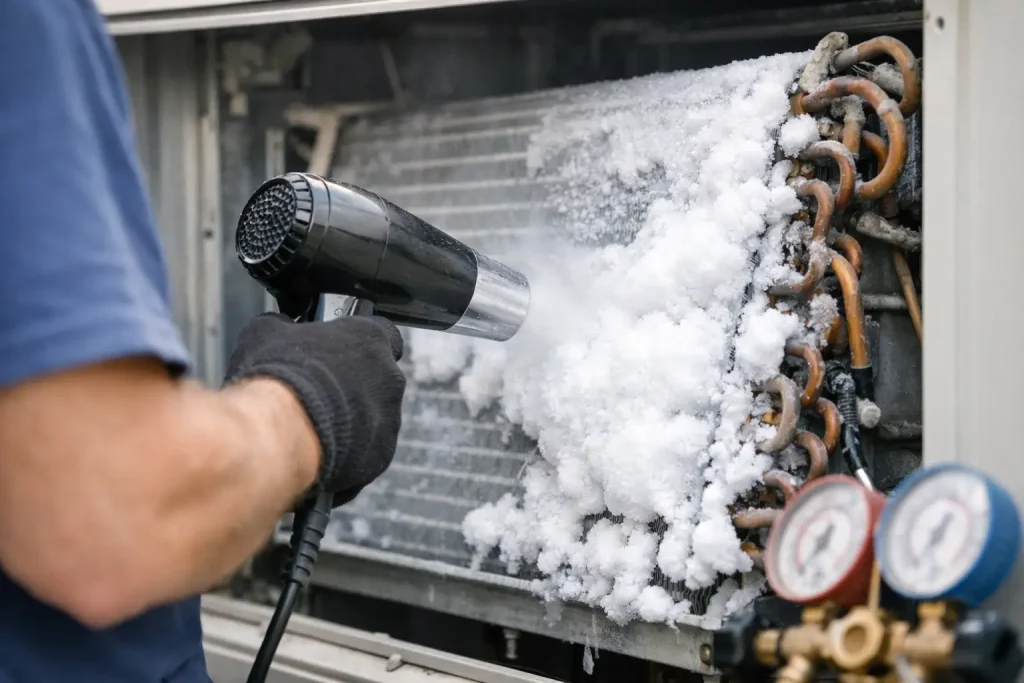
When your AC is running but the house keeps getting warmer, a frozen evaporator coil is often the reason. If you need to fix frozen evaporator coil issues fast, the first priority is simple – stop the system from making the problem worse and find out why the coil iced over in the first place.
A frozen coil is not just a minor airflow problem. It can shut down cooling, strain your compressor, cause water damage when the ice melts, and point to a larger issue inside the system. In Modesto heat, that is the kind of problem that goes from inconvenient to urgent very quickly.
Why an evaporator coil freezes
Your evaporator coil needs warm indoor air moving across it to do its job. When airflow drops too low, or when the refrigerant side of the system is off balance, the coil temperature can fall below freezing. Moisture in the air then turns to ice and keeps building.
In real homes and small commercial spaces, the most common cause is restricted airflow. A dirty air filter, blocked return vents, a clogged coil, or a blower problem can all reduce airflow enough to start freezing. Sometimes the issue is as simple as a neglected filter. Other times, the filter is only one part of a bigger problem.
Low refrigerant is another common cause. If the system has a leak and the refrigerant charge drops, pressure inside the coil changes and the coil can get too cold. That usually means this is not a do-it-yourself repair. Refrigerant problems need proper testing, repair, and recharge by a licensed HVAC technician.
It can also happen when the thermostat is set too low for too long, especially overnight, or when the system runs during cooler weather with underlying airflow issues already present. Dirty coils, damaged blower motors, collapsed ductwork, and closed supply or return vents can all contribute.
Signs you need to fix frozen evaporator coil problems
Sometimes the ice is obvious. Other times, homeowners notice the symptoms before they ever see frost.
You may have weak airflow from the vents, warm air coming through the registers, water dripping around the indoor unit, or an AC that runs constantly without cooling the space. You might also hear the system working harder than usual while comfort gets worse instead of better.
If you remove the access panel and see frost on the evaporator coil or refrigerant lines, that confirms it. But even without visible ice, the pattern matters. Poor cooling plus reduced airflow is a strong sign that the coil may be frozen.
First steps to fix frozen evaporator coil issues safely
The biggest mistake people make is letting the AC keep running. That usually adds more ice, more stress, and more delay before real cooling can be restored.
Turn off cooling right away
Set the thermostat from cool to off. If your thermostat allows it, switch the fan to on. That helps move room-temperature air across the coil and can speed up thawing.
Do not keep forcing the AC to run because you want the house cooler. If the coil is frozen, the system cannot cool properly anyway. Continuing to run it can damage expensive components.
Check the air filter
If the filter is dirty, replace it. This is the fastest and most affordable fix if airflow restriction is the main problem. Make sure you use the correct filter size and that it is installed in the proper direction.
A heavily clogged filter can absolutely freeze a coil. But if replacing it does not solve the issue, there may be a deeper airflow or refrigerant problem.
Open vents and inspect returns
Walk through the property and make sure supply vents are open and not blocked by furniture, rugs, or boxes. Check return grilles too. If airflow is being choked off in multiple rooms, the system may not be pulling enough air across the coil.
This is especially common in homes where vents were closed in unused rooms to try to save money. In many systems, that move backfires and creates pressure and airflow problems.
Give the coil time to thaw
Depending on how much ice has built up, thawing can take several hours. In some cases it takes most of the day. You may notice water around the air handler as the ice melts, so keep an eye on the drain area and use towels if needed.
Do not chip at the ice or use sharp tools. That can damage the coil fins or refrigerant lines and turn a repairable issue into a more expensive one.
When a frozen coil is not a DIY fix
There is a limit to what you should handle on your own. If you have changed the filter, opened vents, let the coil thaw completely, and the system freezes again after restarting, it is time for professional service.
Low refrigerant and leaks
If refrigerant is low, adding more without fixing the leak is only a temporary patch. The proper repair involves leak detection, sealing the leak if possible, pressure testing, and charging the system to manufacturer specifications.
This matters because an undercharged system does not just freeze up. It also runs inefficiently, cools poorly, and can shorten the life of major components.
Blower and airflow failures
A failing blower motor, bad capacitor, dirty evaporator coil, or damaged ductwork can all reduce airflow enough to cause icing. These are problems a technician can confirm with testing instead of guesswork.
This is where homeowners often lose time. The AC may thaw and briefly work again, which makes it seem fixed. Then it freezes a second time because the actual cause was never addressed.
Drain and moisture issues
A frozen coil often creates a secondary problem when the ice melts. If the condensate drain line is clogged or the drain pan is compromised, you can end up with water around the unit, ceiling stains, or moisture damage.
That is another reason quick action matters. The frozen coil is one issue. What happens after it thaws can become another repair.
How technicians fix frozen evaporator coil problems
A professional visit should do more than melt the ice and restart the system. The goal is to find the root cause and correct it.
In most cases, the technician will inspect filter condition, blower operation, evaporator coil cleanliness, duct airflow, thermostat performance, refrigerant pressure, and the condensate system. That process helps separate a basic maintenance issue from a more serious mechanical or refrigerant problem.
The repair might be straightforward, such as replacing a failed blower component or cleaning a heavily impacted coil. In other cases, it may involve refrigerant leak repair or recommending system replacement if the equipment is older and the repair cost no longer makes sense.
That last part depends on age, condition, and efficiency. If the unit is relatively new, repair is often the smart move. If it is older, leaking refrigerant, and already struggling through Modesto summers, replacement may be the more dependable long-term choice.
How to prevent the coil from freezing again
The best way to avoid another frozen coil is consistent maintenance. Filters should be checked regularly, not just when the system starts acting up. Vents should stay open, return airflow should remain unobstructed, and routine AC tune-ups should catch coil, blower, and refrigerant issues before they turn into a breakdown.
It also helps to avoid extreme thermostat settings. Setting the AC drastically lower does not cool the house faster. It just keeps the system running longer, which can expose airflow or refrigerant problems more quickly.
If your AC has frozen more than once, that is not normal wear. It is a warning sign. Repeated icing means there is an unresolved issue that needs attention before it leads to a bigger repair.
When to call for fast AC service
If your home or business is already getting hot, waiting too long usually costs more in comfort and in repair risk. Call for service if the coil freezes again after thawing, if airflow is still weak after changing the filter, if you hear unusual noises from the indoor unit, or if you suspect a refrigerant problem.
For property managers and business owners, the timeline matters even more. A frozen coil can affect tenants, customers, equipment, and indoor air quality all at once. Fast diagnosis keeps a small issue from disrupting the whole property.
At YourK AC, this is the kind of problem we take seriously because it rarely fixes itself. The right repair is not just about getting cold air back today. It is about making sure the system can keep up tomorrow, next week, and through the next stretch of valley heat.
If your evaporator coil is frozen, act early. Shut the cooling off, let the system thaw, check the basics, and if the problem comes back, bring in a qualified HVAC technician before a frustrating AC issue turns into compressor damage or a full system failure.