
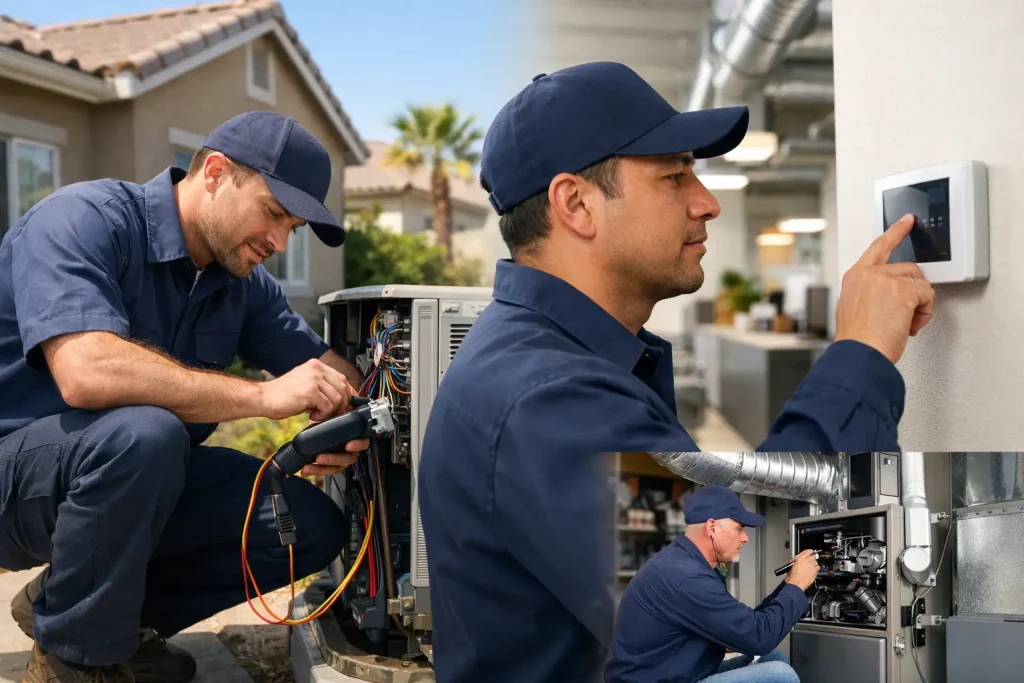
Your air conditioner starts, runs for a few minutes, shuts off, then starts again before the house feels comfortable. If you are wondering why HVAC keeps cycling, you are right to pay attention. Frequent on-and-off operation, often called short cycling, can raise energy use, leave rooms uncomfortable, and put unnecessary strain on expensive equipment.
A system will always cycle on and off during normal operation. The concern is when those cycles become unusually short or frequent. In Modesto heat, that pattern can quickly turn from an annoyance into a no-cooling call. The right fix depends on what is causing the system to stop early, which is why a professional inspection is often the fastest path back to dependable comfort.
What Counts as HVAC Short Cycling?
Most cooling systems run long enough to lower the indoor temperature gradually before shutting down. On a hot day, a properly operating AC may run for 10 to 20 minutes or longer, depending on insulation, thermostat settings, outdoor conditions, and the size of the home.
Short cycling is different. The equipment may run for only a few minutes, stop, and restart repeatedly. You may also notice that the thermostat never reaches its setting, some rooms stay warm, or your utility bill rises without a clear reason.
One isolated short cycle does not always mean something is wrong. For example, a system may cycle more often during mild weather when there is less cooling demand. But repeated short cycles, especially during peak heat or when comfort is suffering, deserve attention.
Why HVAC Keeps Cycling: Common Causes
A dirty air filter is restricting airflow
A clogged filter is one of the simplest and most common reasons for cycling problems. Your HVAC system needs steady airflow to move cooled or heated air through the property. When a filter is packed with dust, pet hair, or debris, the system can overheat, freeze up, or trigger a safety control that shuts it down early.
Check the filter according to the manufacturer’s recommendations and replace it when it is visibly dirty. This is a safe homeowner maintenance task that can protect both comfort and equipment performance. If a clean filter does not improve the problem, there is likely another issue involved.
The thermostat is reading the wrong conditions
Your thermostat tells the system when to run and when to stop. If it is placed near a sunny window, supply vent, kitchen, or heat-producing appliance, it may sense a temperature that does not reflect the rest of the building. It can then shut the HVAC system off too soon or call for cooling again too quickly.
A failing thermostat, loose connection, weak battery, or incorrect setting can cause similar behavior. Thermostat problems can look like an AC or furnace failure, so accurate diagnosis matters before replacing parts.
Refrigerant levels or cooling components need service
Low refrigerant can keep an air conditioner from removing heat effectively. In some cases, the indoor coil may become too cold and freeze, reducing airflow and causing the system to cycle off. Refrigerant does not get used up under normal conditions, so low levels can point to a leak that needs professional repair.
Other cooling-side issues, including a dirty evaporator coil, a failing blower component, or a problem with the outdoor unit, can also interrupt the cooling cycle. These issues are not good candidates for guesswork. A certified HVAC technician can test the system safely, find the source of the problem, and recommend the repair that makes sense for your equipment.
The system may be oversized for the space
Bigger is not always better with heating and cooling equipment. An oversized system can cool the air too quickly, satisfy the thermostat before it has properly conditioned the home, and shut down early. It then restarts as temperatures shift again.
This is especially common after a replacement when equipment sizing was based only on the old unit rather than the property’s layout, insulation, window exposure, occupancy, and airflow needs. Short cycling caused by oversizing may require adjustments or a larger conversation about system design. The best solution depends on the age and condition of the equipment.
Blocked vents or ductwork issues are affecting airflow
Closed supply vents, blocked return grilles, damaged ducts, and airflow imbalances can all make the system work harder than it should. Restriction can lead to overheating in heating mode or coil freezing in cooling mode. Either condition may activate safety controls and stop the system.
Before scheduling service, make sure furniture, rugs, and stored items are not covering return vents. Keep supply vents open unless an HVAC professional has advised otherwise. If the issue continues, the duct system and equipment should be checked together.
Safety controls are doing their job
Modern HVAC systems use safety switches to prevent damage when they detect unsafe conditions. A furnace may shut down because of overheating. An AC may stop because of drainage trouble, pressure problems, electrical component failures, or a frozen coil.
The system stopping may be protecting itself, but repeated shutdowns are not a repair. If you hear unusual clicking, buzzing, grinding, smell burning odors, see ice on refrigerant lines, or notice water around the indoor unit, turn the system off and contact a qualified technician promptly.
What You Can Check Before Calling for Service
There are a few basic checks that may help rule out a simple issue without taking apart equipment. Confirm that the thermostat is set to the correct mode and temperature. Replace a dirty filter if needed, make sure vents and returns are clear, and check whether the outdoor unit has obvious leaves or debris around it.
Also pay attention to the pattern. Does the system cycle only in the afternoon? Does it happen in cooling mode, heating mode, or both? Is there weak airflow, warm air from the vents, ice, water, or unusual noise? These details help a technician diagnose the issue more efficiently.
Avoid repeatedly resetting breakers, bypassing safety switches, opening sealed equipment, or adding refrigerant. Those actions can create a bigger problem, damage components, or put you at risk. HVAC short cycling has multiple possible causes, and the symptoms can overlap.
When Short Cycling Becomes Urgent
Call for professional HVAC service soon if your system will not maintain the set temperature, cycles every few minutes, trips a breaker, produces a burning smell, leaks water, or has ice on the indoor or outdoor lines. For businesses, frequent cycling can also affect employees, customers, equipment, and inventory, so waiting can carry a real operational cost.
In extreme summer heat, a system that is short cycling may still be running enough to make it seem like it can hold on. That can change quickly. Addressing the problem early may help prevent a complete breakdown and reduce the chance of more extensive equipment damage.
YourK AC provides residential and commercial heating and cooling service for Modesto-area properties, including urgent HVAC problems that cannot wait for regular business hours. A trained technician can determine whether the issue is a maintenance need, a repair, a thermostat problem, or a system-sizing concern, then explain the practical next step clearly.
Preventing HVAC Cycling Problems
Routine maintenance is the best defense against many short-cycling causes. Seasonal service gives a technician the chance to inspect filters, electrical connections, coils, drainage, airflow, refrigerant performance, and safety controls before a small issue disrupts your comfort.
Maintenance cannot prevent every repair, especially in aging systems, but it helps reveal warning signs early. If your HVAC unit has been cycling more often than usual, do not wait for the next hot afternoon to see whether it gets worse. A timely service visit can help protect your comfort, your energy budget, and the equipment your property depends on.