
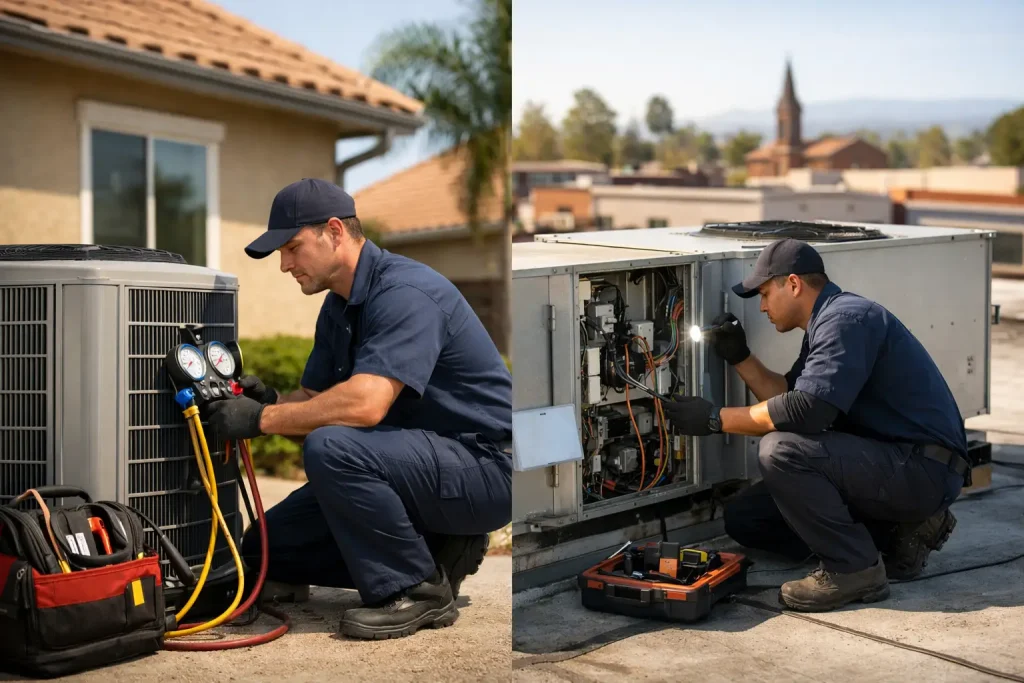
When your air conditioner stops in the middle of a Modesto heat wave or your furnace goes out on a cold night, waiting for regular business hours is not always realistic. Emergency HVAC repair Modesto homeowners and businesses need is about more than restoring temperature. It is about protecting your family, tenants, employees, equipment, and property from a problem that can quickly become more serious.
A sudden HVAC breakdown is stressful, but you do not have to guess what comes next. Knowing which warning signs require immediate service, what you can safely do while waiting, and what to expect from a qualified technician can help you act with confidence.
When an HVAC Problem Is an Emergency
Not every heating or cooling issue needs an overnight visit. A system that is running but not quite keeping up may be able to wait for a scheduled appointment, depending on the weather and who is in the building. But certain problems deserve prompt professional attention.
Loss of cooling during extreme summer temperatures can become urgent fast, especially for homes with young children, older adults, pets, or anyone with a health condition affected by heat. The same applies when a furnace fails during cold weather, particularly in occupied rental properties or commercial spaces that need to remain safe and usable.
Call for emergency service if your HVAC system will not turn on, repeatedly trips off, blows hot air when it should cool, blows cold air when it should heat, or creates conditions that make the property unsafe. Strong burning smells, smoke, sparking, water leaking around the equipment, loud grinding noises, and unusual odors should never be ignored.
If you smell gas or a carbon monoxide alarm goes off, leave the building right away and contact the appropriate emergency utility or public safety resource. Do not try to restart the furnace or locate the source yourself. Once the immediate safety concern has been addressed, an HVAC professional can inspect the system and determine what repairs are needed.
What to Do Before Emergency HVAC Repair Arrives
The goal is to stay safe, prevent additional damage, and give the technician useful information. Start by turning the system off if it is making alarming noises, producing smoke, emitting a burning odor, or leaking heavily. Continuing to run a failing unit can turn a repairable issue into a larger equipment problem.
If the system is simply not responding, check that the thermostat is set to the correct mode and temperature. You can also confirm that the thermostat has power and that the area around the indoor and outdoor equipment is clear. These basic observations help rule out simple operating issues without attempting a repair.
For water around an indoor unit, move valuables away from the area and use towels or a container to limit minor water spread if it is safe to do so. Do not open panels, handle wiring, add refrigerant, or attempt to repair gas, electrical, or mechanical components. Those problems require a trained technician and the right diagnostic equipment.
When you call, be ready to describe what the system is doing, when the problem started, any sounds or smells you noticed, and whether the unit has been repaired recently. If you manage a business or rental property, let the dispatcher know whether customers, tenants, or critical equipment are being affected. Clear details help the service team prepare for the visit.
Common Reasons Heating and Cooling Systems Fail Suddenly
HVAC equipment often gives warning signs before it shuts down completely, but those signs can be easy to miss during a busy week. A clogged air filter can restrict airflow and put strain on the system. A failing capacitor, worn blower motor, thermostat malfunction, refrigerant issue, ignition problem, or condensate drainage blockage can also bring heating or cooling to a stop.
Summer demand places particular pressure on air conditioners in Modesto. A unit that has been running hard for days may expose a weak electrical component or airflow problem at the worst possible moment. Older systems can be more vulnerable, though even newer equipment can fail if maintenance has been missed or a component is defective.
Furnaces have their own failure points. Ignition and flame-sensing components, safety switches, blower motors, and control boards all need to operate properly for safe, reliable heat. The right fix depends on the actual cause. A trustworthy technician should diagnose the problem first, explain the findings in plain language, and discuss practical repair options before moving forward.
Emergency HVAC Repair in Modesto for Homes and Businesses
A home without cooling can become uncomfortable quickly. A business without climate control can lose productivity, disrupt customers, and create an unpleasant environment for staff. Property managers face another layer of pressure when tenants need a response outside regular hours.
That is why emergency service should be built around communication as well as technical skill. You need to know that someone will answer, assess the situation, and send a qualified professional prepared to troubleshoot the equipment. Fast response matters, but accurate diagnosis matters too. Replacing parts without identifying the root cause can lead to repeat breakdowns and unnecessary expense.
YourK AC provides 24/7 emergency HVAC service for residential and commercial customers who need dependable help when their system cannot wait. Certified technicians can inspect the issue, explain what is happening, and focus on restoring safe, effective operation with a solution that fits the property and the equipment.
Repair or Replacement: How to Make the Right Call
An emergency does not automatically mean you need a new HVAC system. Many unexpected breakdowns can be repaired, even on older equipment. A technician should consider the condition of the unit, the failed component, repair history, energy performance, and whether the system can be restored safely and reliably.
Replacement may make more sense when repairs are becoming frequent, a major component has failed, the system is near the end of its expected service life, or the equipment is no longer delivering dependable comfort. It can also be worth considering when an outdated unit drives high energy use or struggles to cool or heat the property evenly.
There is a real trade-off. Repairing a system may be the right short-term decision when the issue is isolated and the rest of the equipment is in good shape. Replacing it can be the better long-term choice when repeated repairs are adding up. The best decision is based on clear information, not pressure during a stressful moment.
Preventing the Next After-Hours Breakdown
No maintenance plan can prevent every emergency, but routine service can reduce the risk of a surprise failure. Seasonal inspections give technicians a chance to check system operation, airflow, electrical components, safety controls, drainage, and signs of wear before extreme weather puts the equipment under maximum demand.
Regular filter changes also matter. A clean filter supports airflow, helps protect internal components, and can improve comfort throughout the property. If some rooms are consistently too hot or too cold, or if utility bills rise without a clear reason, schedule service before the system stops altogether.
For business owners and property managers, keeping a record of past service, equipment age, and recurring issues makes future decisions easier. It also helps you act early when a system begins to show patterns of decline rather than waiting for a failure during peak demand.
Get Help When Comfort Cannot Wait
HVAC emergencies rarely happen at a convenient time. The right response is to protect safety first, turn off equipment that appears dangerous, and contact a local team that can diagnose the issue without delay. Whether it is a failing AC on a hot afternoon or a furnace that will not start overnight, prompt professional attention can protect your comfort and help prevent a small problem from becoming a bigger disruption.
When your system sends a warning sign, trust it. A timely service call is often the simplest way to get back to a safe, comfortable home or business.