
A warm sales floor, a stuffy office, or a kitchen that cannot hold a safe working temperature can disrupt business fast. Commercial air conditioning service is not just about making a building feel better. It protects employee comfort, customer experience, equipment performance, and the daily operations that keep your business moving.
For Modesto businesses, air conditioning problems often show up when the system is working its hardest. Waiting until the unit stops completely can turn a manageable repair into an urgent interruption. A prompt professional inspection gives you clear answers, practical options, and a path back to reliable cooling.
Why Commercial Cooling Problems Need Fast Attention
A commercial HVAC system supports more people, more square footage, and often more demanding operating hours than a typical home system. When cooling starts to slip, the effects can spread beyond one uncomfortable room. Employees may struggle to focus, customers may leave early, and heat-sensitive inventory or equipment may be put at risk.
The warning signs are not always dramatic. You may notice rooms that cool unevenly, rising utility bills, weak airflow, unusual noises, frequent cycling, or a thermostat that never seems to reach the set temperature. Water around an indoor unit, musty odors from vents, and a system that starts and stops repeatedly also deserve attention.
These issues can have several causes. A clogged filter may restrict airflow, while a worn blower component, refrigerant concern, thermostat issue, dirty coil, or electrical fault may require professional diagnosis. The right repair depends on what is actually happening inside the system. Replacing parts without identifying the cause can waste time and money.
What Commercial Air Conditioning Service Should Include
A dependable service visit starts with listening. Your technician should understand what you are seeing, when the issue began, which areas are affected, and whether the system has had recent repairs or maintenance. That context helps narrow down the problem without guesswork.
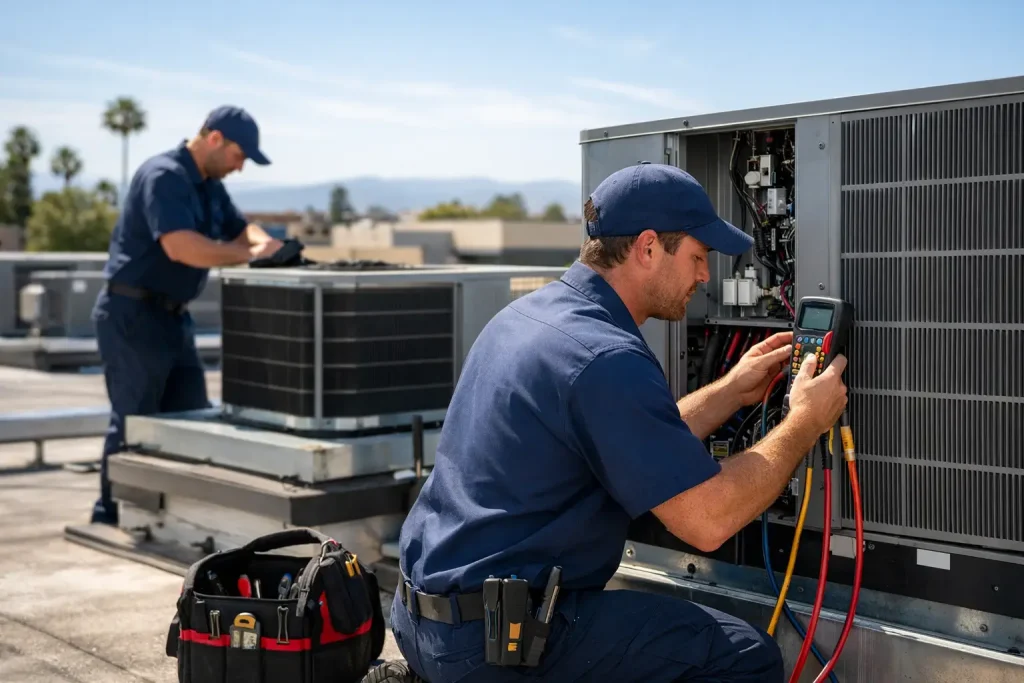
From there, a qualified technician can inspect the equipment, test system operation, check airflow, evaluate electrical components, examine key cooling parts, and look for signs of wear or leakage. After the diagnosis, you should receive a straightforward explanation of the issue and the recommended next steps before work moves forward.
Commercial air conditioning service may involve a targeted repair, a system adjustment, routine maintenance, or a discussion about replacement when an aging unit is no longer a practical fit. The goal is not to push the largest project. It is to restore dependable performance with a solution that makes sense for your property, usage, and budget.
Repair, Maintenance, or Replacement?
The best choice depends on the condition of your equipment and the type of problem involved. A newer system with a repairable component may be a strong candidate for repair. If the unit is generally sound and has been maintained, a focused fix can restore performance and extend its useful life.
Maintenance is the right move when the system is operating but showing early signs of strain. Cleaning, testing, and adjusting the equipment can help catch minor problems before they affect comfort or lead to a shutdown during a busy day.
Replacement may deserve consideration when repairs are becoming frequent, cooling is inconsistent throughout the building, or the system no longer operates efficiently enough for your needs. A properly sized, energy-efficient replacement can improve comfort and reduce operating strain, but bigger is not automatically better. The equipment must be selected for the building layout, occupancy, insulation, operating schedule, and cooling demands.
Maintenance Is a Business Continuity Plan
Many businesses call for help only after the AC stops cooling. Emergency service matters in that moment, especially during extreme heat, but planned maintenance gives you more control over the situation. It helps identify loose connections, airflow restrictions, dirty components, drainage concerns, and worn parts before they create a larger problem.
For a retail shop, that can mean avoiding a hot, uncomfortable customer area during peak hours. For an office, it can help keep staff productive through long summer afternoons. For a property manager, regular service can reduce surprise tenant calls and make it easier to plan repairs around occupancy.
A maintenance schedule should fit how your building operates. A small office with standard weekday hours may have different needs than a restaurant, warehouse, salon, medical office, or multi-tenant commercial property. Systems that run longer hours or face heavier demand generally benefit from more frequent attention.
Between professional visits, your team can help by keeping vents unobstructed, reporting odd sounds or temperature swings early, and replacing accessible filters according to the system’s needs. Those simple habits support airflow, but they do not replace a trained inspection of the equipment.
How to Respond When Your AC Fails During Business Hours
If your commercial system stops cooling, start by noting what changed. Is the issue affecting the full building or one zone? Are any error messages displayed? Is there water near the unit, a burning smell, loud mechanical noise, or no airflow at all? This information helps the service team arrive prepared.
Do not keep resetting breakers, opening equipment panels, or attempting repairs that should be handled by a licensed technician. If you notice an electrical smell, smoke, or other immediate safety concern, turn the system off if it is safe to do so and contact a qualified HVAC professional right away.
For less urgent failures, reducing heat load can help your building stay more comfortable while service is on the way. Close blinds where afternoon sun is strongest, keep exterior doors closed as much as practical, and move staff or customers away from the hottest affected area when possible. These are temporary measures, not a substitute for repair.
A local company with 24/7 emergency HVAC availability can be especially valuable when a breakdown happens after normal business hours or before a busy shift. Fast response matters, but honest diagnosis matters just as much. You need to know what failed, what needs attention now, and what can be planned for later.
Choosing a Commercial HVAC Partner
Commercial properties benefit from a service provider that understands both the equipment and the pressure of keeping a business open. Look for certified technicians, clear communication, transparent recommendations, and a company that treats your time and property with respect.
Ask whether the technician can explain the problem in plain language and whether the proposed work addresses the cause rather than only the symptom. You should also feel comfortable asking about maintenance options, expected system performance, and whether a repair is likely to be a short-term measure or a sound long-term decision.
For businesses in Modesto and surrounding communities, YourK AC provides commercial heating and cooling support with responsive service, practical recommendations, and around-the-clock help when an HVAC issue cannot wait. Whether your system needs a focused repair, regular maintenance, or replacement planning, the priority is restoring a comfortable, dependable environment for the people who rely on your building.
Keep Small Problems From Taking Over the Day
The best time to schedule service is often when your system is still running, but something feels off. A new rattle, warmer rooms near closing time, reduced airflow, or an unexplained utility increase can be the early signal that your equipment needs attention.
Addressing that signal early gives you more options than waiting for a full shutdown. It also helps protect the comfort and confidence of the employees, tenants, and customers who count on your business every day.