A heater rarely chooses a convenient time to fail. It often starts with a strange sound before bed, rooms that never warm up, or a furnace that runs constantly without making the house comfortable. When you need heating repair Modesto homeowners can depend on, recognizing the difference between a minor comfort issue and a problem that needs professional attention can help you act before a cold night becomes a no-heat emergency.
When a Heating Problem Needs a Service Call
Some heating concerns have a simple explanation. A thermostat may be set incorrectly, an air filter may be overdue for replacement, or a tripped breaker may have interrupted power to the system. Those are reasonable things to check before calling.
But if your system still will not heat properly after those basic checks, it is time to bring in an HVAC professional. Furnaces and heat pumps rely on electrical components, controls, fuel connections, safety switches, and ventilation systems that should be diagnosed by a trained technician. Guessing at the cause can delay the real repair or create a safety risk.
Call for service when your heater will not turn on, blows cool air, shuts down shortly after starting, makes persistent unusual noises, or leaves parts of the building noticeably colder than others. Property managers should also take repeat tenant complaints seriously. A heating system that is struggling may still operate, but it is unlikely to become more reliable by being ignored.
Warning Signs You Should Not Wait On
A complete breakdown is obvious. The earlier warning signs are easier to dismiss, especially when the heater still produces some warm air. Paying attention to them can help prevent more disruption later.
Watch for these signs:
- The furnace cycles on and off repeatedly without reaching the thermostat setting.
- Energy bills rise unexpectedly even though your heating habits have not changed.
- Airflow from supply vents is weak, uneven, or cooler than normal.
- You hear banging, grinding, squealing, rattling, or repeated clicking during operation.
- The system produces unfamiliar odors that do not go away after the first seasonal use.
- Your thermostat setting and the actual indoor temperature do not match.
A single symptom does not always point to one specific failed part. Weak airflow, for example, can stem from a dirty filter, a blower issue, duct restrictions, or another system problem. That is why a proper inspection matters. The goal is not just to get heat moving again, but to identify why the system stopped working as it should.
Treat Safety Concerns Differently
If you smell gas, hear a hissing sound near a gas line, see signs of soot around heating equipment, or a carbon monoxide alarm goes off, leave the building if needed and follow the safety directions provided by your utility company or local emergency services. Do not try to restart the equipment or locate the source yourself.
Once the immediate safety situation has been addressed, an HVAC technician can inspect the heating system and determine whether a repair is appropriate. Carbon monoxide is colorless and odorless, which is one reason working carbon monoxide alarms are essential in homes and occupied properties with fuel-burning equipment.
Why a Furnace Blows Cold Air
Cold air from the vents is one of the most frustrating heating problems because the system may sound like it is operating normally. Sometimes the answer is simple: the thermostat fan setting is set to “On” rather than “Auto,” so the blower keeps circulating air between heating cycles. Changing that setting may resolve the issue.
If the fan setting is correct, the cause may be more involved. A furnace may be overheating and shutting off the burners as a safety response. A clogged filter can contribute to restricted airflow and overheating. A problem with the ignition system, flame sensor, blower motor, control board, or fuel supply can also leave you with cool air instead of reliable heat.
Heat pumps have their own set of possibilities. During colder weather, they periodically enter a defrost cycle, which can briefly change what you feel at the vents. If cool air continues for long periods, however, the system may need professional diagnosis.
The trade-off is straightforward: waiting may seem easier when the system provides occasional heat, but intermittent problems can turn into a full shutdown at the least convenient time. Prompt service gives you a clearer answer and a chance to address the issue before comfort disappears completely.
What to Expect During Heating Repair in Modesto
A good service visit should feel clear, not confusing. The technician should begin by listening to what you have noticed: when the issue began, whether it happens every cycle, changes in thermostat behavior, unusual sounds, and any recent maintenance or filter changes.
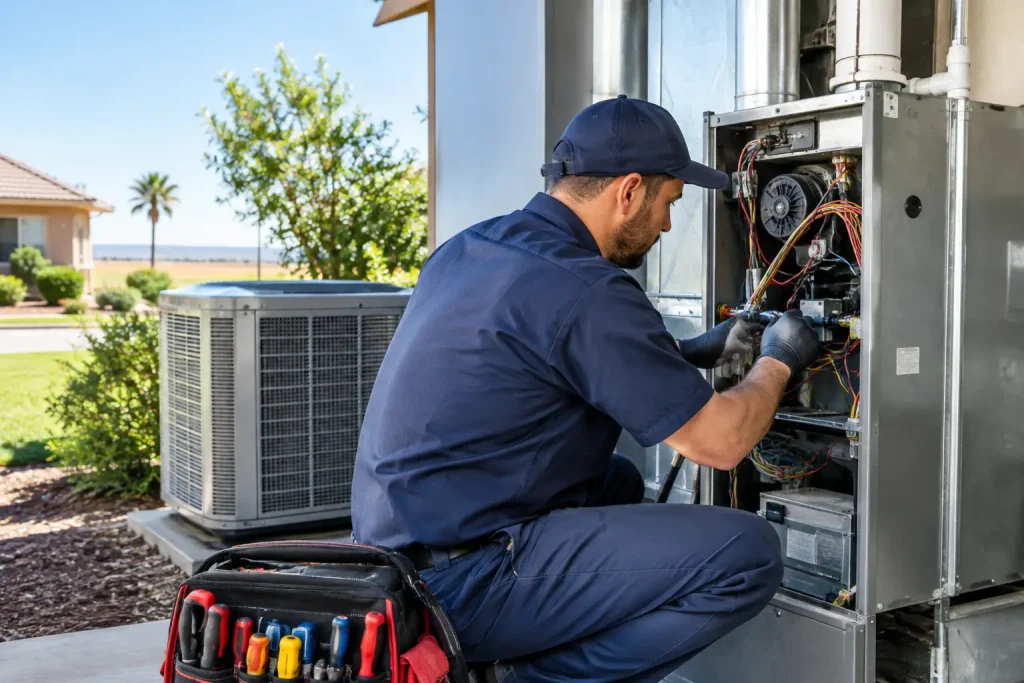
From there, the inspection may include checking the thermostat, electrical connections, airflow, filter condition, safety controls, ignition sequence, blower operation, and other components relevant to your specific equipment. The exact process depends on whether you have a gas furnace, electric furnace, heat pump, packaged unit, or another heating setup.
After identifying the issue, you should receive an explanation of the recommended repair before work moves forward. Ask what caused the failure, whether the repair addresses the underlying problem, and whether there are maintenance concerns worth planning for. Clear answers help homeowners and property managers make decisions based on the condition of the equipment rather than pressure or guesswork.
YourK AC provides heating support for homes and businesses in Modesto and nearby Stanislaus County communities, including urgent HVAC situations. If your heater has stopped working or is showing warning signs, call (209) 604-0405 to discuss the issue and schedule service.
Repair or Replacement: How to Think About the Decision
Not every heating problem means the system needs to be replaced. Many failures involve components that can be repaired, particularly when the equipment has otherwise been dependable and is maintained regularly. A professional inspection is the best starting point because the visible symptom does not tell the whole story.
Replacement may be worth considering when repairs are becoming frequent, the system has a history of inconsistent performance, or the equipment is nearing the end of its useful service life. Efficiency also matters. An older unit may still run, but it can cost more to operate and struggle to maintain even temperatures.
There is no universal age at which replacement automatically makes sense. The right choice depends on the nature of the repair, the overall condition of the system, the building’s comfort needs, and your plans for the property. For a rental property, reliability and tenant comfort may be the priority. For a long-term home, better efficiency and fewer future repairs may carry more weight.
Small Steps That Help Protect Your Heating System
Regular maintenance does not eliminate every repair, but it gives your system a better chance of operating safely and efficiently through the season. Replace filters on the schedule appropriate for your home and filter type, keep vents open and unobstructed, and keep the area around indoor heating equipment clear.
A seasonal professional maintenance visit can also catch wear, airflow concerns, and safety issues before they become a no-heat call. It is especially useful before colder weather arrives or for properties where heating equipment has been inconsistent in past seasons.
If your heater is making a new sound, failing to keep up, or leaving your family, tenants, or customers in the cold, trust the warning sign. Getting a clear diagnosis early is often the fastest path back to a comfortable, dependable space.