When your AC is running but the air feels warm, weak, or strangely inconsistent, the compressor may be part of the problem. Recognizing ac compressor failure symptoms early can help you avoid a complete loss of cooling during a Modesto heat wave and give a qualified technician a better chance to address the issue before damage spreads.
The compressor is often called the heart of an air conditioning system. It pressurizes and circulates refrigerant so your indoor unit can remove heat from the air. When it cannot do that job, your system may still turn on, but it will not cool your home or business properly.
8 AC Compressor Failure Symptoms to Watch For
1. Warm air is coming from the vents
Warm air is one of the clearest signs that something is wrong, especially when the thermostat is set correctly and the indoor fan is operating. A failing compressor may not be able to circulate refrigerant effectively, leaving the system unable to pull heat out of your indoor air.
That said, warm air does not automatically mean the compressor has failed. A refrigerant leak, frozen evaporator coil, electrical issue, or airflow restriction can create a similar problem. The right next step is a professional diagnosis, not assuming the most expensive repair is necessary.
2. Your AC takes much longer to cool the space
If your system eventually cools but runs far longer than it used to, the compressor may be losing efficiency. You might notice that the house feels comfortable only late at night, while the system struggles through the hottest part of the afternoon.
Long cooling cycles also put extra stress on other components. In a commercial property, this can mean uncomfortable employees or customers, uneven temperatures between rooms, and higher operating costs. Prompt service can identify whether the compressor is the cause or whether another repair can restore normal performance.
3. Loud noises start at the outdoor unit
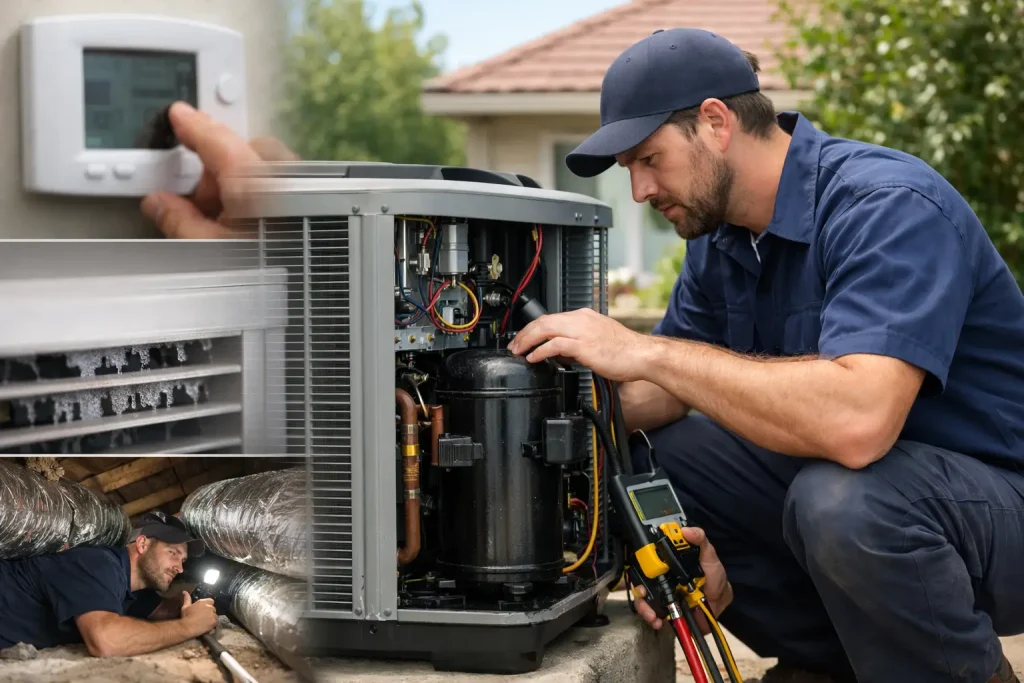
A healthy outdoor AC unit makes a steady operating sound. A compressor problem can create louder or more unusual noises, including rattling, banging, clanking, grinding, or a harsh humming sound.
Banging or clanking may point to loose internal compressor parts. A loud hum with no startup can be related to an electrical component, such as a capacitor or contactor. Because the outdoor unit contains moving parts, high-voltage components, and refrigerant lines, turn the system off if the sound is severe and schedule service rather than trying to inspect it yourself.
4. The outdoor unit shakes excessively when it starts
Some vibration is normal when an air conditioner starts and stops. Strong shaking, repeated hard jolts, or a unit that sounds like it is struggling to start is not normal. These signs can occur when the compressor is having trouble starting or when related electrical components are failing.
A hard-start condition can become more serious if the system keeps attempting to restart. Continued cycling may overheat the compressor and turn a repairable issue into a larger one. If you notice repeated startup struggles, avoid running the system continuously until it has been checked.
5. The circuit breaker trips repeatedly
An AC breaker that trips once may have responded to an isolated event. A breaker that trips again after you reset it needs attention. Compressor problems can cause a high electrical draw, particularly during startup, and that can trip the breaker as a safety measure.
Do not keep resetting the breaker to force the air conditioner to run. Repeated resets can create additional risk for the equipment and may mask the source of the problem. A trained HVAC technician can test the compressor and electrical components to find out why the system is drawing too much power.
6. You see leaking fluid or signs of refrigerant loss
Refrigerant does not get used up like fuel. If your system is low, there is usually a leak that needs to be located and repaired. Low refrigerant can force the compressor to work harder, reduce cooling capacity, and eventually contribute to compressor damage.
You may notice poor cooling, ice on refrigerant lines, a frozen indoor coil, or a hissing sound near the equipment. Water near the outdoor unit may simply be condensation, but any suspected refrigerant issue should be evaluated by a licensed HVAC professional. Refrigerant work requires proper equipment and handling procedures.
7. The outdoor fan runs, but the compressor does not
Sometimes the outdoor unit appears to be on because its fan is spinning, yet the home is not cooling. The compressor may not be starting, may be overheating, or may have shut down because of an electrical or safety issue.
This symptom is easy to misread from a distance. The fan motor, compressor, capacitor, control board, and wiring all play different roles in outdoor unit operation. Professional testing is the only reliable way to determine whether the compressor itself is damaged or another component is preventing it from running.
8. Your energy bills rise without a clear reason
A sudden jump in cooling costs can be one of the quieter ac compressor failure symptoms. When a compressor loses efficiency, it may need to run longer to produce less cooling. You may not notice a major comfort problem right away, but your utility bill often does.
Higher bills can also come from dirty coils, duct leaks, thermostat problems, poor insulation, or an aging system that no longer matches the building’s cooling needs. An HVAC inspection can separate a compressor concern from other efficiency issues and help you make a practical decision about repair or replacement.
What Causes an AC Compressor to Fail?
Compressor failures rarely happen without a reason. Refrigerant leaks, dirty condenser coils, blocked airflow, electrical failures, incorrect refrigerant charge, and normal wear can all place added strain on the system. In some cases, the compressor is the damaged part. In others, it is the final component affected by an underlying problem that needs to be corrected as well.
This matters because replacing a compressor without addressing the cause can lead to another breakdown. For example, if a system has a leak or a recurring electrical issue, that condition should be repaired before the equipment is put back into regular service.
Age also matters. On a newer system, a compressor repair may make sense if the rest of the equipment is in good condition. On an older system with frequent repairs, declining efficiency, or outdated refrigerant requirements, replacement may be the more dependable long-term option. A trustworthy technician should explain both paths clearly, including the condition of the whole system, rather than pushing a one-size-fits-all answer.
What to Do When You Suspect a Compressor Problem
Start with the safe, simple checks: confirm the thermostat is set to cool, make sure the air filter is not severely clogged, and look for an obviously tripped breaker. If the breaker trips again, the system makes loud mechanical noises, or the AC is blowing warm air during high heat, turn it off and arrange professional service.
Keeping a struggling AC running can increase damage, particularly if it is short cycling, overheating, or tripping the breaker. It can also leave you without cooling at the worst possible time. For homes and small businesses in Modesto, fast attention is especially valuable when outdoor temperatures climb and the system is under its heaviest demand.
A proper service visit should include checking electrical readings, refrigerant performance, airflow, coils, controls, and the compressor’s operating condition. That diagnostic process helps prevent guesswork and supports a repair recommendation based on what the system actually needs.
Protecting Your Compressor Before It Fails
Regular AC maintenance is one of the best ways to reduce avoidable compressor stress. Clean coils help the system release heat. Proper airflow helps prevent freezing and overheating. Electrical inspections can catch worn capacitors, loose connections, and other small problems before they interfere with startup.
Changing filters on schedule also matters more than many property owners realize. A clogged filter restricts airflow, makes the system work harder, and can contribute to coil issues that affect the entire cooling cycle. Maintenance cannot prevent every failure, but it can improve efficiency and reveal developing problems early.
If your AC is making new noises, blowing warm air, or repeatedly shutting down, do not wait for a total breakdown to get answers. YourK AC provides responsive HVAC service for Modesto-area homes and businesses, with experienced technicians who can identify the problem and explain the next step clearly. Acting early can protect your comfort, your equipment, and your peace of mind when you need cooling most.