
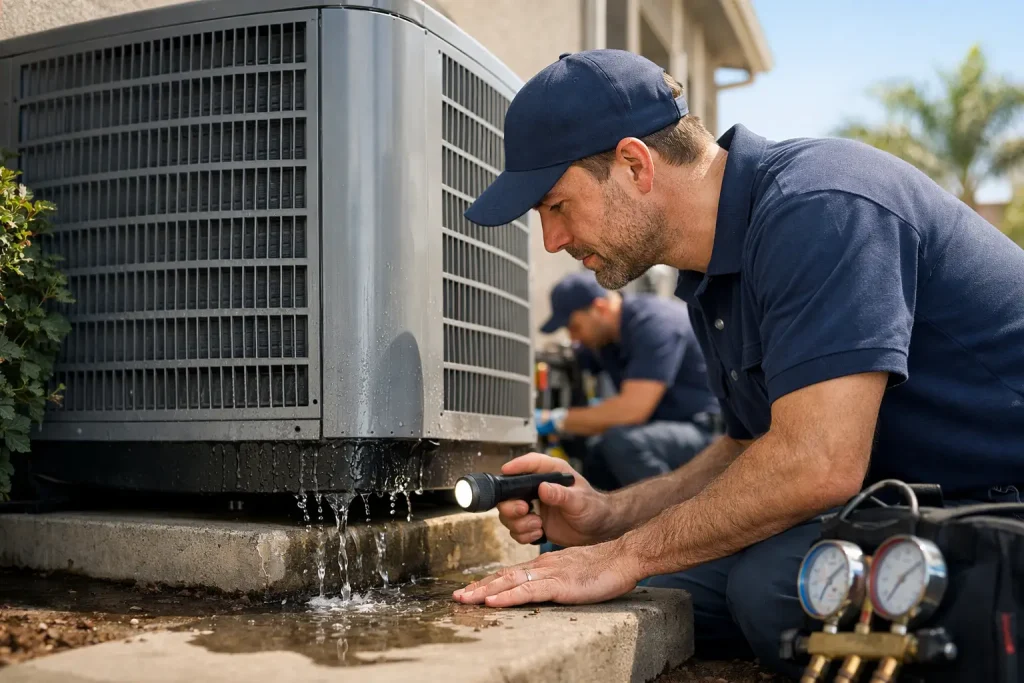
You spot water around the indoor unit, the floor feels damp, or there’s a steady drip where there definitely should not be one. If you’re asking, why is my AC leaking, the short answer is this: your air conditioner is either producing condensation it can’t drain properly, or something inside the system is frozen, blocked, damaged, or out of balance.
A leaking AC is easy to shrug off at first, especially if the system still seems to be cooling. But water around your unit is not a small issue for long. It can damage drywall, flooring, insulation, and ceilings, and it often points to a problem that can get worse fast in peak summer heat.
Why is my AC leaking inside the house?
In most homes and small commercial spaces, the indoor portion of the AC naturally pulls moisture from the air as it cools. That moisture is supposed to collect in a drain pan and move out through a condensate drain line. When everything is working correctly, you never notice it.
When you do notice water, it usually means one of a few common problems is happening. The drain line may be clogged, the drain pan may be cracked or rusted, the evaporator coil may be freezing up, or the system may have an airflow issue that creates excess condensation. Sometimes the cause is simple. Sometimes it’s a warning sign that your system needs professional repair.
The most common reasons an AC starts leaking
A clogged condensate drain line
This is one of the most frequent causes of indoor AC leaks. Over time, dust, dirt, algae, and debris can build up in the drain line. Once that line is blocked, the water has nowhere to go. Instead of draining outside, it backs up and spills around the indoor unit.
This kind of leak may seem minor at first. You might only notice a little moisture near the air handler or furnace closet. But if the blockage continues, the water can keep building until it causes visible damage.
A damaged or rusted drain pan
The drain pan is designed to catch condensation before it moves into the drain line. In an older system, that pan can corrode, crack, or shift out of position. When that happens, water escapes before it ever reaches the drain.
This is more common in aging AC systems and in units that have gone years without routine maintenance. If the pan is the issue, the fix depends on the condition of the part and the overall age of the system.
A dirty air filter causing a frozen coil
A restricted air filter can create a bigger problem than many people expect. When airflow is reduced, the evaporator coil can get too cold and freeze over. Then, when the ice melts, it can overwhelm the normal drainage process and create a leak.
This is one of those issues that starts with something small but leads to bigger performance problems. Along with water, you may notice weak airflow, uneven cooling, or an AC that runs longer than usual.
Low refrigerant levels
Low refrigerant can also cause the evaporator coil to freeze. Just like with an airflow problem, the ice eventually melts and creates excess water. If that’s the reason your AC is leaking, the water is only part of the problem.
Low refrigerant usually points to a leak or another system issue that needs professional attention. It also affects cooling performance and efficiency, so the system may be struggling in more ways than one.
A broken condensate pump
Some AC systems use a condensate pump to move water out, especially when gravity alone can’t do the job. If that pump fails, the water stays in the system instead of being discharged properly.
This is a more mechanical issue, and it tends to show up in systems installed in attics, basements, or certain commercial spaces. If the pump is not working, the leak typically continues until the part is repaired or replaced.
Poor installation or improper leveling
If an AC unit was installed incorrectly or is not level, water may not flow the way it should through the drain system. Instead, it can pool in the wrong area and spill out.
This is not the most common cause, but it does happen, especially with newer systems that start leaking sooner than expected. When installation issues are involved, the fix is less about cleaning and more about correcting how the system is set up.
Signs the leak is more serious than it looks
Not every AC leak means major repairs are ahead, but some warning signs should move it higher on your priority list. If the system is leaking and also blowing warm air, running constantly, shutting off unexpectedly, or making unusual noises, there’s a good chance the problem goes beyond a simple drain issue.
The same is true if you see ice on the refrigerant lines, notice a musty smell, or find repeated water buildup after you’ve changed the filter. Water is often the symptom people notice first, not the root cause.
That’s why it helps to look at the full picture instead of treating the leak as a one-off problem.
What you can check safely before calling
There are a few basic things property owners can look at without getting into risky or technical repairs. First, check the air filter. If it’s dirty, replace it with the correct size and type for your system. A clogged filter is a common trigger for frozen coils and poor airflow.
Next, turn the thermostat setting from cooling to off if you suspect the coil may be frozen. Letting the system rest can prevent additional strain while you wait for service. You can also look for obvious water around the indoor unit and move valuables or rugs away from the area to limit damage.
What you should not do is open up sealed system components, handle refrigerant-related parts, or assume that clearing visible water solves the cause. If the leak returns, there is still an underlying issue that needs attention.
When to call for AC repair
If the leak is ongoing, if the system is not cooling properly, or if water is reaching walls, ceilings, or flooring, it’s time to call for professional service. The same goes for any sign of ice, electrical concerns near the unit, or repeated leaking after a filter change.
An AC leak can look simple from the outside, but the source is not always obvious. A technician can inspect the drain line, coil, refrigerant levels, pump, pan, and airflow conditions to find out what’s actually causing the water. That matters because the right repair depends on the real failure point.
For homeowners and property managers, speed matters here. The longer the leak continues, the more likely it is to create secondary damage and higher repair needs.
Why maintenance helps prevent AC leaks
Many leaks start with buildup, wear, or performance issues that develop slowly over time. Routine maintenance helps catch those problems before they turn into water damage or a no-cooling call on a hot day.
A proper maintenance visit can uncover a partially clogged drain line, a worn drain pan, weak airflow, dirty coils, or early refrigerant issues before they push the system into failure. It also gives you a better sense of whether your current unit is in solid shape or starting to show its age.
That doesn’t mean maintenance prevents every repair. Parts still wear out, and older systems can still develop problems. But it does reduce surprises, and that’s valuable when you rely on your AC every day.
Why is my AC leaking if it still works?
This is a common question, and the answer is that cooling and draining are related but not identical. Your AC can still lower the temperature while struggling with condensation management, airflow, or a developing mechanical issue.
In other words, a leaking unit is not something to ignore just because cold air is still coming out of the vents. The system may be in the early stage of a larger problem. Acting early often means a simpler repair and less disruption.
If you’re in Modesto and dealing with an AC leak, getting it checked before the next heat wave is the smart move. Water around your system is your warning sign – and the sooner the cause is identified, the easier it is to protect your comfort and your property.