
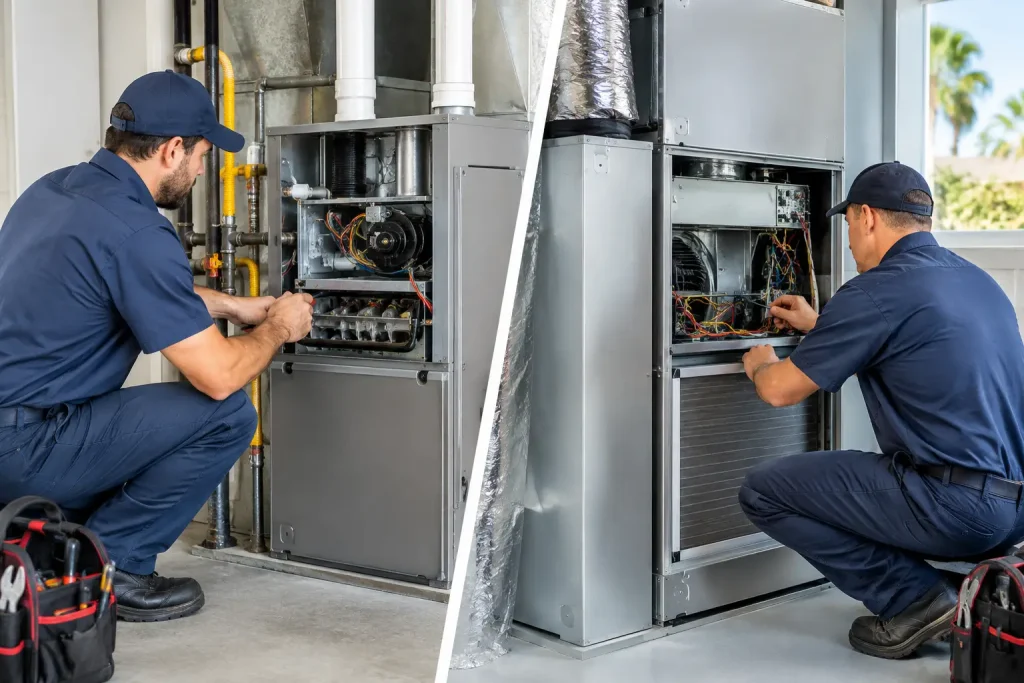
A furnace replacement is not a decision most property owners make on a calm, convenient day. It often comes after uneven heat, repeated repairs, or a system that quits when the weather turns cold. When weighing a gas furnace versus electric furnace, the right choice depends less on a universal winner and more on your home, utility setup, comfort expectations, and long-term plans.
For many homes in Modesto and nearby communities, an existing gas connection makes a new gas furnace the familiar path. But electric heat can make sense in specific situations, especially when a property has no gas service or is being updated around an all-electric plan. Knowing where each option performs well can prevent a rushed replacement decision.
Gas Furnace Versus Electric Furnace: The Core Difference
Both systems use a blower to move heated air through your ductwork. The difference is how they create that heat. A gas furnace burns natural gas inside a sealed combustion chamber and transfers heat to the air circulating through the home. An electric furnace uses electric heating elements, similar in principle to a large-scale version of the heating coils found in some appliances.
Gas furnaces generally deliver hotter air at the supply vents. That can make them feel faster and more forceful on cold mornings, particularly in homes with heat loss from older windows, limited insulation, or leaky ductwork. Electric furnaces produce steady heat, but the air may not feel as hot as air from a gas system.
Neither approach can overcome an incorrectly sized unit or neglected ductwork. A furnace that is too large can short-cycle, while one that is too small may run constantly and still struggle to keep rooms comfortable. Proper evaluation matters as much as the fuel source.
Operating Cost Depends on Local Utility Rates
The biggest practical difference for many homeowners is monthly operating cost. Natural gas has often been a cost-effective way to heat a home, especially for households that already use gas for a water heater, range, or dryer. A high-efficiency gas furnace can turn a large share of its fuel into usable indoor heat.
Electric resistance heat is highly efficient at the unit itself because nearly all of the electricity entering the furnace becomes heat. That does not automatically mean it is less expensive to operate. Electricity can cost more per unit of heat than natural gas, so an electric furnace may result in higher winter utility bills in many homes.
Usage changes the math. A small, well-insulated property with modest heating needs may see a smaller difference than a larger house that runs heat for long periods. Property managers should also consider how tenants control the thermostat and whether the building has insulation, duct, or window issues that drive unnecessary runtime.
If energy costs are a key concern, ask about a heat pump during your replacement discussion. A heat pump is not an electric furnace, even though it runs on electricity. It moves heat rather than generating it with resistance elements, which can make it a more efficient electric heating option in California’s relatively mild climate. The best setup may be a heat pump, a gas furnace, or a dual-fuel system based on the property and its existing equipment.
Installation Requirements Can Shape the Decision
Replacing an existing gas furnace with another gas furnace is usually more straightforward when the home already has a properly sized gas line, venting system, and compatible ductwork. The installation still needs careful attention to combustion venting, condensate drainage on high-efficiency models, airflow, and safety controls.
An electric furnace does not need a gas line or combustion vent. That can simplify placement in a property without gas service. However, electric furnaces require substantial electrical capacity. Older homes may not have enough available panel capacity for the equipment, and addressing that limitation requires qualified electrical work outside a typical furnace installation.
A change from gas to electric is therefore not automatically easier or cheaper. Before selecting equipment, have the full system evaluated: the electrical service, ductwork, insulation, thermostat compatibility, and the condition of the outdoor cooling unit if the furnace shares an air handler with central AC.
Safety and Maintenance Needs Are Different
Gas heating is safe when installed, vented, maintained, and repaired correctly. Because combustion is involved, it requires a working carbon monoxide detector in appropriate areas of the home. A cracked heat exchanger, blocked vent, ignition failure, or burner problem should be handled by a trained HVAC professional rather than treated as a minor inconvenience.
Electric furnaces eliminate combustion and carbon monoxide concerns from the heating equipment itself. They still need maintenance. Electrical connections, heating elements, relays, blower components, filters, and airflow all affect reliability. An overheated component or restricted filter can lead to shutdowns and unnecessary wear.
For either system, regular maintenance supports safer operation and can catch small issues before they become a no-heat call. Homeowners can replace filters as recommended and keep supply and return vents clear. Repairs involving gas, wiring, internal components, or system controls should be left to a qualified technician.
Lifespan and Repair Considerations
Electric furnaces have fewer combustion-related parts, which can mean fewer components associated with fuel burning and venting. Gas furnaces have more complex systems, including burners, igniters, gas valves, safety switches, and heat exchangers. That does not mean a gas furnace is inherently unreliable. A well-maintained gas unit can provide many years of dependable service.
When an older furnace needs a major repair, the decision should include its age, overall condition, efficiency, repair history, and whether replacement would solve other comfort problems. Replacing a furnace without addressing damaged ducts or an aging AC system may leave you with the same uneven temperatures and high runtime.
For homes with central air conditioning, furnace decisions also affect cooling performance. The indoor blower must be properly matched to the AC equipment. If your AC is not cooling well, airflow, duct conditions, and the indoor equipment can all be part of the diagnosis. A professional evaluation can identify whether the problem is isolated to the AC, connected to the furnace blower, or caused by another system issue.
Which Furnace Is Best for Your Property?
A gas furnace is often a strong choice when your home already has natural gas service, you want powerful heat delivery, and you prefer to avoid the potentially higher operating cost of electric resistance heating. It is also a practical replacement when the existing venting and fuel infrastructure are in good condition.
An electric furnace may fit a home without gas service, a limited-use property, or a plan centered on all-electric equipment. Still, compare it with heat pump options before committing. In many California homes, a heat pump can offer heating and cooling in one system while using less electricity for heat than an electric resistance furnace.
The most useful answer comes from looking at the entire home, not just the equipment label. YourK AC can assess your current heating and cooling setup, explain practical replacement options, and help you choose a system that fits your property without guesswork.
Comfort should not depend on whether you chose the trendiest fuel source. Choose the system that matches your utility access, building conditions, budget priorities, and the way your household or tenants actually use the space.