
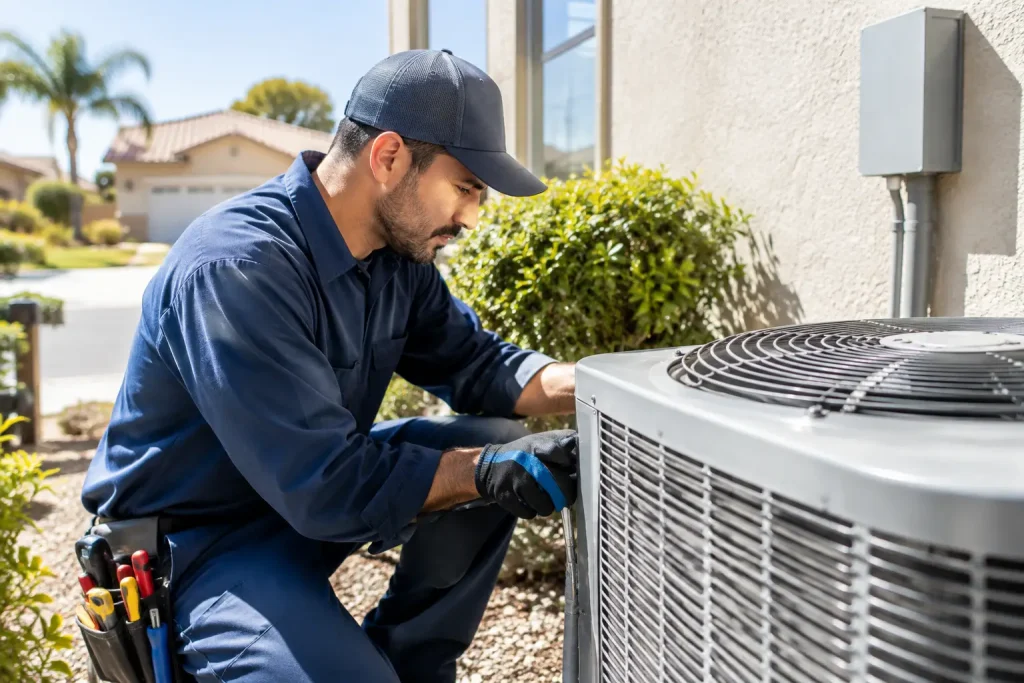
A buzzing air conditioner is easy to ignore for a day or two – until the sound gets louder, the house stops cooling, or the system shuts down in the middle of a hot afternoon. If your AC unit making buzzing noise is new, persistent, or paired with weak airflow, warm air, or frequent cycling, treat it as a warning sign instead of background noise.
Some AC buzzes are minor, such as vibration from a loose panel. Others point to a failing electrical component, a struggling compressor, or a damaged fan motor. Knowing the difference can help you protect your system and avoid a more disruptive breakdown.
What a Buzzing AC Unit Can Mean
The location, timing, and character of the noise matter. A brief hum when the system starts can be normal. A steady buzz that continues while the AC is running, a loud buzzing at startup, or a buzz followed by a system that will not cool is not something to brush off.
Outdoor units are especially likely to produce noticeable sounds because they contain the compressor, condenser fan, contactor, and other working components. Indoor buzzing can come from the air handler, blower assembly, thermostat controls, or loose cabinet parts. In either case, changes in sound usually deserve attention.
Loose Panels, Screws, or Debris
The simplest possibility is vibration. Sheet-metal panels, fasteners, or nearby objects can rattle and buzz when the unit runs. Leaves, twigs, or other debris around the outdoor condenser can also interfere with airflow or make contact with the fan area.
You can safely look at the exterior of the outdoor unit from a distance while it is running. Keep children, pets, tools, and hands away from the equipment. If you see obvious debris around the unit, clear it away only if you can do so without removing panels or reaching into the cabinet. A technician should handle anything inside the unit.
A Failing Contactor or Electrical Component
A contactor is a component that helps send power to the outdoor AC equipment. When it starts to wear out, it may buzz, chatter, or make a vibrating sound. Capacitors, relays, and wiring connections can create similar symptoms when they are failing.
Electrical issues are not a homeowner repair. Besides the risk of shock, continuing to operate an AC with a failing component can strain other parts of the system. If the buzzing is loud, the unit is having trouble starting, or you notice a burning smell, turn the thermostat off and request professional service.
Compressor Trouble
The compressor is one of the most important and expensive parts of your air conditioning system. It circulates refrigerant and makes cooling possible. A loud electrical buzz from the outdoor unit, especially when cooling performance drops, may mean the compressor is struggling to start or operate correctly.
That does not automatically mean replacement is the answer. The source could be a supporting electrical part rather than the compressor itself. A qualified HVAC technician can test the system, identify the failed component, and explain the practical repair options before work begins.
Fan Motor or Blade Problems
If the outdoor fan is not turning properly, the unit may buzz while overheating or cycling off. A worn fan motor, loose blade, damaged mounting hardware, or obstruction can all create noise. You may also hear scraping, clicking, or a louder vibration along with the buzzing.
Do not try to force the fan to move or remove the top grille. The unit can hold electrical power even after it has been switched off at the thermostat. Shut the system down and have the fan assembly inspected if it is not spinning normally.
Frozen Components or Restricted Airflow
An AC system needs steady airflow to work efficiently. A heavily clogged filter, blocked return vents, dirty coils, or another airflow issue can contribute to freezing and unusual operating sounds. In some cases, refrigerant problems can also cause the coil to freeze.
Check the filter if it is accessible and replace it if it is visibly dirty or overdue for replacement. Make sure supply and return vents are not blocked by furniture, rugs, or stored items. If you see ice on refrigerant lines or the indoor coil area, turn cooling off and call for service rather than repeatedly restarting the system.
What to Do When Your AC Unit Is Making Buzzing Sounds
Start by paying attention to what the system is doing, not just what it sounds like. Is it still cooling? Does the buzz happen only at startup? Is the outdoor fan moving? Did the sound begin after a power outage or during unusually hot weather? Those details help a technician diagnose the issue faster.
If the AC is still cooling and the sound is mild, replace the air filter if needed, clear loose debris from around the outdoor unit, and listen again during the next cycle. Avoid taking panels off, touching electrical parts, or spraying water into the equipment to stop the noise.
Turn the system off and arrange service sooner if the buzzing is loud, metallic, or electrical in nature. The same applies when the unit blows warm air, trips the breaker, repeatedly turns on and off, produces a burning odor, or fails to start. Waiting can turn a smaller repair into a larger one, particularly during peak summer demand.
When It Is an Emergency
Not every buzzing sound needs an after-hours call, but some symptoms should be treated as urgent. Turn off the AC and seek prompt HVAC help if you notice smoke, a burning smell, visible sparking, a repeatedly tripping breaker, or a loud buzz with no cooling.
For businesses, property managers, and households with vulnerable family members, loss of cooling during extreme heat can become urgent quickly even without smoke or sparks. A fast assessment can help determine whether a safe repair is possible or whether the system needs a different solution.
YourK AC provides 24/7 emergency HVAC support for homeowners and businesses in Modesto when a cooling problem cannot wait. The goal is straightforward: identify the cause, explain the options clearly, and restore dependable comfort as efficiently as possible.
Can a Buzzing AC Still Run Safely?
Sometimes, yes. A mild vibration from a loose panel may not affect performance immediately. But it is difficult to confirm the cause from sound alone, and an AC can continue running while a capacitor, contactor, motor, or compressor problem gets worse.
The trade-off is simple. Continuing to run the system may preserve short-term comfort, but it can add stress to failing components. Turning it off may be inconvenient, particularly in Modesto heat, but it is the safer choice when the buzz is severe or paired with poor performance. If you are unsure, professional diagnosis is the most reliable next step.
Preventing Future Buzzing and Breakdowns
Routine maintenance catches many noise-related issues before they become an emergency. During a professional tune-up, technicians can inspect electrical connections, test capacitors and contactors, check motors and fan operation, clean components, and look for signs of wear that are easy to miss from outside the unit.
Between visits, keep the outdoor unit clear, change filters on schedule, and pay attention when your AC starts sounding different. A new sound is often the first sign that the system needs attention.
Your AC does not need to be completely silent, but it should not make you wonder whether it will make it through the next hot day. A timely inspection gives you a clear answer and helps protect the comfort of your home or business.
Comments are closed.