A rooftop HVAC unit often gets attention only when an office turns too warm, too cold, or noticeably stuffy. Knowing how to maintain an office rooftop unit before that point helps property managers avoid disruptive breakdowns, protect tenant comfort, and make better use of their heating and cooling budget.
Rooftop units work hard in Modesto-area weather. They are exposed to heat, wind, dust, rain, and debris while serving multiple offices or an entire small commercial space. A practical maintenance plan combines simple on-site observations with scheduled professional service. The goal is not to turn your maintenance team into HVAC technicians. It is to catch warning signs early and ensure qualified service is performed before a small issue interrupts business.
Start With a Consistent Maintenance Schedule
For most offices, rooftop units should receive professional maintenance at least twice a year. Schedule cooling service in spring before sustained hot weather arrives, then schedule heating service in fall. Buildings with long operating hours, high occupancy, dusty conditions, or sensitive equipment may need more frequent attention.
A calendar is more useful than waiting for a problem. Record the service date, filter changes, comfort complaints, repairs, and any unusual sounds or shutdowns. Over time, that record helps identify whether a unit is developing repeat problems, losing efficiency, or nearing a repair-versus-replacement decision.
Maintenance timing also depends on the building. A small office with one unit and regular weekday hours has different needs than a busy retail space, medical office, or workspace with multiple zones. A qualified HVAC technician can help set a schedule that matches the system’s use rather than applying a one-size-fits-all plan.
Keep Airflow From Becoming a Bigger Problem
Restricted airflow is one of the most common reasons rooftop units struggle. When air cannot move freely through the system, comfort suffers and components work harder than they should.
Change Filters on Time
Check filters monthly and replace them as needed. The exact interval depends on filter type, occupancy, nearby construction, outdoor dust, and whether the office has doors that open frequently. A heavily used space may need filter service more often than a lightly occupied office.
Do not assume a filter is fine because it has not reached a certain date on the calendar. If it looks loaded with dust or debris, replace it. A clean filter supports better airflow, helps reduce strain on the blower, and can improve the consistency of temperatures across the building.
Keep Return and Supply Vents Clear
Walk through the office periodically and look for blocked vents. Furniture, boxes, displays, and files can restrict supply air or cover return grilles without anyone realizing it. If one area repeatedly feels uncomfortable, check for obstructions before assuming the rooftop unit itself is the only cause.
Persistent hot and cold spots can also point to duct issues, controls problems, or an improperly balanced system. Those conditions deserve professional evaluation rather than repeated thermostat adjustments.
Inspect the Rooftop Area Safely
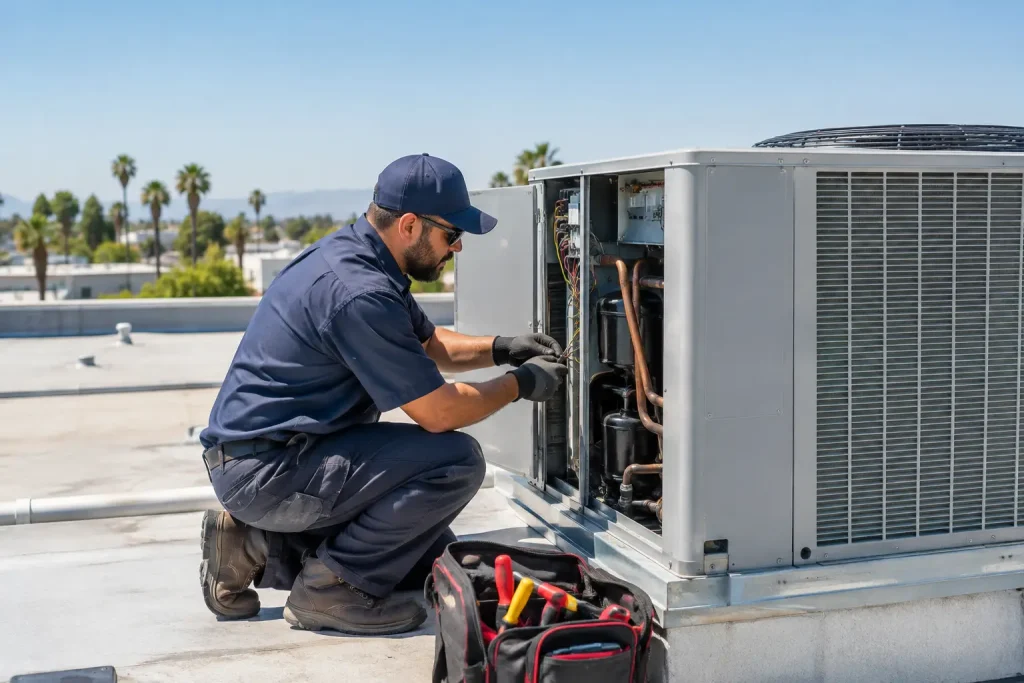
The rooftop unit needs clear space around it to move air and shed water properly. Only authorized personnel should access the roof, and no one should remove panels, reach into the equipment, or attempt repairs. Electrical components, moving parts, refrigerant systems, and elevated roof access all create real safety concerns.
During a safe visual check, look for leaves, loose debris, nesting material, or objects near the unit. Check that nearby drains are not visibly blocked and that there is no standing water around the equipment. Also watch for bent panels, damaged insulation on exposed lines, loose-looking parts, or signs that an access panel is not secured.
If you find an issue, document it with a photo if your site procedures allow, then arrange service. Clearing loose debris from a safe distance may be appropriate for your facility team, but internal cleaning and mechanical work should be left to an HVAC professional.
Watch for Early Signs That Service Is Needed
A rooftop unit rarely fails without giving some indication that something is changing. Office staff may notice the first symptoms because they experience the building every day. Encourage employees or tenants to report comfort concerns early and record where and when they occur.
Call for an inspection when you notice several of these signs:
- Rooms that remain too warm or too cold despite normal thermostat settings
- Unusual banging, rattling, squealing, or repeated cycling sounds
- Weak airflow from vents or uneven temperatures between areas
- Musty odors, burning smells, or a sudden decline in indoor air quality
- Water stains, moisture near ceiling vents, or evidence of a drain problem
- Higher-than-expected energy use without a clear change in operations
One symptom does not always mean the unit needs a major repair. A dirty filter, thermostat setting, clogged drain, worn belt, or control issue can cause noticeable discomfort. But delaying an inspection can allow a manageable repair to become a larger interruption for the business.
What Professional Rooftop Unit Maintenance Should Cover
A professional maintenance visit goes beyond changing a filter and looking at the outside of the cabinet. The technician should inspect the equipment’s operation, safety controls, electrical connections, airflow, and major heating and cooling components.
Depending on the unit and season, service may include checking belts and motors, cleaning coils when needed, inspecting the condensate drain system, verifying thermostat and control operation, evaluating refrigerant performance, testing heating functions, and looking for worn or damaged components. The technician may also identify issues that should be monitored before they become urgent.
Not every unit needs the same work at every appointment. Coil cleaning, for example, depends on how dirty the equipment is and how accessible it is. Refrigerant should not simply be “topped off” as routine maintenance. If levels are low, the system needs proper diagnosis because refrigerant loss can indicate a leak.
Ask for a clear explanation of any recommended repair. A dependable contractor should explain what was found, why it affects the system, and what could happen if the issue is postponed. That information helps property managers prioritize work without guesswork or pressure.
Protect Thermostats and Building Controls
The thermostat is the office’s communication point with the rooftop unit. A thermostat that is poorly located, frequently adjusted, or incorrectly programmed can make a functioning system appear unreliable.
Keep thermostats away from direct sunlight, portable heaters, exterior doors, and equipment that gives off heat. Limit access to authorized staff so settings are not changed throughout the day. If the building is empty overnight or on weekends, consider a schedule that reduces unnecessary runtime while still protecting the space and equipment.
Avoid extreme temperature setbacks. Turning cooling or heating completely off may seem economical, but the unit can then face a heavy load when the office reopens. The best schedule depends on occupancy, insulation, equipment needs, and the building’s ability to hold temperature.
Plan for Repairs Before an Emergency
A maintenance report may reveal a worn part or declining component that has not failed yet. This is where planning matters. Ask whether the concern should be addressed immediately, monitored during the next visit, or budgeted for a future repair. The answer depends on the component, the unit’s age, the building’s comfort needs, and the risk of downtime.
For offices that cannot easily pause operations, it is wise to know who will approve repairs and how building access will be handled before a breakdown occurs. Keep service records, unit model information, and site contact details available. Clear information can reduce delays when the system needs attention during peak heat or cold.
If your rooftop unit is not keeping up, making unusual noises, or causing repeated comfort complaints, schedule a professional inspection rather than asking staff to work around the problem. YourK AC can help office owners and property managers assess rooftop unit concerns, explain practical next steps, and keep comfort from becoming another workday distraction.
A well-maintained rooftop unit should fade into the background. When the office stays comfortable, airflow remains steady, and service is planned instead of rushed, your team can stay focused on the work that matters.