
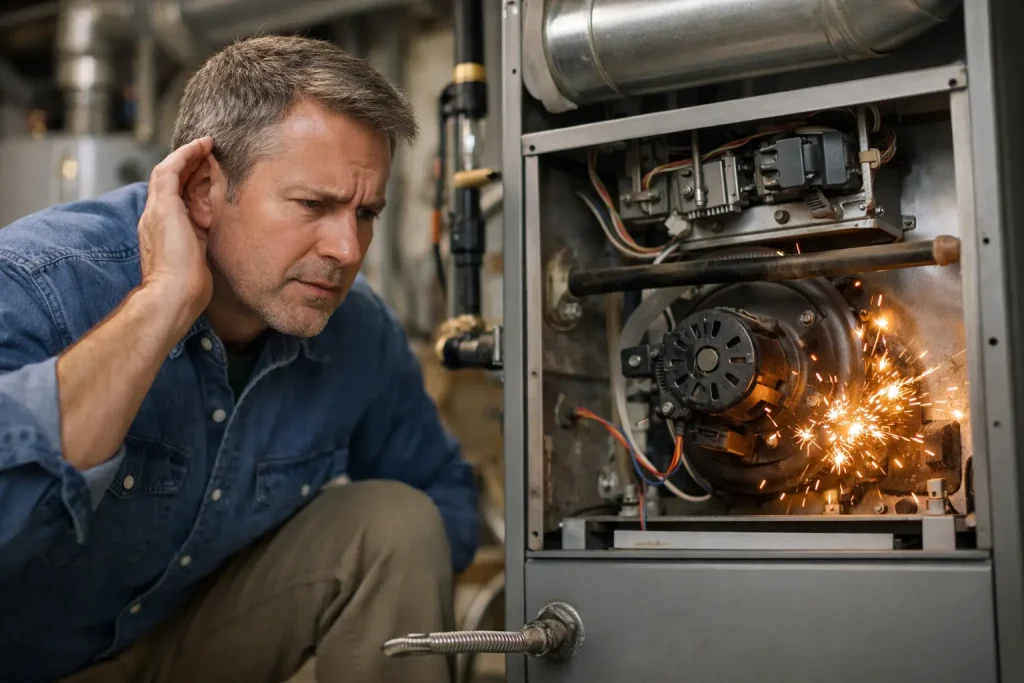
A furnace usually gives you a warning before it quits. One of the most common is sound. If your furnace making loud noise suddenly wakes you up, rattles the hallway, or starts banging every time heat kicks on, that is not something to ignore and hope goes away.
Some furnace noises are minor. Others point to airflow problems, worn parts, ignition issues, or damage that can get more expensive if the system keeps running. The good news is that the sound itself often tells you a lot about what is going wrong.
Why a furnace making loud noise should not be ignored
Heating systems are built to make some noise. You may hear the blower start, a soft click from the thermostat, or a brief hum during a normal cycle. What is not normal is a sudden bang, a high-pitched squeal, metal-on-metal scraping, or a vibration that seems to shake the unit.
When a furnace gets louder, it usually means a part is under strain. That could be as simple as a loose panel, or as serious as a failing blower motor or delayed ignition. In either case, the safest move is to pay attention early. Small furnace problems often become larger repair bills when the system keeps cycling under stress.
For homes and businesses in Modesto, that matters even more during colder nights when you need reliable heat fast. A noisy furnace rarely picks a convenient time to act up.
What different furnace noises usually mean
Banging or booming
A loud bang when the furnace starts is one of the more concerning sounds. In many cases, it points to delayed ignition. Gas builds up in the combustion chamber, then ignites all at once instead of smoothly. That creates a small boom that can sound much worse than it is, but it still needs prompt attention.
Another possibility is expanding and contracting ductwork. Metal ducts can pop as they heat up and cool down. That is usually less urgent than an ignition problem, but if the sound is new or much louder than usual, it is worth having checked.
Squealing or screeching
A high-pitched squeal often comes from the blower assembly. You may be dealing with a worn belt in an older unit, a failing motor bearing, or a blower wheel that is struggling to spin properly. This kind of sound usually starts small and gets worse over time.
If the furnace still runs, many people put this off. That is risky. A blower problem can eventually stop airflow altogether, and then your furnace may overheat or shut itself down.
Rattling
A rattling furnace can mean something loose. It could be a panel, screws, a cracked heat exchanger component, or debris inside the cabinet. Sometimes the sound comes from duct sections that are not secured tightly.
This is one of those problems where it depends. A loose access panel is usually a simple fix. Internal rattling tied to a damaged part is not. If the noise gets louder during operation or comes with uneven heating, the system should be inspected.
Humming with poor performance
A low hum is not always a problem. But if the furnace hums and struggles to start, the issue may be electrical. A failing capacitor, motor problem, or transformer issue can all cause that kind of behavior.
Electrical faults are not good DIY territory. If the system is humming but not moving air normally, turn it off and schedule service.
Scraping or grinding
Scraping and grinding sounds usually mean moving parts are making contact where they should not. That often points to a blower wheel issue, loose motor mount, or worn bearings. Continued operation can damage the motor and nearby components.
If you hear grinding, shut the furnace off. That sound tends to mean the problem is active right now, not developing slowly.
Whistling
A whistling noise often comes down to airflow restriction. The first thing to suspect is a dirty air filter. Closed vents, blocked returns, or undersized ductwork can also create pressure that causes a whistle.
This is one of the more fixable issues if caught early. It is also one of the easiest to ignore, even though poor airflow makes the furnace work harder and can shorten system life.
What you can safely check first
Before calling for repair, there are a few safe steps that may help narrow down the problem.
Start with the air filter. If it is dirty, replace it. A clogged filter is one of the most common reasons a furnace becomes noisy or inefficient. It restricts airflow, raises strain on the blower, and can trigger overheating.
Next, check that all supply and return vents are open and not blocked by furniture, boxes, or rugs. Restricted airflow can change the sound of the entire system.
Look at the furnace access panels to see if anything is loose or vibrating. Sometimes a panel just needs to be secured properly. If you hear rattling from the ductwork, inspect any visible sections for loose connections.
You can also pay attention to when the noise happens. Does it start at ignition, during the blower cycle, or after the system shuts off? That timing helps identify whether the issue is combustion-related, airflow-related, or tied to expansion in the ductwork.
What you should not do is open sealed components, tamper with gas parts, or keep resetting the furnace if it is shutting down repeatedly. That can make diagnosis harder and may create a safety issue.
Signs the noise points to an urgent repair
Some furnace sounds can wait a day. Others call for immediate service.
If you smell gas, hear a booming ignition, notice burning odors that do not fade quickly, or the furnace is making grinding sounds, shut the system off and call for professional help right away. The same goes for a unit that starts making noise and then stops heating properly.
Short cycling is another red flag. If the furnace turns on and off frequently while making unusual noise, the problem may involve overheating, restricted airflow, or a failing internal component. Running it harder will not solve it.
For property managers and small business owners, quick action matters even more. A loud furnace in a tenant space or commercial property can turn into a no-heat call fast, and that usually happens outside regular business hours.
Why furnace noise often gets worse over time
Furnace issues rarely stay the same. A loose part becomes a damaged part. A squealing motor turns into a failed blower. A dirty filter causes strain that affects multiple components. Noise is often the first noticeable symptom, not the whole problem.
That is why early service usually costs less than delayed service. You are not just fixing the sound. You are preventing the extra wear that comes from letting the system keep running in a compromised state.
For older systems, this matters even more. If your furnace is already near the end of its service life, loud noise can be a sign that repair decisions need to be weighed against replacement value. Sometimes the best option is a targeted repair. Other times, repeated issues are a sign the system is no longer dependable enough for another season.
Professional diagnosis saves time and guesswork
A noisy furnace can have one obvious symptom and several possible causes. Banging might be ignition, ducts, or expansion. Squealing could be a belt, bearing, or motor. Without testing and inspection, it is easy to misread the problem.
A trained HVAC technician can isolate the source, inspect wear points, test operation, and tell you whether the issue is minor, urgent, or part of a bigger system problem. That helps you avoid paying for the wrong repair or waiting until the furnace fails completely.
For Modesto-area homes and businesses, fast service matters when temperatures drop and the system is already showing signs of trouble. Companies like YourK AC focus on practical repairs, clear pricing, and quick response because most people dealing with furnace noise are not looking for theory. They want the heat restored and the problem handled correctly.
How to lower the chance of future furnace noise
The best prevention is routine maintenance. Seasonal tune-ups help catch worn bearings, loose hardware, dirty burners, airflow restrictions, and early motor issues before they get loud enough to interrupt your day.
Regular filter changes also make a real difference. Many furnace noise complaints start with neglected airflow. A clean filter supports quieter operation, better efficiency, and less strain on the blower and heat exchanger.
If your system has been making small noises for months, do not treat that as normal aging. Furnaces do get louder over time, but sudden changes or repeating sounds usually mean something specific needs attention.
A loud furnace does not always mean a major repair, but it does mean the system is asking for help. The sooner you listen, the better your chances of fixing the issue before it turns into a bigger interruption.