
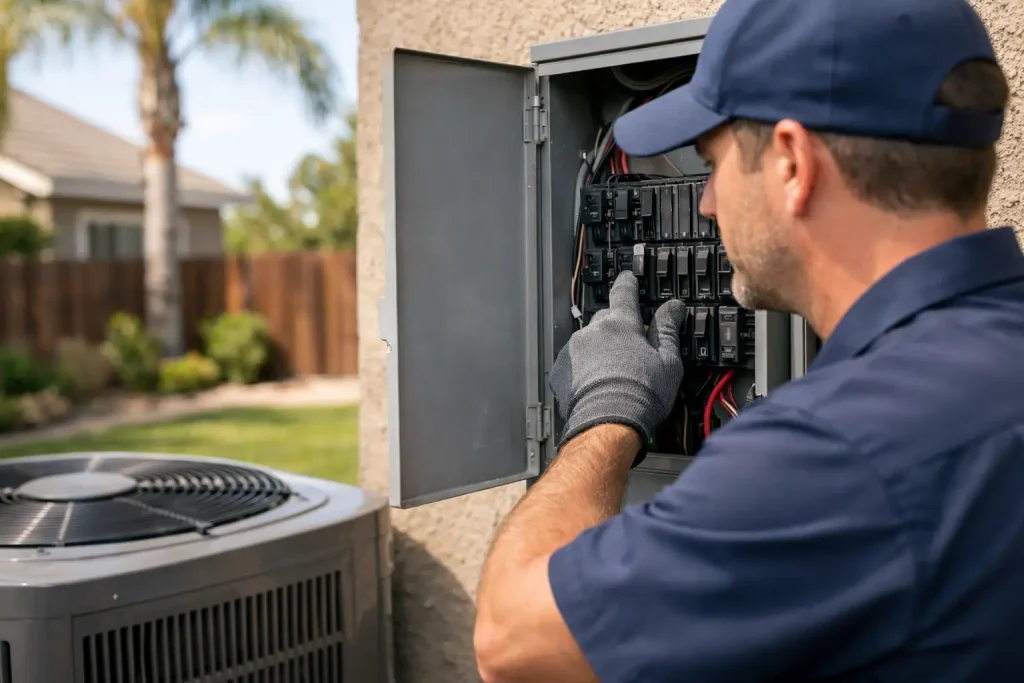
Your AC quits during a hot Modesto afternoon, and the indoor unit or outdoor condenser will not start. Before you reset a tripped AC breaker, take a moment to treat it as a warning, not just an inconvenience. A breaker trips to stop excessive electrical current from damaging equipment or creating a safety hazard. Resetting it once may restore cooling. Resetting it repeatedly can turn a manageable repair into a more serious problem.
When You Can Reset a Tripped AC Breaker
If your air conditioner has stopped and you find one breaker in the main electrical panel sitting in the middle position or switched to OFF, a single reset can be reasonable. First, turn the thermostat to OFF so the system is not calling for cooling. Then locate the clearly labeled AC breaker, move it firmly all the way to OFF, and switch it back to ON.
Wait a few minutes before turning the thermostat back to COOL. Set the temperature several degrees below the current indoor temperature and listen for the system to start normally. If the AC runs, stays on, and delivers cool air, keep an eye on it. One isolated trip can sometimes happen during a temporary power fluctuation or an unusually demanding startup cycle.
That said, a working AC system should not regularly trip its breaker. If the breaker trips again right away, trips when the outdoor unit starts, or trips later the same day, stop resetting it. The issue needs professional diagnosis.
Why an AC Breaker Trips
The breaker is doing its job when it detects an electrical condition outside its safe operating range. The underlying cause may be inside the air conditioner, at the disconnect near the outdoor unit, or within the electrical circuit that serves the equipment. The symptom is simple, but the repair is not always simple.
A dirty condenser coil is one possible contributor. When the outdoor coil is covered in dust, cottonwood, grass clippings, or debris, the AC has a harder time releasing heat. The compressor and fan may run longer and work under greater strain. In Central Valley heat, that extra load can expose problems that were not noticeable during milder weather.
A failing capacitor or contactor can also make the outdoor unit struggle to start. You may hear a humming sound, clicking, or a brief attempt to run before the breaker trips. Motors, wiring connections, and compressor components can create similar symptoms. These parts require proper testing by a qualified HVAC technician. Guessing at the source or replacing electrical components without diagnosis can be unsafe and may damage the system further.
Sometimes the issue is tied to airflow. A severely clogged air filter, blocked return vents, or a failing indoor blower can affect how the system operates and increase stress on key components. Other times, the breaker is responding to a dedicated circuit issue rather than an HVAC failure. This is why a thorough inspection matters. The goal is to find the reason for the overload, not merely get the equipment running for another hour.
Signs You Should Not Reset the Breaker Again
A single reset is one thing. Certain warning signs mean you should leave the breaker off and request service instead. Do not keep cycling power if you notice a burning smell near the panel, thermostat, furnace, or outdoor unit. Do not reset it if you see smoke, melted insulation, scorching, or water around electrical equipment.
You should also stop if the breaker snaps back off immediately or if the outdoor unit hums without starting. The same applies when the breaker trips every time the thermostat calls for cooling. Repeated trips can point to a short circuit, a locked compressor, failing electrical components, or a motor drawing more power than it should.
If the breaker feels hot, makes buzzing sounds, or will not stay in the ON position, do not force it. Keep family members away from the panel and call for qualified help. Electrical protection devices are not designed to be overridden, and a breaker that will not reset is giving you useful information.
What to Check Before Calling for AC Repair
There are a few safe, basic observations that can help speed up an AC service visit. Check whether the thermostat display is on and set to COOL. Make sure the temperature setting is lower than the room temperature. Look at the air filter and replace it if it is visibly packed with dust, as long as it is a standard, accessible filter replacement.
Outside, keep leaves, yard waste, and stored items away from the condenser. Do not remove electrical panels or attempt to access internal wiring. If there is ice on the refrigerant line or outdoor unit, turn the system off at the thermostat and leave the breaker alone until a technician evaluates it. Continuing to run an iced system can cause additional damage.
It also helps to note what happened immediately before the trip. Did the breaker trip after a power outage? Did the AC make a loud noise? Did cooling become weaker over several days, or did the system stop suddenly? Those details help a technician narrow down the cause and focus the repair efficiently.
Why Repeated Resets Can Be Costly
It is tempting to reset the breaker when the house is getting warm, especially when you need cooling fast. But repeatedly restarting an AC with an unresolved electrical problem puts stress on expensive components. A compressor that is struggling to start, for example, may be damaged by repeated attempts. Worn wiring or a failing motor will not improve because the power was cycled again.
There is also a comfort issue. An AC that runs only briefly before tripping cannot properly manage indoor temperature or humidity. For property managers and small business owners, intermittent cooling can quickly become a tenant or customer problem. Addressing the source early is usually the better path than waiting for a complete breakdown during peak heat.
A trained technician can inspect the system safely, measure electrical performance, check airflow, evaluate the outdoor unit, and identify whether the problem involves the AC equipment or the circuit serving it. That diagnosis protects both the system and the people relying on it.
Prevent Future Breaker Trips With Regular Maintenance
Not every breaker trip is preventable, but regular AC maintenance reduces the chances of a surprise failure. A professional tune-up gives the technician a chance to inspect electrical connections, test capacitors and motors, clean the condenser coil, confirm proper airflow, and catch worn components before they become an urgent service call.
Homeowners can support that work by replacing filters on schedule, keeping outdoor equipment clear, and paying attention to changes in system behavior. A new rattling sound, delayed startup, warm air from vents, or frequent cycling deserves attention before it becomes a no-cooling emergency.
For older equipment, it depends on the condition of the system and the cost of repairs. Some issues are straightforward and worth repairing. Others may signal that an aging AC is becoming less reliable and less efficient. A trustworthy HVAC professional should explain the findings clearly, show you the practical options, and help you make a decision based on your property and comfort needs.
Get Reliable Help When Your AC Will Not Stay On
If your breaker trips more than once, do not spend the day repeatedly trying to restore power. Turn the thermostat off, leave the breaker off, and arrange AC service. YourK AC provides prompt, professional heating and cooling support for homeowners and businesses that need clear answers and dependable repairs.
When the heat is rising, the right next step is not taking chances with an electrical issue. A careful diagnosis can restore comfort safely and help prevent the same problem from interrupting your day again.