
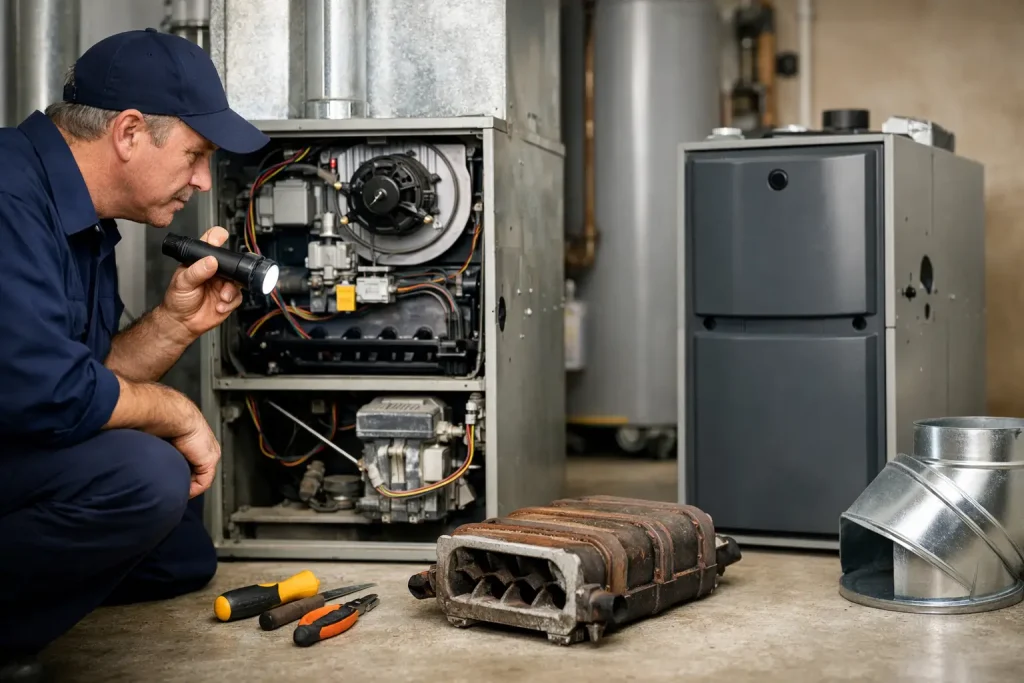
When your heat cuts out on a cold morning, the question gets real fast – should you repair or replace furnace equipment now, or can you squeeze another season out of it? For homeowners, property managers, and small business owners in Modesto, that decision usually comes down to cost, reliability, and how much risk you want to carry into the next cold stretch.
A furnace problem is rarely just about one broken part. It affects comfort, energy bills, daily routines, and in some cases, your ability to keep tenants, customers, or family members safe and comfortable. That is why the best choice is not always the cheapest fix today. It is the option that makes the most sense for your property over the next few years.
Repair or replace furnace: start with age and condition
If your furnace is under 10 years old, repair is often the better first move, especially if the problem is isolated to one component. A faulty ignitor, worn belt, bad thermostat, or clogged filter can usually be addressed without turning the situation into a full system replacement.
Once a furnace gets into the 12 to 15 year range, the conversation changes. Age alone does not mean automatic replacement, but it does raise the stakes. Parts wear out, efficiency drops, and breakdowns tend to come closer together. If your system is already struggling to heat evenly, making unusual noises, or cycling on and off more than it should, those are signs the unit may be nearing the end of its useful life.
Condition matters just as much as age. A well-maintained older furnace may still have some dependable years left. On the other hand, a neglected unit can become a money drain much sooner. If the heat exchanger is cracked, the blower motor is failing, or there are ongoing safety concerns, replacement usually deserves serious attention.
When furnace repair makes the most sense
Repair is usually the right call when the issue is clear, the system has a solid service history, and the cost stays reasonable compared to the value you are getting from the unit. That is especially true if your furnace has been heating reliably until now.
A single repair can be the practical choice if your furnace still heats the space evenly, your utility bills have stayed fairly consistent, and the rest of the system is in good shape. In that case, paying for a targeted fix is often smarter than rushing into replacement before it is necessary.
This is also where honest diagnosis matters. Some furnace issues look worse than they are. Dirty burners, airflow restrictions, electrical connection problems, and thermostat failures can all cause heating trouble without meaning the whole unit is done. A good technician should be able to tell you whether the problem is isolated or part of a larger pattern.
For commercial spaces and rental properties, repair can be a strong short-term solution when you need to restore heat quickly and avoid major disruption. But short-term only works if the system is still trustworthy. If every repair is buying you just a few more weeks, that is not savings. That is delay.
When replacing a furnace is the smarter investment
Sometimes the numbers make the choice for you. If a repair is expensive and your furnace is already near the end of its expected life, replacement often saves more over time. This is especially true when you are facing major component failure rather than a routine repair.
A common rule of thumb is to weigh the repair cost against the system’s age and overall condition. If you are looking at a large repair bill on an older furnace, it may not be worth putting more money into a unit that could fail again soon. You are not just paying for the current fix. You are also accepting the risk of the next one.
Replacement also becomes more attractive when your current system is driving up operating costs. Older furnaces are typically less efficient than newer models, and that gap can show up on your monthly utility bill. If your furnace runs longer than it used to, struggles to reach the thermostat setting, or leaves certain rooms cold, a new system can bring both better comfort and better energy performance.
There is also the reliability factor. If you have had multiple service calls in the past year, you are already seeing the pattern. Frequent breakdowns are not just inconvenient. They create uncertainty. That matters when you manage tenants, operate a business, or simply do not want to wonder whether your heat will work the next time temperatures drop.
The cost question: today versus next year
Most people start with the repair bill, which is understandable. A repair usually costs less upfront than replacement. But the better question is what the decision will cost you over the next one to three years.
If a furnace repair gets you several more reliable seasons, that can be money well spent. If the same repair is followed by another breakdown next month and another one later in the winter, your total cost starts climbing fast. Add in higher utility bills from an aging, inefficient unit, and replacement may have been the better value from the start.
Timing matters too. Emergency replacement after a full breakdown is often more stressful than planned replacement before peak demand hits. When your furnace fails unexpectedly, you are making a major decision under pressure. If your technician tells you the system is still running but showing clear end-of-life signs, replacing it on your schedule can give you more control over budget, equipment choice, and installation timing.
Signs you should not ignore
If you are trying to decide whether to repair or replace furnace equipment, a few warning signs deserve immediate attention. Strange banging, rattling, or screeching sounds often point to mechanical trouble. A yellow pilot light instead of blue can indicate combustion issues. Short cycling, weak airflow, uneven heating, or a sudden spike in utility costs can all signal declining performance.
Some signs go beyond comfort and straight into safety. If you suspect a gas smell, notice soot around the unit, or think there may be a carbon monoxide risk, stop using the system and call for service right away. In those situations, the question is not whether to wait a few days. It is how quickly the issue can be diagnosed and corrected.
Even less dramatic problems matter when they keep repeating. A furnace that needs frequent resets, struggles to start, or breaks down during every cold snap is telling you something. Systems rarely become more dependable with age.
Why local conditions matter in Modesto
Modesto does not deal with the same winter extremes as colder parts of the country, but reliable heat still matters. Cold nights, early mornings, and damp seasonal weather can make a failing furnace very noticeable, very quickly. For homes, that means discomfort and disruption. For commercial properties, it can affect employees, customers, and occupied spaces that need consistent temperatures.
Local service also matters because response time changes everything when the heat is out. Working with a team that understands the area, shows up fast, and gives clear recommendations helps take the guesswork out of the decision. That is especially important if you are balancing tenant needs, family comfort, or business operations.
At YourK AC, that practical approach is what property owners count on most – clear answers, fair pricing, and help deciding whether repair is the right fix or replacement is the smarter long-term move.
How to make the right call without guessing
The best furnace decision starts with a straightforward inspection. You want to know what failed, what shape the rest of the system is in, how much life is realistically left, and whether the repair solves the real problem or just buys a little time.
Ask direct questions. Is this a one-time issue or part of a larger wear pattern? Is the repair cost reasonable for the system’s age? Will the furnace remain safe and dependable after the fix? What efficiency and reliability gains would you get from replacement?
A trustworthy HVAC company should not pressure you toward the most expensive option. The right recommendation should fit your property, your budget, and your timeline. Sometimes that means repairing a newer unit and getting more value from it. Other times it means replacing an older furnace before it costs you more in service calls, stress, and lost comfort.
If you are stuck between the two options, think beyond the invoice in front of you. Look at reliability, safety, energy use, and how much confidence you have in that system making it through the next season. The right choice is the one that lets you stop worrying every time the temperature drops.