
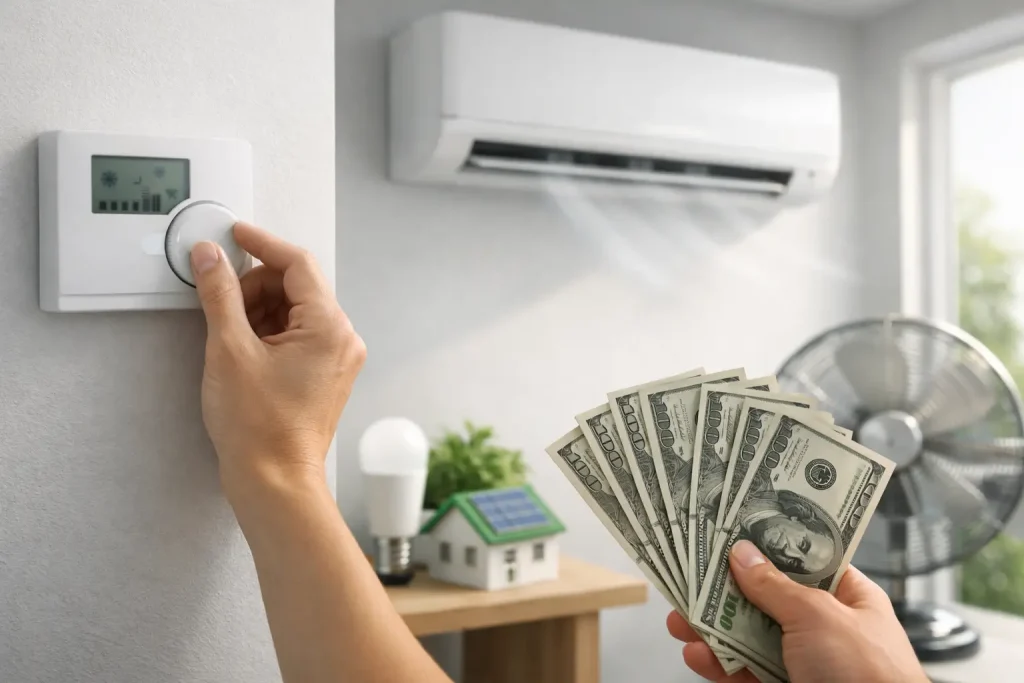
When the Central Valley heat settles in and your AC seems to run all afternoon, the question gets real fast: how to lower air conditioning bill without making your home uncomfortable. Most people are not wasting money because they are careless. They are paying more because small efficiency problems add up – dirty filters, air leaks, poor thermostat settings, or an AC system that is working harder than it should.
The good news is that lower cooling costs usually come from a few practical changes, not one big sacrifice. Some fixes are simple enough to handle today. Others point to a system issue that needs professional attention before it turns into a bigger repair.
How to lower air conditioning bill without losing comfort
The first mistake many homeowners make is turning the thermostat way down, hoping the house will cool faster. It will not. Your AC cools at the same rate either way, but a lower setting often makes the system run longer than necessary. A steady, realistic temperature usually costs less than constant adjustments.
For many homes, setting the thermostat a little higher when nobody is home can make a noticeable difference. If you have a programmable or smart thermostat, use it. Let the temperature rise during work hours, then cool the house before people return. If someone is home all day, the savings may be smaller, but even a few degrees can reduce runtime.
Ceiling fans help here too. They do not lower the room temperature, but they make people feel cooler by moving air across the skin. That means you may be comfortable with the thermostat set a bit higher. Just remember to turn fans off when you leave the room. Fans cool people, not empty spaces.
Start with the low-cost fixes that matter most
If you want the fastest answer to how to lower air conditioning bill, start with airflow and leaks. These are common problems, and they are often overlooked until utility bills spike.
A clogged air filter is one of the simplest and most expensive issues to ignore. When the filter is dirty, airflow drops and your system has to work harder to move cool air through the house. In some cases, restricted airflow can even lead to frozen coils or extra wear on the equipment. Check the filter regularly during heavy-use months and replace it as needed.
Next, look at windows and doors. If hot outside air keeps slipping in, your AC has to keep removing that heat. Worn weatherstripping, gaps around frames, and doors that do not seal tightly can all increase cooling costs. The same goes for poorly sealed attic access points and gaps around plumbing or wiring penetrations.
Window coverings also make a bigger difference than many people expect. Direct sun through west-facing and south-facing windows can heat a room fast. Closing blinds or curtains during the hottest part of the day can cut indoor heat gain and help your AC cycle less often. It is not a cure-all, but it is one of the easiest ways to reduce strain on the system.
Your AC may be costing more because it needs service
Sometimes high bills are not about habits at all. They are a sign that the equipment is no longer operating efficiently.
A system with dirty condenser coils, low refrigerant, weak airflow, or failing components can still run, but it may run longer and cool worse. That is where people get frustrated. The house feels less comfortable, yet the bill keeps climbing. If that sounds familiar, the problem may not be your thermostat setting. It may be your AC itself.
Routine maintenance helps catch these issues early. A professional tune-up can improve performance, protect parts from unnecessary wear, and reveal whether the system is struggling due to age or neglect. For homeowners and property managers, that kind of inspection often saves money in two ways – lower monthly operating costs and fewer surprise breakdowns during peak heat.
If your system is making unusual noises, blowing weak air, cooling unevenly, or running nonstop in the afternoon, it is worth having it checked. In Modesto summers, waiting too long can turn a manageable repair into an emergency call.
Ductwork can quietly waste a lot of money
Many people focus on the AC unit and forget about the duct system. But if cooled air is leaking into the attic, crawl space, or wall cavities, you are paying to cool areas nobody uses.
Leaky ducts can be a major source of energy loss, especially in older homes or buildings with aging HVAC systems. Rooms farthest from the system may feel warmer, which leads people to lower the thermostat even more. That drives up usage without fixing the real issue.
Duct problems are not always obvious from the living room. You might notice some rooms never get comfortable, dust buildup seems excessive, or the system runs longer than expected. In those cases, duct inspection and sealing can make a meaningful difference.
Insulation matters too. If the home does not hold cooled air well, your system has to cycle more often to maintain temperature. Attic insulation is especially important in hot climates. This is one of those areas where the best solution depends on the age of the property, current insulation levels, and how long you plan to stay there. The upfront cost is higher than changing a filter, but the long-term savings can be worth it.
Everyday habits that help lower cooling costs
A few daily choices can reduce the cooling load without making the house feel unbearable.
Heat-producing appliances are a good place to start. Ovens, dryers, and even dishwashers add warmth indoors, especially in the late afternoon. If possible, run them in the early morning or later at night when outdoor temperatures are lower. Cooking outside or using smaller appliances can also help during the hottest weeks.
Keep vents open and unobstructed. Furniture, rugs, or storage placed over supply or return vents can interfere with airflow and force the system to work harder. Closing vents in unused rooms is not always the money-saver people think it is. Depending on the system design, it can throw off pressure balance and reduce efficiency.
It also helps to keep the outdoor unit clear. Leaves, weeds, and debris around the condenser can restrict airflow and reduce performance. Give it breathing room. If the area around the unit looks crowded or dirty, cleaning it up can support better operation. Just avoid bending fins or using too much water pressure if you are cleaning near the equipment yourself.
When repair stops making financial sense
If your AC is older and your energy bills keep rising each summer, there comes a point where repair alone may not be the cheapest path. An aging system can still cool the home, but it often does so inefficiently. That means higher bills, more service calls, and more risk of breakdown during extreme heat.
This is where the answer to how to lower air conditioning bill may be system replacement, not another short-term fix. A newer high-efficiency unit can reduce energy use, improve comfort, and cool more consistently. But replacement is not automatically the right choice for everyone.
It depends on the age of the system, the cost of current repairs, and how often issues are showing up. If a unit is relatively new and the problem is airflow, maintenance, or duct leakage, repair may still be the smart move. If the system is nearing the end of its service life and struggling through every heat wave, replacing it can be the more practical long-term decision.
A trustworthy HVAC company should be honest about that difference. The goal is not to sell more equipment. The goal is to help you spend less over time while keeping the property comfortable and dependable.
For businesses and rental properties, efficiency affects more than the utility bill
For small business owners and property managers, high AC costs can affect tenant satisfaction, operating expenses, and equipment lifespan. A system that runs too hard all summer is more likely to break down when you need it most. That can mean lost business, unhappy tenants, or urgent after-hours service.
Preventive maintenance and fast repair matter even more in those settings because downtime has a bigger cost. If one area of a building is always hotter than another, or if the system never seems to cycle off, it is worth addressing before the next utility bill arrives.
For local property owners in Modesto, a practical inspection from a team like YourK AC can help identify whether the real problem is maintenance, duct loss, thermostat control, or an AC system that is simply past its prime.
Lower bills usually come from fixing what is making your system work harder than it should. Start with the easy wins, pay attention to warning signs, and if your AC still seems to be burning through money, get it checked before the next stretch of triple-digit heat.