
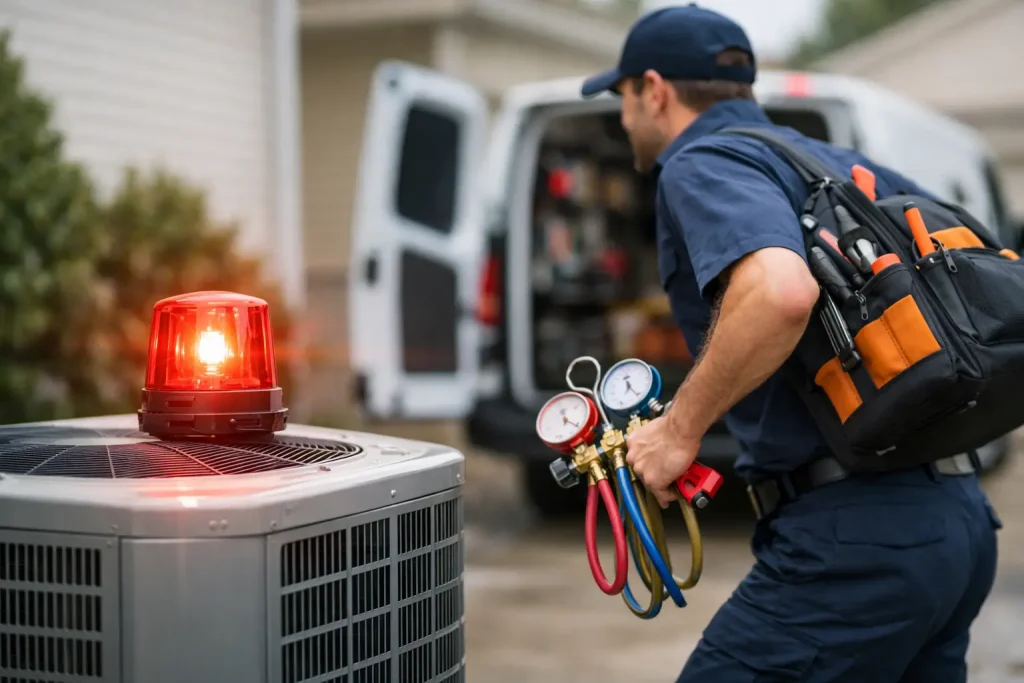
When your AC quits at 5 p.m. on a 105-degree Modesto day or your furnace stops working on a cold night, you usually know right away that this is not a problem to put off until next week. An emergency HVAC service guide helps you make the right call fast, protect your system from added damage, and get your home or business back to a safe, comfortable temperature.
The hardest part of an HVAC breakdown is often the first 10 minutes. You are uncomfortable, the building is heating up or cooling down fast, and you need to decide whether it is a true emergency or something that can wait until regular service hours. A calm, practical response makes a difference.
What counts as an HVAC emergency?
Not every HVAC issue is an emergency, but some problems need immediate service. The most obvious example is complete loss of cooling during extreme summer heat, especially when young children, older adults, or people with health conditions are in the building. The same goes for a heating failure during very cold conditions.
There are other situations that deserve urgent attention even if the unit is still technically running. Burning smells, smoke, electrical issues, loud banging or grinding, water leaking near electrical components, or a system that keeps tripping the breaker should not be ignored. If your commercial property depends on climate control for employees, customers, inventory, or equipment, the problem moves from inconvenient to urgent very quickly.
On the other hand, a slightly weak airflow issue or a system that runs longer than usual may be serious, but it is not always a middle-of-the-night emergency. It depends on indoor conditions, outdoor temperatures, and whether the issue creates a safety risk.
Emergency HVAC service guide: what to do first
Before you call for service, take a minute to check the basics. This is not about fixing the equipment yourself. It is about ruling out the simple issues that can sometimes look like a major breakdown.
Start with the thermostat. Make sure it is set to the correct mode, the temperature is set properly, and the batteries are not dead if your thermostat uses them. Then check your air filter. A severely clogged filter can choke airflow and cause the system to shut down or struggle.
Next, look at your breaker panel. If the HVAC breaker has tripped once, you can reset it carefully. If it trips again, stop there. Repeated breaker trips usually point to an electrical or equipment problem that needs a professional.
If you are dealing with an AC issue, check the outdoor unit. Leaves, debris, or obvious blockage around the condenser can affect performance. If you notice ice on the system, turn the cooling off. Running a frozen unit can make the damage worse.
If there is a burning odor, visible smoke, sparking, or signs of overheating, shut the system off immediately and call for emergency service. If you suspect a gas-related issue around a heating system, leave the area and follow gas safety procedures before arranging HVAC help.
When waiting can make the repair more expensive
One reason emergency calls happen is that small warning signs often get pushed aside until the system finally stops. That does not mean every emergency was avoidable, but it does mean timing matters.
A strange noise can point to a loose or failing part. Weak airflow may signal a blower problem, duct issue, or a coil that is struggling. Water around the indoor unit can look minor at first, but it can damage surrounding materials and lead to a bigger repair if ignored.
The same is true for commercial properties. A restaurant, office, retail space, or rental unit can lose comfort fast, but the bigger cost may come from downtime, unhappy tenants, or business disruption. Fast response is not just about comfort. It is about limiting the fallout.
What to expect when you call for emergency service
A good emergency visit should feel organized, not chaotic. You should be able to explain what is happening, get a realistic response window, and know what the next step looks like.
Most emergency HVAC calls start with a few practical questions. What is the system doing or not doing? When did the problem start? Is there airflow? Are there unusual smells, sounds, leaks, or electrical issues? That information helps the technician arrive prepared.
Once on site, the technician should inspect the system, identify the immediate cause of the failure, and explain the repair clearly. Sometimes the solution is straightforward, like replacing a failed capacitor, contactor, igniter, or thermostat component. Other times the issue is larger, such as a compressor problem, major electrical failure, blower motor failure, or a system at the end of its service life.
This is where transparency matters. In a real emergency, nobody wants a sales pitch. People want an honest explanation, fair pricing, and a path to getting the system running again as quickly as possible.
Repair or replace? It depends on the situation
Emergency service does not always mean replacement. In fact, many urgent HVAC problems can be repaired the same day. But there are times when replacement is the more practical move.
Age is a factor. If your air conditioner or furnace is already well past its prime and the repair is expensive, putting more money into it may not make sense. Efficiency matters too. An older system that breaks down during extreme weather may be costing you more each season than you realize.
That said, replacement is not automatically the right answer. If the unit is relatively new, the repair is targeted, and the rest of the system is in solid condition, a repair can be the better value. The right decision comes down to repair cost, equipment age, energy performance, and how dependable you need the system to be moving forward.
Why local response matters in Modesto
Extreme temperatures in the Central Valley are not theoretical. When heat hits hard, indoor comfort becomes a real health and safety issue. That is one reason local emergency service matters.
A local company understands how quickly homes and business spaces can become unsafe when cooling fails in peak summer. It also understands the pressure customers are under when they need service now, not a vague appointment days later. Fast arrival times, clear communication, and practical solutions matter more in an emergency than polished sales language.
For homeowners, that means getting your family comfortable again without added stress. For property managers and business owners, it means reducing disruption and restoring normal operations fast. That is the standard people expect from a dependable local HVAC team.
How to reduce the chance of another emergency
No emergency HVAC service guide would be complete without addressing prevention. You cannot prevent every breakdown, but you can lower the odds.
Routine maintenance is the biggest step. Seasonal inspections help catch worn electrical components, refrigerant issues, dirty coils, drainage problems, ignition concerns, and airflow restrictions before they become urgent failures. Replacing filters on schedule also helps the system breathe properly and operate with less strain.
Pay attention to small changes. If your system starts making new noises, takes longer to cool or heat, cycles oddly, or drives up your utility bill without explanation, those are signs worth checking early. Waiting usually does not make HVAC problems cheaper.
It also helps to know who you will call before there is a crisis. During an emergency, the last thing you want is to scroll through search results while the house gets hotter by the minute. Having a trusted local provider already in mind saves time and stress.
Choosing the right emergency HVAC company
Speed matters, but speed alone is not enough. You also want certified technicians, clear communication, and pricing that is explained before the work begins. Emergency service should feel urgent, not rushed.
Look for a company that handles both residential and commercial work if you manage more than one type of property. It should be available 24/7, able to diagnose problems accurately, and focused on fixing the issue rather than creating confusion. A company like YourK AC is built around that expectation – fast response, dependable repairs, and practical service when people need it most.
The best emergency HVAC support is not flashy. It is simple. Someone answers. A technician shows up. The problem gets diagnosed honestly. The repair is handled correctly. Comfort comes back.
When your heating or cooling system fails, the goal is not to become an HVAC expert overnight. It is to stay safe, act quickly, and get the right help before a stressful situation turns into a bigger one.
Comments are closed.