
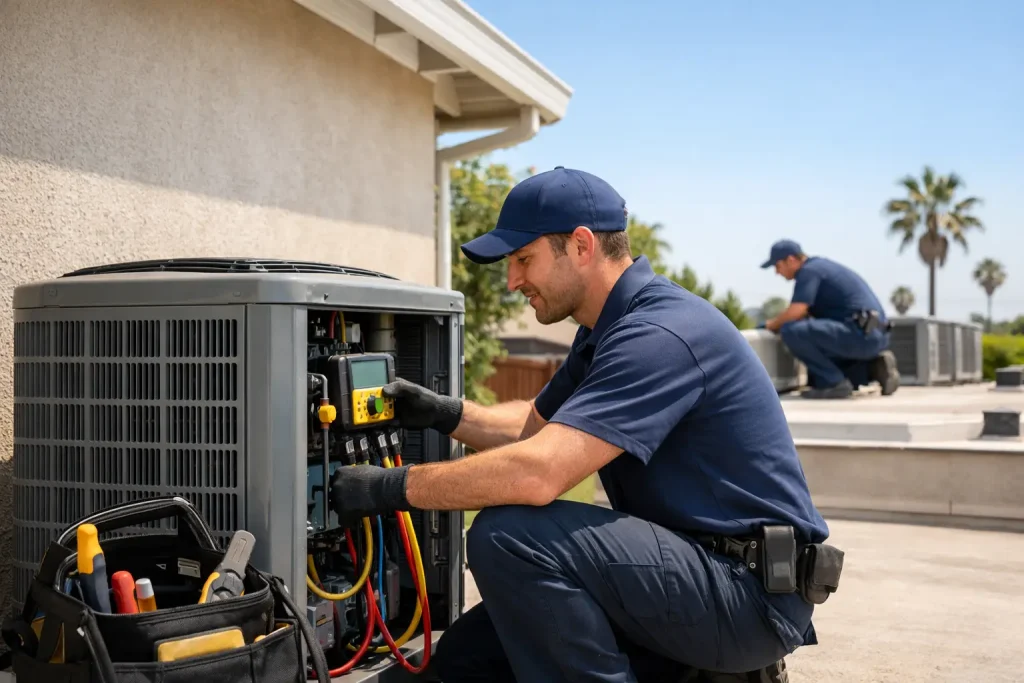
A cooling system tune up is not just a pre-summer chore. It is a practical way to reduce the chance that your AC quits when your home, tenants, customers, or employees need it most. In Modesto, a cooling system can work hard for long stretches of hot weather. Small issues that seem harmless in spring can become expensive comfort problems once temperatures climb.
The goal of professional maintenance is straightforward: find wear, airflow restrictions, drainage concerns, and performance problems early. A properly maintained system is more likely to cool evenly, run efficiently, and avoid unnecessary strain during the season.
What a Cooling System Tune Up Actually Covers
A professional tune up looks at how the whole cooling system is operating, not just whether cool air is coming from a vent. Certified HVAC technicians inspect the equipment, test key functions, and address maintenance needs that can affect comfort, efficiency, and reliability.
The exact work depends on your system’s age, condition, and type. A visit commonly includes checking the thermostat operation, inspecting electrical connections and components, evaluating airflow, cleaning or inspecting coils as needed, examining the condensate drain, and testing the cooling cycle. The technician may also inspect the blower, outdoor unit, refrigerant-related performance, and safety controls.
This matters because air conditioning problems often start as small changes in operation. A dirty coil can make heat transfer less effective. Restricted airflow can force the system to run longer. A clogged drain can lead to water issues or a system shutdown. Catching these conditions during maintenance is usually far less stressful than discovering them during a heat wave.
A tune up is also an opportunity to get clear answers. If a part is showing signs of wear or the system is struggling to maintain temperature, you should know what is happening, why it matters, and what options make sense before a complete breakdown forces a rushed decision.
Why Routine AC Maintenance Pays Off
Most homeowners do not think about their air conditioner until it stops cooling. Property managers and business owners know the impact can be even broader: uncomfortable tenants, disrupted operations, employee complaints, or unhappy customers. Routine service helps make those disruptions less likely.
First, maintenance can support better energy efficiency. When airflow is restricted or components are dirty, an AC system may run longer to reach the temperature on the thermostat. That extra run time can increase energy use and place more stress on the equipment. A tune up cannot make an aging system perform like a brand-new one, but it can help the equipment operate closer to its intended condition.
Second, regular inspections can help prevent avoidable repairs. Not every failure can be predicted, especially in older equipment, but maintenance can reveal loose connections, drainage problems, worn components, and airflow concerns before they cause a no-cool call.
Finally, consistent service creates a useful record of your system’s condition. Over time, a technician can identify declining performance and help you decide whether a repair is reasonable or whether planning for replacement would be the better long-term move. That is especially helpful for rental properties and small businesses that need to avoid surprise disruptions.
When to Schedule a Cooling System Tune Up
Spring is often the best time to schedule cooling maintenance, before the hottest weather arrives and before your system begins its heaviest workload. It gives you time to address any findings without the pressure of an emergency. However, a tune up can be valuable at other times too, especially if your AC has been running harder than usual or you recently moved into a property with an unknown maintenance history.
For most homes, annual professional cooling maintenance is a sensible baseline. Commercial properties may need a different schedule based on equipment size, operating hours, occupancy, and the demands placed on the system. A small office with limited hours does not have the same needs as a business that relies on cooling throughout the day.
If your system is older, annual service becomes even more valuable. Age alone does not mean immediate replacement is necessary, but older equipment has more potential for wear and reduced efficiency. A careful inspection helps you make decisions based on the system’s actual condition rather than guesswork.
Signs Your AC Should Be Checked Sooner
Do not wait for a complete shutdown if your cooling system is already showing changes. One warm room may point to an airflow issue. Higher utility bills may signal that the system is running longer than it should. Water near the indoor unit, unusual noises, short cycling, weak airflow, unpleasant odors, or frequent thermostat adjustments all deserve attention.
Some symptoms have simple causes, while others require a more detailed inspection. For example, a clogged air filter can restrict airflow, but persistent weak airflow can also involve the blower, ductwork, coil condition, or another system issue. A technician should diagnose the cause rather than treating the symptom alone.
If the AC stops cooling during extreme heat, prompt service is the right next step. Turning the system off if you notice burning smells, electrical concerns, or unusual mechanical noise can help avoid further strain while you arrange professional assistance.
What You Can Do Between Service Visits
Homeowners and property managers can support their system without taking on repairs that should be handled by a licensed HVAC professional. Replacing the air filter on the recommended schedule is one of the most useful steps. The right timing depends on the filter type, household conditions, pets, dust, and how often the system runs.
Keep supply and return vents open and free of furniture, boxes, or drapes. Outside, keep leaves, grass clippings, and loose debris from building up around the outdoor unit. Give the equipment room to breathe, and avoid placing objects directly against it.
Pay attention to changes in performance. Note when the issue occurs, whether it affects the entire property or one area, and whether you hear or see anything unusual. Those details can help a technician diagnose the problem more efficiently.
Tune Ups Are Different From Repairs
A tune up is preventive service. It focuses on inspection, cleaning, testing, and identifying conditions that may lead to trouble. A repair is needed when a component has failed, a system has a specific malfunction, or performance requires corrective work.
The two often overlap. During maintenance, a technician may find a repair need that should be addressed before summer. That does not mean the tune up was unsuccessful. It means the visit did its job by identifying a concern before it became a larger interruption.
Honest communication matters here. You should receive a clear explanation of what was found, what needs attention now, what can be monitored, and how each option may affect your comfort and system performance. Not every recommendation has the same urgency, and a dependable HVAC company should help you understand the difference.
Reliable Cooling Starts Before the Heat Peaks
A cooling system does not need to be broken to deserve professional attention. Scheduling maintenance before peak summer gives your equipment a better chance to handle the season with fewer surprises, steadier comfort, and less wasted energy.
For homeowners, property managers, and small business owners, that preparation can mean fewer urgent calls when the temperature rises. YourK AC provides practical cooling maintenance and responsive service for Modesto-area properties that need dependable comfort. If your system has not been checked recently, arranging a tune up now is a simple step that can make the hottest days easier to manage.