
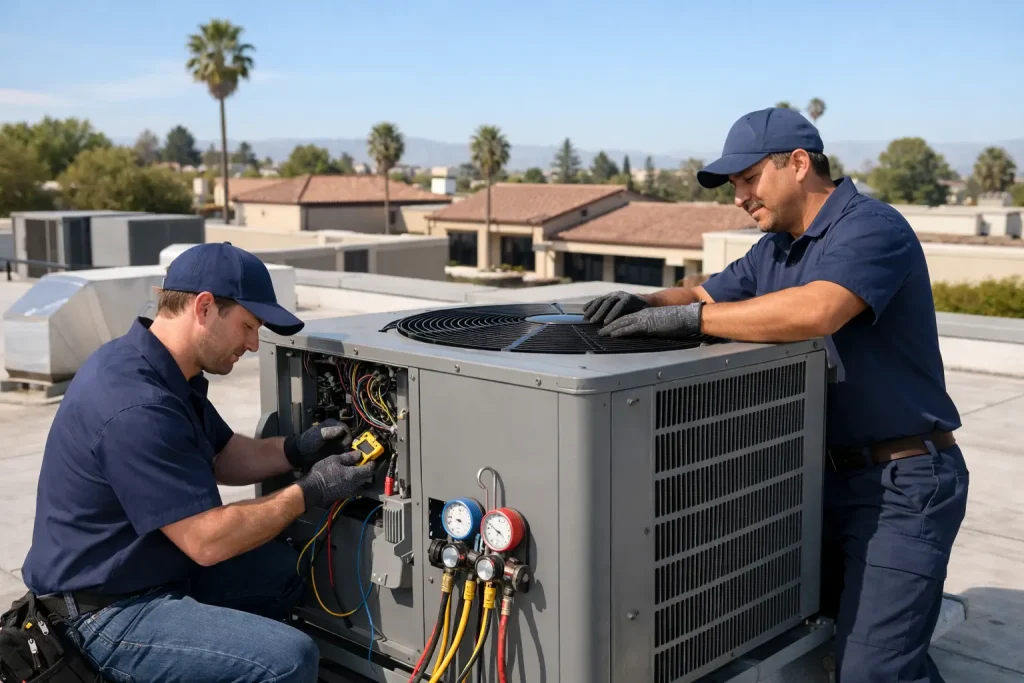
A packed dining room, a busy office, or a retail floor can become a problem fast when the air conditioning stops working on a hot Central Valley afternoon. This Modesto commercial HVAC guide is built for the people responsible for keeping customers, employees, tenants, and equipment comfortable without turning HVAC decisions into a full-time job.
Commercial heating and cooling is not just about whether a unit turns on. It affects customer experience, employee productivity, energy use, indoor air quality, and the ability to keep operating during extreme temperatures. The right response depends on the property, the equipment, and how urgent the issue is, but early action almost always gives business owners more options.
What Makes Commercial HVAC Different?
A commercial HVAC system often serves larger spaces, longer operating hours, and more people than a typical residential system. It may include rooftop package units, split systems, thermostats serving separate zones, ventilation equipment, or multiple units working together. A small issue in one component can leave one office too warm, create uneven temperatures across a store, or put unnecessary strain on the entire system.
That is why a commercial repair call should start with a clear assessment rather than a quick guess. A reliable technician should identify the source of the problem, explain what is happening in plain language, and help you understand whether a repair, maintenance visit, or replacement plan makes the most sense.
For property managers, the challenge can be even broader. One tenant may be reporting a warm suite while another has no heating at all. Keeping records of equipment age, service history, recurring issues, and tenant complaints helps make decisions faster when a system needs attention.
Signs Your Business Should Call for HVAC Service
Some HVAC problems are obvious: the system will not start, warm air is coming through the vents, or the building is suddenly uncomfortable. Others develop quietly and can become costly if they are ignored.
Call for professional commercial HVAC service when you notice unusual banging, rattling, squealing, or persistent cycling; hot and cold spots that were not there before; weak airflow; unusual odors; moisture around equipment; or a steady rise in utility costs with no clear change in operations. These signs do not always mean the system has reached the end of its life, but they do warrant an inspection.
A thermostat that seems inaccurate also deserves attention. The issue may be the thermostat itself, but it could also point to airflow restrictions, sensor concerns, or equipment that is struggling to meet demand. Repeatedly adjusting the temperature setting rarely solves the underlying problem.
If the system fails during business hours or in severe weather, treat it as an operational issue, not something to revisit next week. Fast diagnosis can protect customer comfort, employee safety, inventory conditions, and your ability to stay open.
Commercial HVAC Maintenance Protects Your Operating Budget
Emergency repairs are sometimes unavoidable. Preventive maintenance is still the best way to reduce the chance that a minor issue becomes a disruptive breakdown.
A commercial maintenance visit typically focuses on the parts that affect performance and reliability: filters, coils, electrical connections, condensate drainage, belts where applicable, blower components, refrigerant performance, thermostat operation, and safety controls. The work is tailored to the system, because a lightly used office unit has different demands than equipment cooling a restaurant, medical office, salon, or high-traffic retail space.
Filter changes are especially important. A dirty filter restricts airflow, forcing equipment to work harder and often making rooms feel unevenly cooled or heated. The right replacement schedule depends on your building, occupancy, indoor air conditions, and system design. A busy business may need more frequent attention than an owner expects.
Maintenance also gives you time to plan. If a technician sees a worn component or an aging unit that may need replacement soon, you can budget and schedule around your business instead of making a rushed decision during an outage.
Build a Schedule Around Your Business
For many commercial properties, service before the peak cooling season and again before the heating season is a practical baseline. Businesses with long hours, heavy foot traffic, sensitive equipment, or multiple tenants may benefit from more frequent checkups.
The best schedule is not necessarily the most frequent one. It is the one that matches how hard your equipment works and catches problems before they interrupt operations. Ask your HVAC provider to explain what they are checking, what they found, and what should be monitored between visits.
Repair or Replace? Make the Decision With Facts
A commercial HVAC replacement is a major business decision, so it should not be based on age alone. Older equipment can sometimes continue operating reliably with proper maintenance and targeted repairs. On the other hand, continually repairing a unit that cannot maintain comfort may drain your budget and create repeated disruptions.
Replacement becomes worth discussing when repairs are becoming frequent, important components are failing, energy use is climbing, comfort complaints continue, or the system no longer fits the needs of the space. A business that has expanded, changed its layout, added heat-producing equipment, or increased occupancy may have outgrown its original HVAC capacity.
Newer equipment can offer improved efficiency and better temperature control, but bigger is not automatically better. An oversized unit can cycle too often and may not manage humidity or comfort well. An undersized system may run constantly and wear out faster. Proper sizing and a review of your building’s needs matter more than choosing equipment by nameplate alone.
When evaluating options, ask for a clear explanation of the condition of your current system, the scope of the recommended work, likely operational considerations, and what maintenance the new equipment will require. Transparent information makes it easier to choose a solution that fits both the building and the business.
Reduce HVAC Strain Between Service Visits
Business owners and managers do not need to perform technical repairs to help their systems operate better. A few practical habits can reduce unnecessary strain.
Keep vents and returns clear of boxes, displays, furniture, and storage. Make sure staff know not to block thermostat areas or change settings repeatedly throughout the day. Address doors that are routinely left open, damaged weatherstripping, and direct sunlight through large windows when those conditions are affecting comfort.
It also helps to pay attention to patterns. If one room is consistently warmer in the afternoon, if the system runs louder after a certain time, or if tenants mention the same concern each month, write it down. Those details give a technician useful context and can shorten the diagnostic process.
Know What to Do During an HVAC Emergency
When cooling or heating fails, start by checking whether the issue affects the whole building or one area. Note what the thermostat displays, whether you hear the system running, and whether there are unusual smells, noises, or water near the equipment. Do not attempt repairs involving electrical components, refrigerant, or internal mechanical parts.
If there is a burning smell, smoke, visible electrical damage, or a safety concern, turn off the system if it is safe to do so and seek immediate professional help. For other urgent failures, a 24/7 commercial HVAC provider can assess the situation and help you decide on the next step.
YourK AC provides commercial heating and cooling support in Modesto for businesses that need straightforward answers, dependable service, and prompt help when comfort cannot wait.
Choose a Commercial HVAC Partner Before You Need One
The best time to find an HVAC contractor is before a rooftop unit quits on the busiest day of the year. Look for a local team that communicates clearly, can support routine maintenance as well as urgent repairs, and treats your schedule and property with respect.
Ask how service recommendations are documented, whether maintenance can be tailored to your equipment, and how the company handles urgent calls. You want practical guidance, not pressure. A good service relationship means you know who to call, your equipment history is easier to track, and problems can be addressed with less disruption.
Comfort is part of how your business serves people. Keep an eye on small changes, schedule care before peak seasons, and get professional help early when the system is telling you something is wrong.