The first cold evening is the wrong time to find out your heat is not working. Prepare furnace for winter before temperatures drop, while you still have time to address a weak airflow issue, a dirty filter, or a system that needs professional attention. A little planning now can help your home or business stay comfortable when the heater has to run for hours at a time.
For property owners in and around Modesto, furnace preparation is about more than avoiding an inconvenient breakdown. It can help reduce wasted energy, protect indoor air quality, and catch safety concerns before the heating season is underway.
Prepare Your Furnace for Winter Before You Need It
The goal is simple: make sure the system can start, heat evenly, and operate safely. Some steps are easy for a homeowner or property manager to handle. Others should be left to a trained HVAC technician, especially when gas connections, combustion components, electrical controls, or internal repairs are involved.
Start a few weeks before you expect to use the furnace regularly. That timing gives you room to schedule service instead of reacting to a no-heat emergency on the first chilly night.
Replace or inspect the air filter
A clogged filter is one of the most common reasons a furnace struggles. It restricts airflow, which can make rooms feel unevenly heated and force the system to work harder than necessary. In severe cases, reduced airflow can contribute to overheating and short cycling.
Check the filter size and type recommended for your system. If it looks gray, packed with dust, or has been in place longer than the manufacturer recommends, replace it. Homes with pets, allergies, renovation dust, or frequent furnace use may need filter changes more often. Write the replacement date on the filter frame so the next check is easy to track.
Clear the space around the furnace and vents
Your furnace needs adequate clearance for safe airflow and technician access. Move boxes, paint cans, stored furniture, and other household items away from the unit. Never use the furnace area as a storage closet, particularly if your system uses natural gas.
Walk through the property and look at supply registers and return vents. Rugs, curtains, shelving, and furniture can block airflow without anyone noticing. Keep vents open and unobstructed unless an HVAC professional has advised otherwise. Closing too many registers does not usually save energy and can create pressure issues that affect comfort and equipment performance.
Test the thermostat and heating cycle
Set the thermostat several degrees above the current indoor temperature. The furnace should start after a short delay, and warm air should begin moving through the vents. Let it complete a heating cycle while you listen and observe.
A brief dusty smell may occur when a furnace runs for the first time after a long break. That smell should fade quickly. Loud banging, scraping, repeated clicking, a burning odor that persists, or a furnace that starts and stops within minutes are reasons to stop relying on the system and arrange professional service.
If your thermostat uses batteries, replace them before winter. Also verify that it is set to Heat and that the fan setting is on Auto. A thermostat problem can look like a furnace problem, so this small check can prevent unnecessary frustration.
What a Professional Furnace Tune-Up Looks For
A homeowner can handle filter changes, vent clearance, and basic thermostat checks. Annual furnace maintenance goes further. A qualified technician can inspect the parts that are not safe or practical to service on your own.
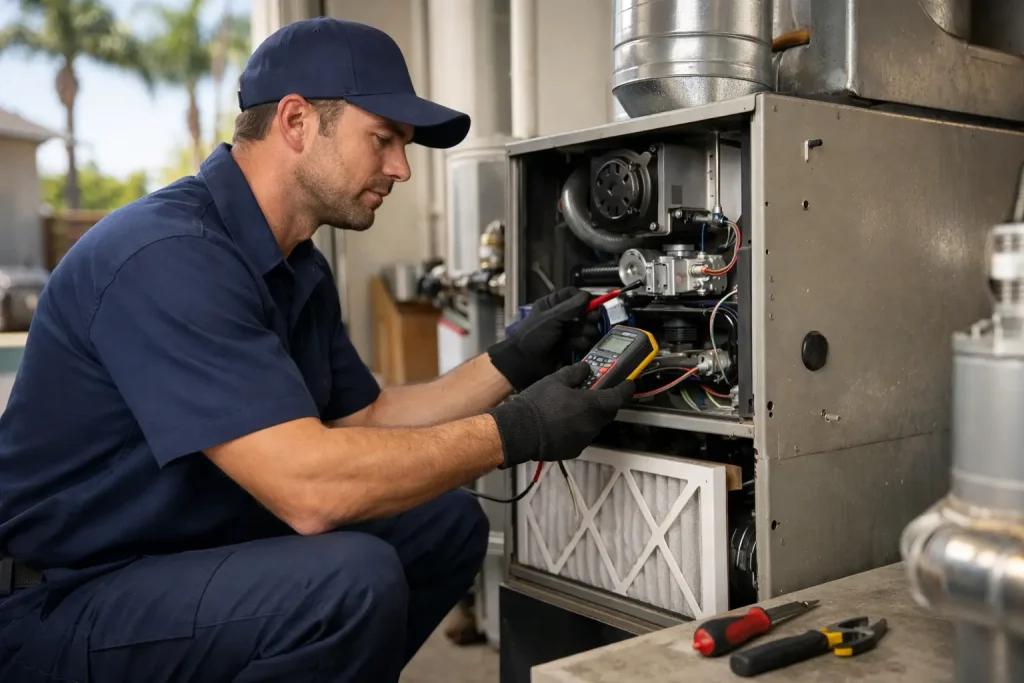
During a heating maintenance visit, the technician may evaluate the burner operation, ignition system, blower components, safety switches, electrical connections, condensate drainage on high-efficiency equipment, and the condition of the heat exchanger. They can also confirm that the furnace is operating within manufacturer specifications and identify worn components before they become a no-heat call.
For gas furnaces, this inspection matters because combustion must be handled correctly. A cracked heat exchanger, venting issue, or combustion concern is not something to guess about. Professional testing provides a clear answer and an appropriate repair recommendation when needed.
Maintenance is especially worthwhile for furnaces that are older, have needed repairs in the past, or serve a rental property or small business where downtime affects more people. It does not mean every older system must be replaced. Sometimes a tune-up and a targeted repair are the sensible choice. Other times, recurring breakdowns and declining efficiency make a replacement discussion worth having.
Check Carbon Monoxide Alarms and Furnace Warning Signs
Every home with fuel-burning equipment should have working carbon monoxide alarms. Install them according to the manufacturer instructions, test them regularly, and replace batteries or units as required. Carbon monoxide has no color or odor, so an alarm is an essential layer of protection.
If a carbon monoxide alarm sounds, or anyone develops symptoms such as headache, dizziness, nausea, confusion, or unusual fatigue while the furnace is operating, get people and pets outside and contact emergency services or the appropriate utility provider. Do not re-enter until authorities say it is safe.
You should also take action if you notice a gas odor. Do not operate switches, use open flames, or try to locate the leak yourself. Leave the area and contact your gas utility or emergency services from a safe location.
Less urgent signs still deserve prompt attention. Call for furnace service if you notice cold spots, weak airflow, frequent cycling, rising utility bills without a clear reason, yellow burner flames instead of steady blue flames, or new noises during operation. Waiting can turn a smaller repair into a complete loss of heat when you need it most.
Don’t Forget the Rest of the Heating System
Your furnace does not work alone. The ductwork, thermostat, vents, and insulation all influence comfort. If some rooms are consistently colder than others, the cause may be airflow imbalance, duct leakage, insulation gaps, or an incorrectly sized system. Simply turning up the thermostat may make the furnace run longer without solving the underlying issue.
For businesses and larger properties, have staff report comfort complaints early. A room that is always too cold, an office with noisy airflow, or a unit that runs constantly can point to a maintenance need before it disrupts operations.
It is also smart to keep the area around outdoor equipment clear if your heating system includes a heat pump. Leaves, debris, and overgrown landscaping can reduce airflow. Avoid covering equipment in a way that traps moisture or obstructs operation.
When to Schedule Furnace Service
Schedule maintenance before winter if the furnace has not been inspected within the past year, if it performed inconsistently last season, or if you have moved into a property and do not know its service history. Early service appointments are generally less stressful than waiting for a cold-weather failure.
If your heat stops working, do not keep resetting the system or ignore repeated shutdowns. Those patterns often signal a problem that needs diagnosis. YourK AC provides professional heating maintenance, repair, installation, and 24/7 emergency HVAC support for homeowners and businesses that need dependable help.
A prepared furnace gives you more than warm air. It gives you a chance to enter winter knowing the system has been checked, the easy maintenance is handled, and help is available if something changes.