
Your AC may still be running while a refrigerant leak quietly takes away its cooling power. In Modesto heat, that can turn from an uncomfortable room into a system breakdown fast. Knowing how to spot refrigerant leak symptoms gives you a chance to schedule service before your air conditioner is working harder, using more energy, and risking more expensive damage.
Refrigerant is the sealed chemical that carries heat out of your home or business. It is not a fuel that your system simply uses up over time. If the refrigerant level is low, there is usually a leak that needs to be located and repaired by a qualified HVAC technician.
How to Spot Refrigerant Leak Symptoms at Home
A refrigerant leak is rarely obvious to the eye. The leak may be in a small copper line, a coil, or a connection inside equipment you cannot safely access. Instead of looking for refrigerant itself, pay attention to changes in comfort, sound, airflow, and energy use.
Your AC blows warm or less-cool air
This is often the first sign homeowners notice. The thermostat is set correctly, the indoor fan is running, and air is coming from the vents, but the house does not cool as it normally would. You may feel mildly cool air instead of the steady, cold air you expect.
Warm air can also be caused by a dirty filter, thermostat issue, compressor problem, or other AC fault. Still, when weaker cooling continues even after you have checked the thermostat setting and replaced a dirty filter, it is time for a professional inspection.
The system runs longer without reaching the set temperature
On a hot afternoon, an air conditioner will naturally run for extended periods. The concern is when it seems to run almost constantly yet the indoor temperature continues to rise or never reaches the setting on the thermostat.
Low refrigerant makes heat transfer less effective. Your system has to work longer for less cooling, which puts additional strain on key components. Do not assume this is normal simply because temperatures outside are high. A properly operating system should still make measurable progress toward the temperature you selected.
You see ice on refrigerant lines or the indoor unit
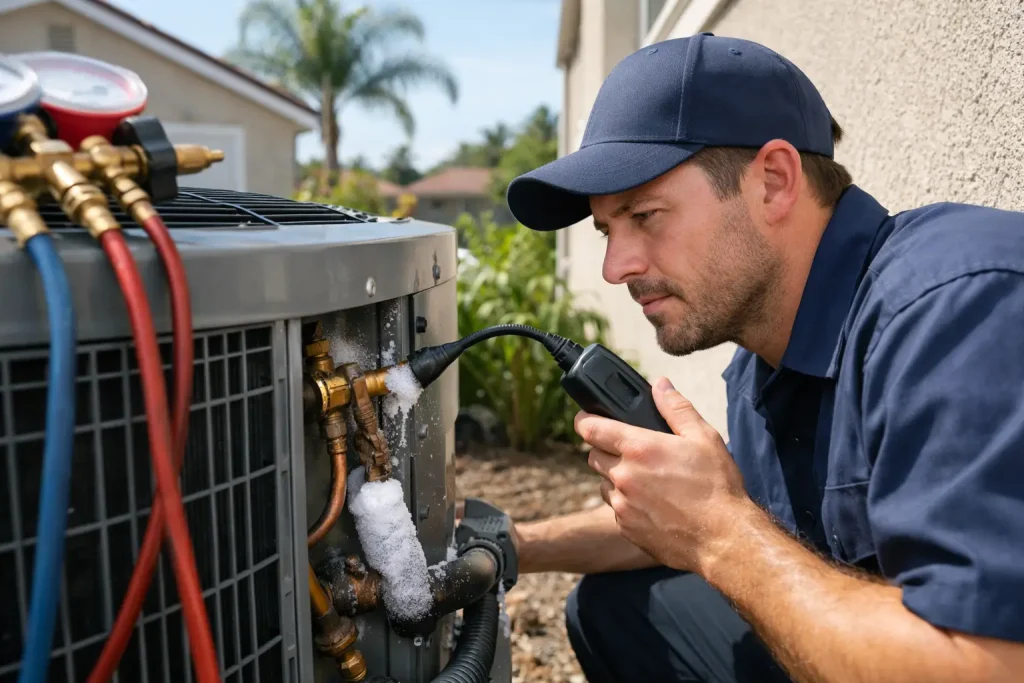
Ice or frost on the insulated copper line near the outdoor unit is a strong warning sign. You may also notice ice forming around the indoor coil area or water around the equipment after the ice melts.
Low refrigerant can cause the evaporator coil to get too cold and freeze. However, restricted airflow from a severely dirty filter, blocked vents, or a blower problem can produce similar icing. Turn the cooling system off if you see ice and contact an HVAC professional. Continuing to run it can damage the compressor and leave you with a larger repair.
You hear bubbling or hissing sounds
A noticeable hiss near the indoor or outdoor equipment can indicate refrigerant escaping through a small opening. A bubbling or gurgling sound may occur when refrigerant and oil move through a compromised line.
Not every unusual sound means there is a leak. Normal systems can make occasional clicks or low operating sounds. What matters is a new, persistent hiss or bubbling noise paired with weak cooling, longer cycles, or ice.
Your energy bills rise without a clear reason
A sudden increase in cooling costs can be frustrating, especially when your household routine has not changed. A refrigerant leak may be part of the cause because the AC needs more runtime to remove the same amount of heat.
Bills alone do not confirm a leak. Seasonal weather, poor insulation, duct issues, and aging equipment can all raise energy use. Compare your recent bills with similar warm periods, then consider whether you have noticed any comfort changes at the same time.
The indoor air feels humid and uncomfortable
Your air conditioner does more than lower the temperature. It also removes moisture from indoor air. When refrigerant is low, the system may struggle to dehumidify effectively, leaving rooms feeling sticky even when the thermostat says the temperature is acceptable.
This can be especially noticeable in bedrooms, upstairs rooms, or spaces with afternoon sun. If the home feels clammy while the AC runs, do not ignore it as a minor comfort issue. It can be a useful clue for a technician diagnosing system performance.
What You May Notice Around the Outdoor Unit
The outdoor condenser is not where every refrigerant leak occurs, but it can reveal signs that the system is under stress. Look for frosted refrigerant lines, a unit that runs for unusually long periods, or a fan that is operating while the home is not getting cooler.
You may also notice an oily residue around a refrigerant line connection. Refrigerant oil can leave a trace where a leak is present, but it is not a reliable do-it-yourself test. Dirt, moisture, and normal wear can be misleading. A certified technician uses the proper tools to identify the leak, confirm its location, and determine whether repair makes sense for the system’s condition.
Avoid trying to tighten lines, add refrigerant, or use store-bought sealants. Refrigerant work requires trained handling, correct equipment, and compliance with safety and environmental rules. Adding refrigerant without repairing the source of the leak only creates a temporary symptom change while the underlying problem continues.
Why a Refrigerant Leak Needs Prompt Attention
A small leak does not always cause an immediate shutdown. That is exactly why it can be easy to postpone. As refrigerant escapes, cooling capacity drops and your AC works harder to compensate. Over time, low refrigerant can lead to frozen coils, compressor stress, higher utility costs, and a complete loss of cooling when you need it most.
The right response depends on the system. A newer unit with a repairable leak may be a strong candidate for professional repair. With an older system, the leak location, coil condition, refrigerant type, repair history, and overall efficiency all affect the decision. An honest technician should explain the findings clearly and help you weigh the practical options instead of pushing a one-size-fits-all answer.
For a commercial property, respond quickly as well. Uneven temperatures can affect employees, customers, equipment rooms, and tenant comfort long before the AC stops completely. Documenting when the issue started, which areas are affected, and what the thermostat is doing can help speed up diagnosis.
What to Do When You Suspect a Leak
Start with a few safe observations. Check that the thermostat is set to cool and that the filter is not visibly clogged. Make a note of warm airflow, ice, unusual sounds, thermostat readings, and when the problem occurs. These details help the technician find patterns faster.
If you see ice, hear a strong hissing sound, smell anything unusual, or the AC cannot keep the property comfortable, turn off cooling and request service. You can leave the fan setting on if advised by your HVAC professional, but do not keep forcing the compressor to run against a frozen coil or low refrigerant condition.
During a professional visit, the technician can inspect the system, measure operating pressures, check airflow, test for leaks, and evaluate the condition of the coil and lines. The proper repair is to find and address the leak, then restore the refrigerant charge to the manufacturer’s specifications. Simply topping off the system without fixing the leak is not a lasting solution.
Preventing Surprise Refrigerant Problems
Regular AC maintenance cannot prevent every leak, particularly in aging equipment, but it can uncover warning signs before peak summer demand. A maintenance visit gives a technician the opportunity to inspect system performance, look for corrosion or wear, verify airflow, and catch problems that may otherwise go unnoticed.
Keep outdoor equipment clear of leaves, grass clippings, and stored items so it can release heat properly. Replace filters on schedule and keep supply vents open. These habits will not fix a refrigerant leak, but they reduce airflow problems that can look similar and help your system operate under less strain.
When cooling changes suddenly, trust what you are noticing. Fast service can protect comfort, prevent added equipment damage, and give you clear answers. YourK AC is ready to help Modesto-area homeowners and businesses get to the source of AC problems with practical, professional care.