Your AC quits on the hottest afternoon of the week, and the first question is usually not technical. It is financial. AC repair costs explained in plain language can help you make a smart decision fast, without feeling pressured or caught off guard.
The truth is that air conditioner repair pricing is rarely one-size-fits-all. Two homes can have similar cooling problems and still end up with very different repair bills. The reason comes down to the type of issue, the condition of the system, the parts involved, and how urgent the service call is. If you know what drives the cost, it is much easier to tell the difference between a reasonable repair and a sign that a bigger conversation may be needed.
AC repair costs explained: what you are really paying for
When people think about AC repair, they often picture one broken part and one simple fix. Sometimes that happens. But in many cases, the cost reflects more than the replacement of a single component.
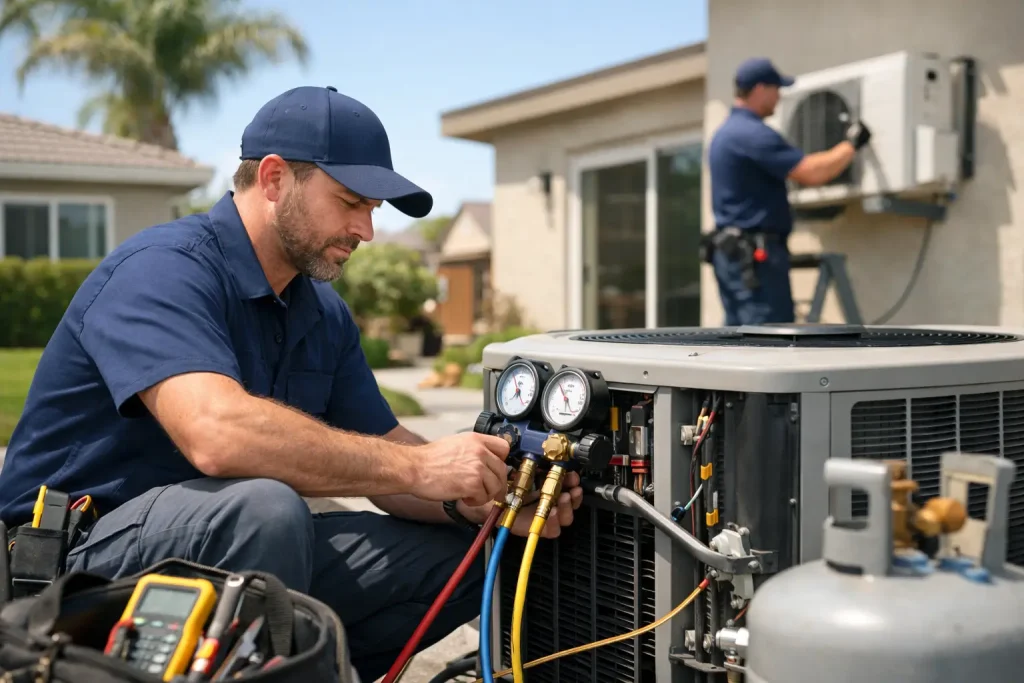
You are paying for diagnosis, skilled labor, the right repair process, and the parts needed to restore safe and reliable operation. In some cases, the technician also has to test the system after the repair, confirm airflow and temperature performance, and make sure the original issue did not cause damage elsewhere.
That matters because an AC system is connected. A weak capacitor may look like a small problem, but if it has been stressing the compressor or fan motor, the repair can involve more than one step. A refrigerant issue may not just mean adding refrigerant. It may also mean finding and correcting the leak that caused the problem in the first place.
The biggest factors that affect AC repair cost
The type of repair is usually the biggest factor. Some problems are relatively straightforward, like a worn contactor, a failed capacitor, or a clogged drain line. Others are more involved, such as a blower motor issue, evaporator coil problem, compressor trouble, or a refrigerant leak that takes time to trace and correct.
System age also matters. Older air conditioners can be harder to repair because parts may be less available, wear may be more widespread, and the unit may already be operating inefficiently. If one component fails in an aging system, there is a higher chance that another part is also near the end of its service life.
Accessibility plays a role too. A repair on an easily reached outdoor condensing unit is not the same as a repair that requires working in a tight attic during peak summer heat. Labor time changes when access is difficult, and that affects the total cost.
Timing can affect cost as well. If your system stops during extreme weather or outside standard business hours, the urgency of emergency service may influence what the visit involves. For many property owners, that trade-off is worth it. Restoring cooling quickly can be more important than waiting, especially in a home with children, older adults, tenants, or sensitive equipment.
Common repairs and why the range can vary
Not all AC problems carry the same level of complexity. A thermostat issue, for example, might be simple if the problem is calibration, wiring, or settings. It becomes more involved if the issue is tied to control board communication or a larger electrical fault.
Capacitors and contactors are common wear items, but even these can vary depending on the system design and whether the failure caused strain on other components. Fan motor repairs can be more expensive because the part itself is more substantial, and labor may take longer.
Refrigerant problems are one of the biggest sources of confusion for homeowners. If your system is low on refrigerant, that usually points to a leak. A proper repair may involve leak detection, sealing or replacing the faulty part, pressure testing, evacuation, and recharging the system to manufacturer specifications. That is a much different job than simply topping off refrigerant, and it is one reason these repairs can vary so much.
Compressor issues are often the most serious. Since the compressor is central to the cooling cycle, repairs involving it can become a turning point. In some cases, repair makes sense. In others, especially with older systems, replacement may be the more practical long-term decision.
Why a diagnosis matters before anyone talks numbers
A trustworthy HVAC company does not guess. Proper diagnosis comes first because the symptom you notice is not always the actual problem.
Warm air from the vents could mean a refrigerant issue, but it could also mean a failing capacitor, airflow restriction, frozen evaporator coil, thermostat malfunction, or electrical problem. Water around the unit might point to a clogged condensate drain, but it could also be connected to icing and airflow issues.
This is where transparent service matters. Clear communication about what failed, what caused it, and what needs immediate attention helps you make a decision with confidence. For homeowners and business owners, that clarity is often just as important as the repair itself.
AC repair costs explained for older vs. newer systems
Newer systems can still need repairs, but they often benefit from better part availability and improved efficiency. If the problem is isolated and the unit is otherwise in good condition, repair is usually the practical move.
With older systems, the decision can be less straightforward. Even if the immediate repair is possible, it may not solve the bigger issue of declining performance, repeat breakdowns, and rising energy use. A system that struggles every summer may keep generating repair costs without delivering dependable comfort.
That does not mean every older AC should be replaced. It means the repair should be evaluated in context. If the system has been reliable and the issue is limited, repair may still be the best value. If the unit has a history of problems, the conversation may shift from short-term fix to long-term cost control.
How maintenance affects repair costs
The cheapest repair is usually the one you never need. Routine maintenance does not eliminate all breakdowns, but it can catch many of the problems that turn into larger, more expensive repairs later.
Dirty coils, loose electrical connections, blocked drains, restricted airflow, and low-performing components often show warning signs before they cause a complete shutdown. A system that is cleaned, tested, and inspected regularly has a better chance of running efficiently and avoiding mid-season failures.
Maintenance also helps protect parts that work hard under summer demand. When airflow is poor or electrical components are under strain, the system has to work longer and harder to cool the space. That added stress can shorten the life of major components and increase the chance of emergency service.
When repair is worth it and when it may not be
This is where honest guidance matters most. Not every problem should lead to replacement, and not every repair makes financial sense.
Repair is usually worth considering when the system is in generally good condition, the issue is isolated, and the repair restores dependable performance. If the unit has several years of useful life left and the repair solves the problem without signs of broader failure, fixing it is often the right call.
Repair may be harder to justify when major components fail in an older system, when breakdowns are becoming frequent, or when efficiency has dropped enough that utility costs and repair costs are both climbing. In those situations, spending more on another repair may only delay an inevitable replacement.
A dependable HVAC company should walk you through that trade-off clearly. The goal is not to sell the biggest job. The goal is to recommend the option that best fits the condition of your system, your property, and your budget.
How to avoid surprises on your repair bill
The best way to avoid surprises is to ask direct questions before authorizing work. Ask what the diagnosis is, whether the repair addresses the root cause, whether any related issues were found, and what to expect from the system afterward. If there are multiple options, ask which one is the most practical and why.
It also helps to work with a company that values transparency from the start. Fast response is important when your AC is down, but so is clear communication. In a market like Modesto, where summer heat can put real pressure on homes and businesses, responsiveness and honesty are not extras. They are part of good service.
If you are dealing with an AC problem right now, the most useful next step is not guessing the cost based on symptoms alone. It is getting the system properly diagnosed by a qualified technician who can explain the issue, the repair path, and whether the fix makes sense for your unit. That kind of clarity saves time, lowers stress, and helps you make the right call when comfort cannot wait.