
The first 90-degree day has a way of finding every weak spot in your cooling system. If you are wondering how to prepare AC for summer, the best time is before the heat settles in and your system has to run all afternoon just to keep up.
A little preparation now can help you avoid the most common warm-weather problems – weak airflow, rising energy bills, uneven cooling, and sudden breakdowns when you need the system most. For homeowners, property managers, and small business owners, the goal is simple: get ahead of the season and make sure your AC is ready to do its job reliably.
Why how to prepare AC for summer matters
Air conditioners usually do not fail out of nowhere. In many cases, they have been showing signs for weeks or months. A clogged filter, dirty outdoor unit, low airflow, or worn electrical parts can all put extra strain on the system. Then summer arrives, run times get longer, and the problem becomes impossible to ignore.
Seasonal preparation is not about overcomplicating your HVAC system. It is about giving it the basic support it needs before demand spikes. That can mean better comfort, fewer surprise repairs, and a better chance of catching smaller issues before they turn into bigger ones.
If your system is older, this step matters even more. Aging equipment can still perform well, but it usually has less room for neglect. A unit that handled last summer might struggle this year if maintenance has been delayed.
Start with the air filter
If there is one step almost every property owner can take right away, it is checking the filter. A dirty filter restricts airflow, which makes the system work harder and can reduce cooling performance throughout the building.
Take a look at the filter before summer begins. If it looks dusty, clogged, or discolored, replace it. Even if it does not look terrible, replacing it at the start of the season is often a smart move. During peak cooling months, many systems need more frequent filter changes depending on usage, indoor air conditions, pets, and the type of filter installed.
This is a small task, but it has an outsized impact. Good airflow helps the system cool more evenly and can reduce unnecessary strain on major components.
Clear the area around the outdoor unit
Your outdoor condenser needs space to release heat. When it is surrounded by overgrown plants, yard debris, or stacked items, airflow suffers and efficiency can drop.
Walk outside and inspect the area around the unit. Remove leaves, weeds, branches, and anything else that may block circulation. If shrubs have grown too close, trim them back to give the equipment breathing room. Also check for visible dirt buildup on the exterior fins. If the unit looks packed with debris after a windy or dusty season, that is worth addressing during professional maintenance.
This is also a good time to notice anything unusual. A tilted unit, damaged fins, or signs of corrosion do not always mean immediate failure, but they should not be ignored heading into summer.
Check your thermostat settings
Sometimes the issue is not the AC itself. It is the control point. Before hot weather hits, test your thermostat and make sure it is responding correctly.
Switch the system to cooling mode and lower the setting a few degrees. Listen for the system to start. If the response is delayed, inconsistent, or nonexistent, there may be a thermostat issue, a wiring problem, or a larger system fault.
If you use a programmable or smart thermostat, review the schedule. A lot of people forget to update settings from the winter or mild spring months. Running the AC at the wrong times can increase wear and drive up energy use without improving comfort.
For commercial spaces and rental properties, this step is especially useful. Comfort complaints often trace back to scheduling problems, override settings, or thermostats that are not calibrated properly.
Pay attention to airflow indoors
One of the easiest ways to spot trouble early is to check airflow room by room. Turn the system on and notice whether air is moving steadily from the vents. If one area feels weak while another is fine, there may be a blockage, duct issue, dirty filter, or blower-related problem.
Make sure supply vents are open and not blocked by furniture, rugs, or storage. Return vents also need to stay clear. Restricted return airflow can affect the whole system.
Uneven cooling does not always mean you need a full replacement. Sometimes the fix is straightforward. Other times, it points to a system that needs professional diagnosis before summer demand makes the issue worse.
Listen for signs your system is not ready
A well-functioning AC should not be loud, erratic, or constantly cycling. If you hear banging, buzzing, rattling, or screeching, there is a reason. Strange noises can point to loose parts, motor trouble, electrical issues, or debris inside the equipment.
Short cycling is another warning sign. If the system turns on and off too frequently, it may be struggling with airflow, thermostat problems, electrical faults, or capacity issues. On the other hand, if it runs for long stretches without reaching the set temperature, that can also signal trouble.
These are not issues to wait on. What feels like a minor annoyance in spring can become a no-cooling call in the middle of a heat wave.
Schedule professional AC maintenance before peak heat
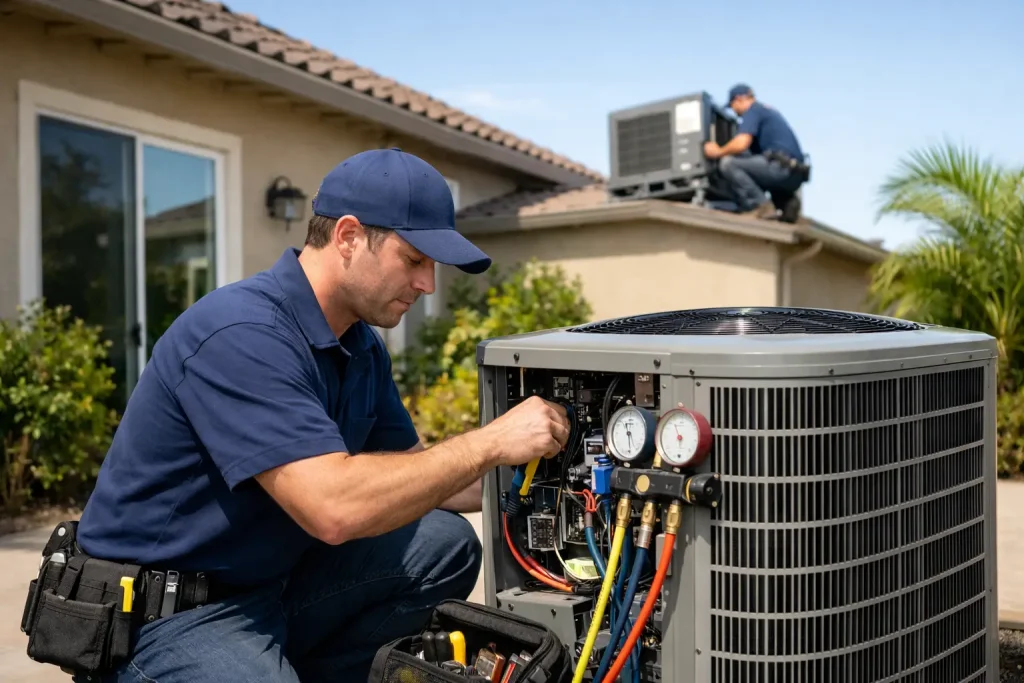
If you really want to know how to prepare AC for summer the right way, this is the step that makes the biggest difference. Professional maintenance helps catch hidden issues that are easy to miss from the outside.
A seasonal tune-up typically includes inspecting key components, checking electrical connections, testing system performance, examining refrigerant-related concerns, cleaning critical parts, and identifying wear that could lead to failure under heavy use. It is the kind of service that supports reliability rather than waiting for a breakdown to force action.
For homes, this can mean fewer comfort disruptions when temperatures climb. For small businesses and rental properties, it can mean fewer emergency service calls, less tenant frustration, and less downtime during busy periods.
There is also a timing advantage. Once summer is in full swing, HVAC schedules fill up fast. Booking maintenance early gives you more flexibility and more time to handle any needed repairs before the hottest stretch of the season.
Watch for signs you may need repair, not just maintenance
Not every AC issue can be solved with a routine tune-up. Sometimes the system is already telling you it needs repair.
Warm air from the vents, weak airflow throughout the property, water around the indoor unit, bad odors when the system runs, tripped breakers, and sudden increases in utility use are all signs that something more than basic maintenance may be going on. If your AC struggled at the end of last summer, do not assume it will bounce back on its own.
Older systems deserve an honest look here. If repairs have become more frequent, your equipment may still be serviceable, but it may also be nearing the point where replacement becomes the more practical long-term decision. That depends on age, condition, repair history, and how well the system is meeting your cooling needs now.
Do not wait until the first real heat wave
There is always a rush when temperatures spike. That is when neglected systems show their age, minor issues turn urgent, and appointment availability gets tighter across the board.
Preparing early gives you options. You can replace a filter, test the thermostat, clear the outdoor unit, and schedule maintenance on your timeline instead of reacting when the building is already uncomfortable. If a technician does find a problem, you have a better chance of addressing it before your AC is under maximum stress.
For property owners in places like Modesto, where summer heat can be relentless, that timing matters. A cooling system does not need to be perfect. It needs to be ready.
A smarter way to head into summer
Summer prep is really about reducing avoidable problems. Clean airflow, clear equipment, working controls, and a professional inspection give your AC a stronger chance of handling the season without unnecessary strain.
If your system is already showing signs of trouble, it is better to deal with it now than sweat through a preventable breakdown later. A little attention before the heat arrives can make the whole season easier to manage.