
If your AC quits during a Modesto heat wave or your furnace struggles on a cold morning, maintenance suddenly stops feeling optional. A lot of homeowners and property managers ask the same question: what does HVAC maintenance include? The short answer is inspection, cleaning, testing, and adjustment of the system parts that affect comfort, efficiency, safety, and reliability.
That sounds simple, but good maintenance is more than a quick filter check. A proper service visit is meant to catch wear before it becomes a breakdown, improve system performance, and give you a clear picture of what condition your equipment is actually in.
What does HVAC maintenance include on a typical visit?
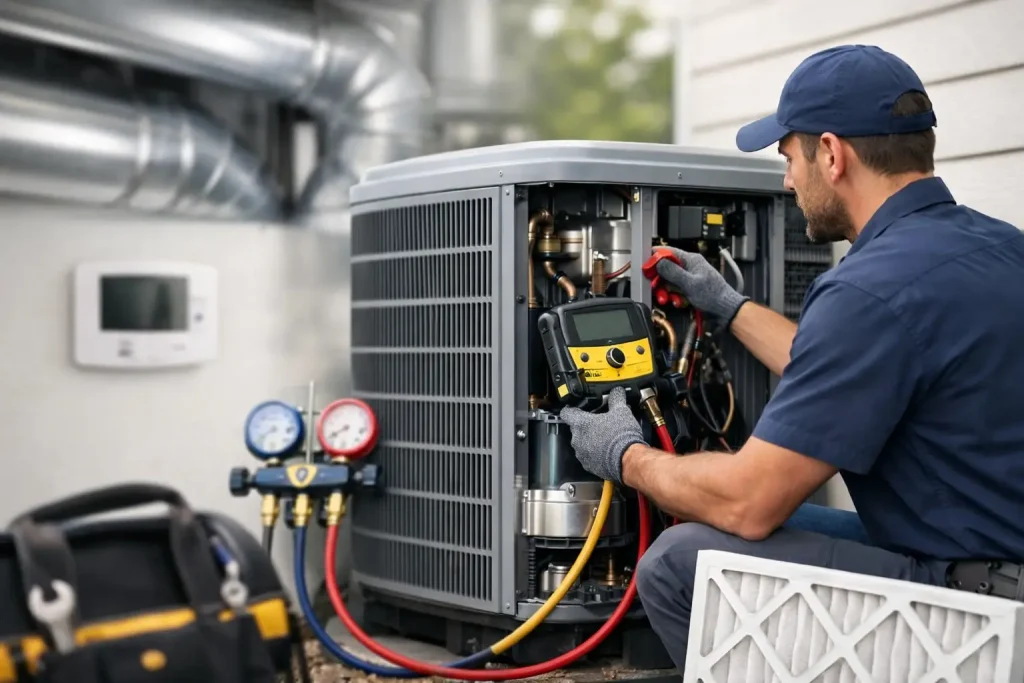
Most HVAC maintenance appointments cover both the cooling and heating sides of your system, depending on the season and the type of equipment you have. For a standard residential system, a technician usually inspects the thermostat, air filter, electrical components, blower assembly, condenser unit, evaporator coil, refrigerant levels, condensate drain, and major safety controls.
The goal is not just to look around and leave. A real maintenance visit includes hands-on service. That means cleaning buildup from critical components, tightening electrical connections, checking voltage and amperage, testing system startup and shutdown, measuring airflow, and making small adjustments that help the system run the way it should.
For commercial properties, the checklist can be broader. Rooftop units, zoning controls, larger duct systems, and heavier usage patterns often require more detailed attention. Maintenance still follows the same principle: find early warning signs, reduce strain on the equipment, and keep the building comfortable without surprise failures.
Inspection comes first
A strong maintenance visit starts with a full inspection because many HVAC issues show up before the system completely stops working. A technician checks for signs of worn parts, dirty components, corrosion, loose wires, refrigerant issues, drainage problems, and airflow restrictions.
This step matters because HVAC systems rarely fail all at once. A capacitor may weaken over time. A contactor may show pitting. A blower motor may pull higher amperage than normal before it burns out. Spotting those issues early gives you options. You can plan a repair before it turns into an emergency call.
Inspection also helps verify whether your system is aging normally or showing signs of more serious trouble. If maintenance reveals repeated electrical issues, refrigerant leaks, or major airflow problems, that may point to a repair need that cleaning alone will not fix.
Cleaning is a major part of HVAC maintenance
Dirty equipment is one of the biggest reasons systems lose efficiency and wear out faster. That is why cleaning is a core part of professional HVAC maintenance, not an extra.
On the cooling side, the outdoor condenser coil often collects dirt, dust, leaves, and debris. When that happens, the system has a harder time releasing heat. Your AC may run longer, cool less effectively, and put more strain on the compressor. Cleaning the condenser helps restore normal operation.
Inside, the evaporator coil, blower components, and drain line also need attention. If the coil is coated in dust, airflow drops. If the blower wheel is dirty, the system may move less air than it should. If the condensate drain is clogged, water can back up and cause leaks or trigger a safety shutoff.
Heating equipment has its own cleaning needs. Furnaces can collect dust around burners, blowers, and compartments. That buildup affects performance and, in some cases, safety. With gas heating systems especially, clean operation matters.
Testing electrical and mechanical components
Many HVAC breakdowns come down to parts that are under constant electrical or mechanical stress. During maintenance, technicians test and evaluate those components before they fail under load.
That often includes checking capacitors, contactors, relays, motors, wiring connections, and control boards. Loose or damaged electrical parts can cause intermittent performance issues, short cycling, hard starts, or total system failure. Tightening connections and identifying weak components early can prevent that mid-season breakdown nobody wants.
Mechanical testing is just as important. Motors, belts, bearings, and moving assemblies need to operate smoothly. If a technician hears unusual noise, sees vibration, or measures abnormal performance, that can point to a part wearing out.
This is one area where maintenance can save real money. Replacing a small failing component during a planned visit is usually easier and less expensive than dealing with a complete shutdown during the hottest or coldest week of the year.
Airflow and filter checks matter more than most people think
Poor airflow can make a healthy HVAC system act like a failing one. Rooms stay uncomfortable, utility bills rise, and the equipment works harder than necessary. That is why maintenance includes checking filters, blowers, vents, and overall air movement.
A clogged air filter is the most common issue, but it is not the only one. Closed vents, dirty coils, leaky ductwork, and blower problems can all reduce airflow. During maintenance, a technician looks at how air is moving through the system and whether restrictions are forcing it to work harder.
This matters in both homes and small commercial spaces. In a house, poor airflow may mean one bedroom never cools properly. In a business, it can affect customer comfort, employee productivity, and even how hard rooftop units have to run throughout the day.
Refrigerant, drain lines, and cooling performance
For air conditioning systems, maintenance often includes checking refrigerant pressures and overall cooling performance. That does not mean simply topping off refrigerant automatically. If levels are low, a good technician should look for the reason. Refrigerant does not get used up like fuel. Low charge can signal a leak, and that needs proper attention.
Technicians also inspect the condensate drain and drain pan. In our area, AC systems run hard for long stretches, so moisture removal is constant in cooling season. A clogged drain can lead to water damage, mold concerns, or unexpected shutdowns if the float switch trips.
System temperature split, cycle behavior, and thermostat performance are also part of the evaluation. If your AC is running but not cooling well, maintenance can reveal whether the cause is dirt, airflow, electrical trouble, refrigerant issues, or something more serious.
Heating maintenance includes safety checks
When maintenance is done on a furnace or other heating equipment, safety becomes a bigger part of the visit. The technician typically checks ignition components, burners, heat exchanger condition, gas connections, flame performance, venting, and safety controls.
This is one of the clearest examples of why DIY maintenance has limits. Homeowners can replace filters and keep areas around equipment clean, but combustion testing and safety inspection should be handled by a trained professional. Problems with flame rollout, cracked heat exchangers, or venting are not things you want guessed at.
Electric heating systems need maintenance too, but the focus may differ. Instead of burner operation and gas pressure, the technician may concentrate more on heating elements, electrical draw, sequencers, and controls.
What HVAC maintenance usually does not include
Maintenance is designed to prevent problems and catch small issues early, but it is not the same as a major repair. If a motor is already failed, a coil is leaking, or a control board is damaged, those repairs are typically separate from the maintenance visit.
That distinction matters because some companies advertise very low-cost tune-ups that are really just quick inspections. If the appointment feels rushed or no one is actually cleaning, testing, or measuring performance, you are probably not getting full maintenance.
A reliable service company should be clear about what is included, what was found, and whether any recommended repair is urgent, optional, or something to keep an eye on. That kind of transparency matters just as much as the maintenance itself.
How often should HVAC maintenance be done?
For most systems, twice a year is the safest schedule – once before cooling season and once before heating season. If your system is older, runs heavily, serves a commercial space, or has had past repair issues, more frequent checks may make sense.
It also depends on how the property is used. A small business with long operating hours puts different demands on HVAC equipment than a home where the thermostat is adjusted throughout the day. Rental properties, homes with pets, and dusty environments can also need more attention because filters and coils get dirty faster.
If you are unsure, the best approach is practical, not complicated. Service the equipment before peak season, correct small issues early, and do not wait for reduced performance to turn into a full outage.
Why maintenance pays off
The biggest benefit of HVAC maintenance is reliability. Cleaner parts, stronger airflow, safer operation, and early problem detection all help reduce the chance of a sudden breakdown. Maintenance can also improve energy efficiency, extend equipment life, and keep repair costs more manageable over time.
That said, maintenance is not magic. It cannot make an aging system last forever, and it cannot solve every comfort issue if the equipment is undersized, poorly installed, or near the end of its life. But for most homes and small businesses, it is one of the smartest ways to protect the system you already have.
If you want fewer surprises, lower strain on your equipment, and a better chance of staying comfortable when temperatures spike, regular HVAC maintenance is a practical move. And when you work with a local team like YourK AC, you should expect a service visit that is clear, thorough, and focused on keeping your system ready when you need it most.
The best time to schedule maintenance is before your system gives you a reason to wish you had.
Comments are closed.