
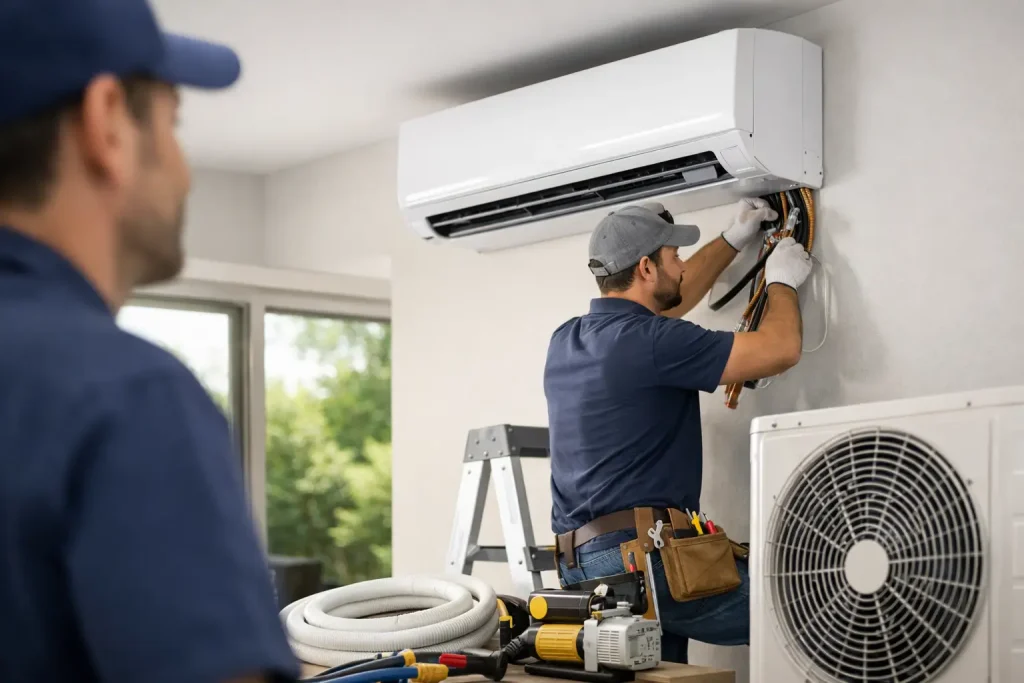
A back bedroom that never cools down, a garage that turns into an oven by noon, or an older home without ductwork usually leads to the same question: is ductless mini split installation the right move? For many Modesto-area properties, the answer is yes – but only when the system is sized correctly, installed cleanly, and matched to how the space is actually used.
A mini split is not a shortcut system or a budget workaround. When installed properly, it gives you targeted heating and cooling, quieter operation, and better control over problem areas that central HVAC often struggles to handle. That makes it a smart option for homeowners, landlords, and small business owners who want reliable comfort without tearing into walls for full ductwork.
Why ductless mini split installation makes sense
The biggest advantage of a ductless system is control. Instead of pushing conditioned air through long duct runs, the system delivers heating and cooling directly into the room or zone where you need it. That can improve comfort and reduce wasted energy, especially in spaces that are hard to keep comfortable with a single central unit.
This setup works well for room additions, converted garages, workshops, home offices, and older houses that were never built with ducts. It is also a practical option when one part of the property runs hotter or colder than the rest. In some homes, adding a mini split solves a comfort issue faster and more affordably than reworking an entire central system.
There are trade-offs. A ductless system still needs professional design, proper electrical support, and the right indoor unit placement. It also looks different from traditional vents, which matters to some property owners. The best choice depends on the layout, insulation, sun exposure, and whether you are fixing one problem area or planning comfort for the whole building.
What happens during ductless mini split installation
Most customers want to know how disruptive the job will be. In a straightforward install, the process is faster and cleaner than many people expect.
First, the technician evaluates the space. This step matters more than people realize. The installer is not just picking a wall and hanging a unit. They are checking square footage, ceiling height, insulation, window placement, electrical capacity, and how the room gains and loses heat. A system that is too small will struggle on extreme days. One that is too large can short cycle and waste energy.
Next comes equipment placement. The indoor air handler needs a location that allows good airflow and practical service access. The outdoor unit needs stable mounting, clearances for ventilation, and a spot that will not create avoidable noise issues near windows, patios, or neighboring properties.
After that, the crew creates a small wall opening for the line set, drain, and wiring. The indoor and outdoor units are connected, electrical components are completed, and the condensate drainage is set up. Then the system is pressure tested, vacuumed properly, and started up. Final testing confirms airflow, temperature performance, and controls.
On a simple single-zone project, installation may be completed in a day. Multi-zone systems or properties with access challenges can take longer. If the electrical panel needs upgrades or the layout is complex, the timeline may extend. A reliable contractor should explain that upfront instead of surprising you once the work begins.
Cost depends on more than the equipment
One of the most common mistakes is comparing mini split prices without comparing the scope of work. The unit itself is only part of the total cost.
Installation pricing is affected by system size, number of indoor zones, brand, efficiency rating, mounting method, line set length, electrical work, and how difficult the property is to access. A single indoor unit serving one room will usually cost less than a multi-zone setup for several areas, but the right solution is not always the cheapest one on paper.
For example, if you are trying to condition three separate rooms with different usage patterns, a multi-zone system may make more sense than forcing one oversized solution to do everything. On the other hand, if you only need comfort in one garage conversion or home office, a single-zone setup may be all you need.
Good contractors also factor in long-term operating value. Higher-efficiency equipment can cost more upfront but lower monthly utility bills over time. That matters in Central Valley heat, where cooling demand is not a small issue for much of the year.
Sizing and placement are where jobs go right or wrong
If you want a system that performs well for years, sizing and placement deserve serious attention. This is where professional experience shows.
A mini split should match the room, not just a rough square-foot estimate. Two rooms of the same size can need very different capacity because of insulation, window area, shade, occupancy, or direct afternoon sun. In Modesto, that heat load difference is real.
Placement matters just as much. An indoor unit mounted in the wrong spot can create uneven temperatures, blow air where it is not wanted, or struggle to circulate air properly. The outdoor unit also needs thoughtful placement to protect performance and simplify service down the road.
A fast install is not the same as a good install. Clean workmanship, correct refrigerant procedures, and proper startup testing are what protect efficiency, reliability, and equipment life.
Where mini splits work best
Not every property needs a ductless system, but certain situations are a strong fit. Homes with hot or cold spots are near the top of that list. So are additions, enclosed patios, detached offices, and older homes where adding ductwork would be invasive or expensive.
For small businesses, mini splits can be useful in offices, server rooms, storefronts, or work areas that need separate temperature control. Property managers also use them to improve comfort in individual units or solve recurring complaints in hard-to-balance spaces.
That said, there are cases where central HVAC is still the better option. If the whole property already has well-designed ducts and the issue is a failing main system, replacement of the existing central equipment may make more financial sense. The right answer depends on the building and the problem you are trying to solve.
Choosing the right installer matters
Ductless equipment has a reputation for efficiency, but efficiency on paper does not guarantee performance in the field. The quality of the installation directly affects how the system runs.
A dependable HVAC company should inspect the property, explain your options clearly, and give you a realistic view of cost, timing, and expected results. You should not feel rushed into oversized equipment or extra zones you do not need. You should also not be left guessing about electrical requirements, permit needs, or how the final setup will look.
For local property owners, there is real value in working with a team that understands Central Valley conditions and the urgency that comes with heating and cooling problems. YourK AC approaches installations with that in mind – practical recommendations, clear pricing, and work focused on dependable comfort instead of sales pressure.
After installation: what to expect from daily use
Once the system is up and running, most people notice the difference quickly. Mini splits are typically quiet, responsive, and easy to control. You can adjust comfort in the space that needs it without over-conditioning the rest of the property.
Routine maintenance still matters. Filters need to stay clean, outdoor units need clearance, and the system should be checked periodically to protect performance. Like any HVAC equipment, small issues are cheaper to address early than after they turn into a breakdown during peak summer heat.
If your goal is better comfort in one hard-to-condition room or a practical solution for a property without ducts, ductless mini split installation can be a strong investment. The key is getting a system that fits the space, the weather, and the way you actually use the building – because comfort is not just about having equipment, it is about having the right equipment installed the right way.