
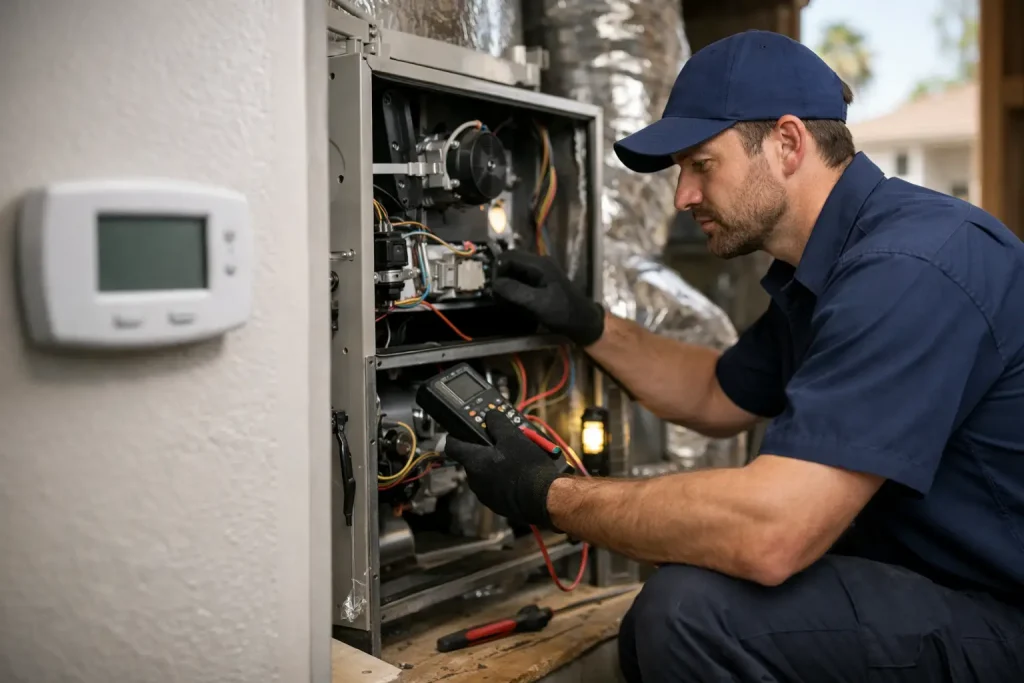
A cold house can make a small heating problem feel urgent fast. If you are asking, “why is heater not turning on,” the cause may be as simple as a thermostat setting or a tripped breaker. It can also point to a safety shutdown, ignition failure, airflow restriction, or a system that needs professional repair. The right next step depends on what your heater is doing – and what it is not doing.
Why Is My Heater Not Turning On?
Start by noticing the exact symptom. Does the thermostat screen stay blank? Does the system make a clicking sound but never produce heat? Does the blower run while the air coming from the vents stays cold? These details help narrow down the issue and help a technician diagnose the problem more efficiently.
For homeowners, property managers, and business owners, the priority is restoring safe, reliable heat without guessing at repairs. You can check a few basic settings safely. If those do not resolve the issue, a certified heating technician can identify the failed component and recommend the practical repair or replacement option.
1. The thermostat is set incorrectly or has lost power
A thermostat can be set to cool, fan-only, or an unusually low temperature without anyone realizing it. Confirm that it is set to Heat and raise the set temperature several degrees above the current room temperature. If your system has a fan setting, choose Auto rather than On. In the On position, the blower may run continuously even when the furnace is not producing heat.
If the thermostat display is blank, replace its batteries if it uses them. A blank display can also indicate a tripped breaker, a blown low-voltage fuse, or a wiring issue. Those electrical issues should be evaluated by an HVAC professional rather than handled as a home repair.
2. The circuit breaker has tripped or the furnace switch is off
Your heating system needs power even if it runs on natural gas. The blower motor, control board, thermostat, and ignition system all rely on electricity. Check your electrical panel for a breaker labeled furnace, heat, HVAC, or air handler. If it has tripped, you may reset it once.
If it trips again, leave it off and call for service. Repeated tripping can signal a motor problem, electrical fault, or failing component that needs trained diagnosis. Also check the furnace service switch, which often looks like a regular wall switch near the unit. It may have been switched off accidentally during storage, cleaning, or other work around the equipment.
3. A clogged air filter is restricting airflow
A dirty filter can cause more than dusty air. When airflow becomes restricted, a furnace may overheat and shut down as a safety measure. In some cases, it will try to restart repeatedly. You may hear it turn on and off without the home ever getting comfortable.
Check the filter only if you can access it easily and safely. If it is visibly packed with dust, replace it with the correct size and type for your system. Avoid using a filter that is too restrictive for the equipment, especially if your system has had airflow issues before. Regular filter changes are one of the simplest ways to protect heating performance and reduce avoidable service calls.
4. The furnace door or safety switch is not engaged
Many furnaces have a safety switch behind the access panel. If the panel is not fully seated after a filter change or inspection, the furnace may not start at all. Make sure the door is properly aligned and secured before trying the system again.
This is a common issue with equipment located in garages, closets, attics, or utility rooms. Do not remove panels to test internal parts or bypass a safety switch. Those protections are there to prevent injury and equipment damage.
5. The pilot light, igniter, or flame sensor has failed
Older gas furnaces may use a standing pilot light, while most newer systems use an electronic igniter. If the igniter cannot light the burners, or if a dirty flame sensor cannot confirm that a flame is present, the furnace will shut itself down for safety.
You might hear a few clicks, see the blower run, or notice that the system attempts to start and then stops. These are frequent heating repair issues, but they are not a good fit for trial-and-error fixes. Gas combustion components must be inspected and serviced correctly to keep the system operating safely.
If you smell gas, leave the building immediately, avoid switches and open flames, and contact your gas utility or emergency services from a safe location. Do not try to restart the heater.
6. The condensate drain is blocked
High-efficiency furnaces produce condensation as they operate. That water drains through a small line. If the drain or related switch becomes blocked, the system may shut off to prevent water damage or unsafe operation.
This problem can be easy to miss because the thermostat may appear normal while the furnace refuses to complete a heating cycle. A technician can inspect the drain system, verify the pressure switches, and make sure the furnace is venting properly.
7. The blower motor or limit switch is malfunctioning
Your furnace needs a working blower to move warm air through the home or building. If the blower motor fails, overheats, or struggles to start, the furnace may shut down before delivering heat. A failed limit switch can create similar symptoms by stopping the burners or preventing normal operation.
Warning signs include weak airflow, unusual humming, rattling, burning odors, or frequent on-and-off cycling. Turn the system off if you notice burning smells, smoke, or loud mechanical noises. Continuing to run a struggling system can turn a repairable problem into a more extensive one.
8. A heat pump may be in defrost mode or have a different issue
If your home uses a heat pump rather than a gas furnace, the troubleshooting path is slightly different. Heat pumps move heat rather than create it through combustion, so the air from the vents may feel less hot than furnace air even when the system is working normally.
However, a heat pump that blows consistently cold air, runs nonstop, freezes over, or will not start may have a refrigerant, defrost, electrical, or airflow problem. Because heat pumps have specialized controls and components, professional service is the safest way to determine whether the issue is minor maintenance or a repair that needs prompt attention.
What You Can Check Before Calling for Heating Repair
Before scheduling service, confirm the thermostat is set to Heat, the temperature is raised above the room temperature, the filter is not severely dirty, and the breaker has not tripped. Make sure all accessible supply vents are open and the furnace access door is fully closed.
After those checks, avoid repeatedly turning the system on and off. Restarting a heater again and again will not correct a failed igniter, safety switch, motor, or control board. It can also make the symptoms harder to interpret when a technician arrives.
For commercial properties, check whether only one area is affected or whether the entire building has lost heat. A single zone problem may involve a thermostat, damper, or localized equipment issue. Whole-building heat loss often points to the primary system, electrical supply, or central controls. Either way, occupants should not be left waiting in an unheated space during cold weather.
When a No-Heat Problem Needs Immediate Service
Some situations should not wait for a routine appointment. Call for emergency heating service if you have no heat during cold conditions, a gas odor, smoke, sparking, repeated breaker trips, carbon monoxide alarm activity, or vulnerable residents affected by the loss of heat.
A qualified technician can test the system safely, explain what failed in clear terms, and help you decide on the next step without unnecessary upselling. YourK AC provides responsive heating repair for Modesto-area homes and businesses when dependable comfort cannot wait.
A heater that will not turn on is frustrating, but it is usually sending a useful signal. Address it early, keep safety first, and get professional help when basic checks do not bring the heat back.