
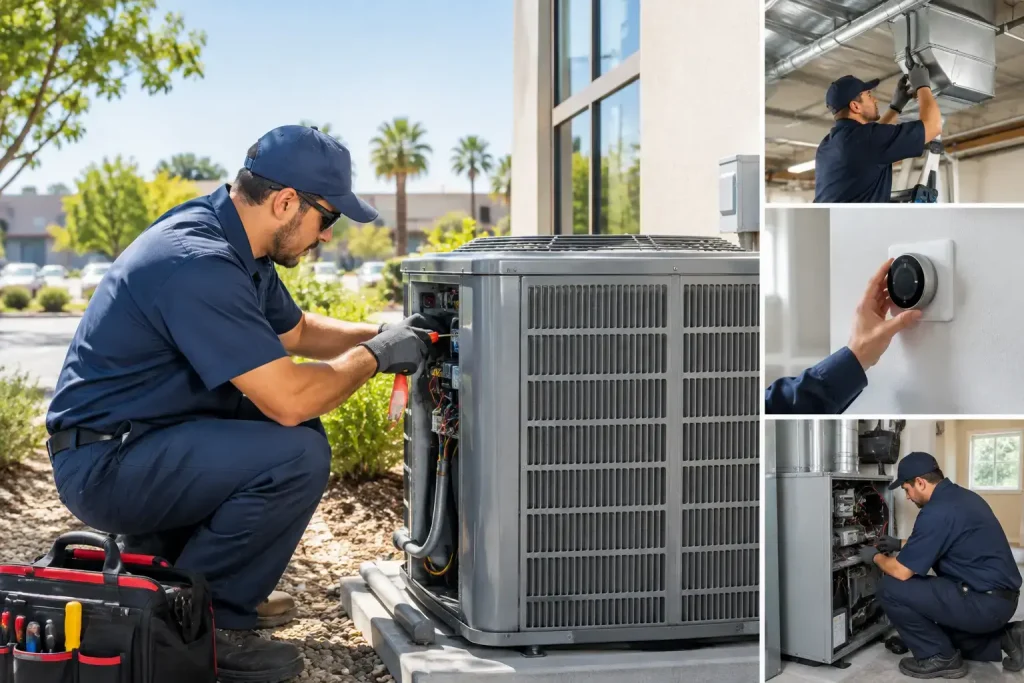
A conference room that feels stuffy by midafternoon, a reception desk that is always too cold, and offices with uneven temperatures are not minor comfort complaints. They can distract employees, frustrate visitors, and signal that the HVAC system is working harder than it should. To improve office HVAC airflow, start by looking at the simple obstructions and maintenance issues that commonly restrict air movement before assuming the entire system needs replacement.
For property managers and business owners, the goal is not just stronger airflow. It is balanced, reliable airflow that reaches occupied areas without creating drafts, noise, or unnecessary energy use. Some causes are easy to correct, while others require a trained HVAC technician to inspect the equipment, ductwork, and controls.
Start With the Vents and Return Grilles
Supply vents deliver conditioned air into a room. Return grilles pull air back to the HVAC system to be cooled or heated again. Both need a clear path to do their jobs.
Walk through the office and check for furniture, filing cabinets, stacked boxes, curtains, or wall décor blocking vents and returns. A desk pushed directly over a floor register can make one workstation uncomfortable while forcing the system to run longer. In retail spaces, inventory displays and storage materials can create the same problem.
Do not close multiple supply vents in an attempt to force more air into another room. This is a common fix that can create pressure problems and reduce system performance. If one area receives too much air and another receives too little, the issue may be related to duct design, dampers, thermostat placement, or a failing component rather than the position of one vent.
Replace Dirty Air Filters on Schedule
A clogged air filter is one of the most common reasons for weak airflow. As dust and debris collect on the filter, the blower has to work harder to pull air through the system. That can leave rooms feeling unevenly cooled or heated and can add strain to equipment.
Office filter needs depend on the building, occupancy, pets in pet-friendly workplaces, nearby construction, and how often doors open to outdoor air. A busy office or storefront may need more frequent filter checks than a lightly used professional office.
Use the filter size and type recommended for the system. A filter with very high filtration resistance may not be the right fit for every HVAC unit. The wrong filter can restrict airflow even when it is clean. If you are unsure what your system needs, an HVAC technician can recommend an option that balances indoor air quality and proper air movement.
Keep the Outdoor Unit Clear
For offices with split-system air conditioning, the outdoor condenser needs room to release heat. Leaves, dirt, weeds, landscaping, and stored materials around the unit can reduce its ability to operate efficiently.
Keep the area around the outdoor equipment clear and avoid storing supplies against it. Do not attempt to open electrical panels or perform internal cleaning yourself. Those tasks involve components that should be handled by a qualified professional. A technician can safely inspect the coil, fan, refrigerant performance, and other conditions that affect cooling and airflow indoors.
Look for Room-by-Room Patterns
The location and timing of airflow problems provide useful clues. If the entire office has weak airflow, the cause may be a dirty filter, blower issue, frozen coil, or system-wide duct restriction. If only one room is uncomfortable, that points more often to a local duct problem, a blocked register, a closed damper, or a room with unusual heat gain.
Sun-facing offices, server closets, kitchens, conference rooms, and spaces with large windows often need different airflow than interior offices. A conference room may feel fine in the morning but become warm once it fills with people and equipment. That does not always mean the AC has failed. It may mean the room needs better balancing or that the system is not sized or controlled for the actual load.
Keep a simple record of where the problem occurs, what time it starts, and whether it happens during heating, cooling, or both. This information helps a technician diagnose the issue faster and avoids guesswork.
Check Thermostat Placement and Settings
A thermostat can only respond to the temperature around it. If it is located near a sunny window, exterior door, kitchen equipment, or a supply vent, it may shut the system off before other parts of the office are comfortable. A thermostat in an unusually cool hallway can also cause warmer interior rooms to be overlooked.
Before changing settings repeatedly, make sure the thermostat is set to the correct mode and that its schedule matches the building’s actual hours. Many offices have changed their work patterns, but their HVAC schedules still reflect an old routine. Starting the system too late before employees arrive can make the building feel uncomfortable for the first part of the day.
If temperature differences persist, a professional can evaluate thermostat placement, zoning options, and control settings. The best solution depends on the building layout and existing equipment. Moving a thermostat may help in some offices, but it is not a cure for undersized ducts or equipment that needs repair.
Schedule Maintenance Before a Small Issue Spreads
Airflow concerns often begin as maintenance issues. Dust buildup on indoor coils, a worn blower motor, a failing capacitor, loose belts on certain commercial systems, or a drainage issue that leads to a frozen coil can all reduce comfort. Left alone, a minor restriction can turn into a no-cooling call during a busy workday.
Regular HVAC maintenance gives a technician a chance to inspect filters, coils, blower operation, drainage, electrical components, and overall system performance. It also provides a practical opportunity to identify concerns before they affect employees, tenants, or customers.
For small offices and commercial properties, maintenance is especially valuable before Modesto’s hotter weather arrives. A system that barely keeps up on a mild day may struggle significantly when outdoor temperatures rise.
When Ductwork May Be the Real Problem
If filters are clean, vents are open, and the system still produces uneven airflow, the ductwork may need attention. Ducts can develop disconnected sections, leaks, crushed runs, loose insulation, or poorly adjusted dampers. These problems can send conditioned air into ceilings or wall cavities instead of occupied rooms.
Ductwork concerns are not always visible from the office floor. A technician may need to inspect accessible attic, ceiling, or mechanical areas to find the source of the loss. In older buildings, the original duct layout may no longer match the way the office is used today.
Balancing airflow can involve adjusting dampers, correcting duct defects, or recommending changes that better serve high-use areas. The right approach depends on the system and building. Simply increasing fan speed is not always the answer, because excessive airflow can create noise, drafts, and equipment strain.
Know When to Call for HVAC Service
Call for professional service if weak airflow is paired with warm air, unusual noises, ice on equipment, repeated cycling, water near the indoor unit, burning odors, or a sudden jump in utility costs. These signs can indicate a repair issue that should not wait.
YourK AC helps property managers, small business owners, and homeowners diagnose heating and cooling problems with practical recommendations based on the system’s condition. For urgent comfort problems or ongoing airflow concerns, calling a qualified HVAC team can help identify whether the fix is maintenance, repair, ductwork adjustment, or a larger system decision.
A comfortable office should not depend on which desk someone happens to sit at. Addressing airflow early can protect productivity, reduce stress on the HVAC system, and give everyone in the building a more consistent place to work.