
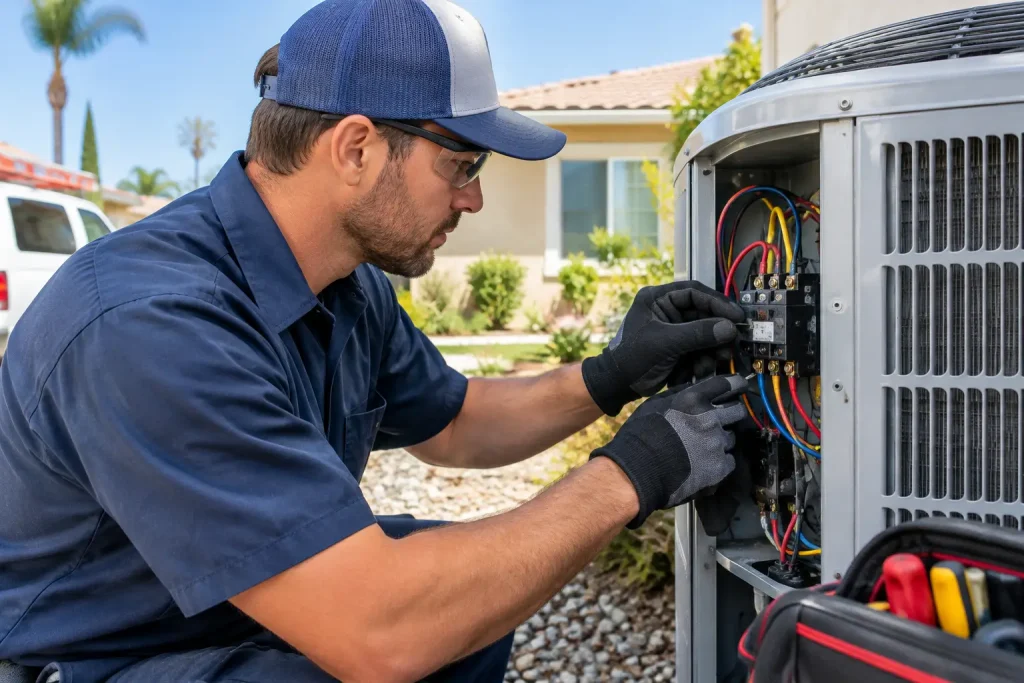
Your air conditioner may still blow air even when a small but essential part is starting to fail. That is what makes the warning signs of a failing AC contactor easy to miss. The contactor is located in the outdoor unit and helps send power to the compressor and condenser fan when your thermostat calls for cooling. When it cannot make a reliable connection, your AC can become noisy, inconsistent, or stop cooling altogether.
For homeowners and property managers, this is not a repair to put off until the next heat wave. Electrical components can worsen quickly, and repeated failed starts can place extra strain on other parts of the system. Knowing what to watch for helps you call for service before a minor electrical issue turns into a no-cooling emergency.
What an AC Contactor Does
Think of the contactor as a heavy-duty switch. When the thermostat signals that the home needs cooling, a low-voltage signal tells the contactor to close. That allows high-voltage power to reach the outdoor unit’s compressor and fan motor.
Each cooling cycle causes the contactor to open and close. Over time, heat, vibration, insects, moisture, and normal electrical wear can damage its internal contacts or coil. A technician can determine whether the contactor is the actual problem or whether another issue, such as a weak capacitor, thermostat fault, wiring problem, or compressor concern, is causing similar symptoms.
7 Warning Signs of a Failing AC Contactor
1. The outdoor unit makes a humming or buzzing sound but does not start
A low hum from the outside condenser when your thermostat is set to cool can mean the unit is receiving some power but cannot start normally. A worn contactor may chatter, fail to close fully, or create an unstable electrical connection.
Buzzing has more than one possible cause, so do not assume the contactor is the only explanation. Still, if the sound is new and the system is not cooling, turn the system off and arrange an inspection. Continuing to force repeated starts can add stress to the compressor.
2. The AC starts only sometimes
Intermittent cooling is one of the most frustrating signs. The system might run normally in the morning, then fail during the hottest part of the afternoon. It may also start after you turn the thermostat off and back on, then quit again later.
This pattern can occur when a contactor’s electrical contacts are pitted or burned. They may make a connection on one cycle and fail on the next. Because heat increases demand on the system, an intermittent problem often becomes more obvious during extended hot weather.
3. You hear clicking from the outdoor unit, but cooling does not begin
A single click when the AC begins a cooling cycle is often normal. Repeated clicking, rapid clicking, or clicking without the condenser fan and compressor starting is not something to ignore.
The contactor may be attempting to engage but failing to hold a secure connection. A technician should inspect the component and the related low-voltage controls. Avoid opening the electrical panel yourself. The outdoor unit contains high-voltage parts that can remain dangerous even when the system is not running.
4. The condenser fan does not run consistently
When the contactor closes correctly, the outdoor fan and compressor should generally start together. If the indoor blower is moving air but the outdoor fan is still, the air coming from your vents may quickly become warm.
A failed fan motor or capacitor can create the same symptom, which is why diagnosis matters. However, an unreliable contactor can prevent the fan from receiving the power it needs. Shut the AC off if the outdoor fan is not operating. Running the system in that condition can lead to overheating and more extensive repairs.
5. Your AC is short cycling
Short cycling means the system starts, shuts off too soon, and then starts again before it has completed a normal cooling cycle. You may notice rooms never reach the temperature set on the thermostat, while the outdoor equipment repeatedly tries to restart.
A damaged contactor can contribute to this behavior when it cannot maintain a dependable electrical connection. Short cycling can also be related to thermostat settings, airflow restrictions, refrigerant issues, or system sizing. Since the causes vary, it is best treated as a professional diagnostic issue rather than a part to replace based on a guess.
6. The AC runs but does not cool as well as it should
A contactor does not always fail completely at once. Weak or worn contacts can create voltage problems that affect how reliably the outdoor unit operates. You may feel cooler air at first, then notice temperatures rise as the system struggles to keep up.
Poor cooling can also point to dirty coils, a clogged filter, refrigerant concerns, or a failing compressor. Start with the simple check: make sure the filter is clean and the thermostat is set correctly. If airflow is normal but the home remains uncomfortable, schedule service rather than repeatedly adjusting the thermostat lower.
7. You notice visible damage or a burning smell near the outdoor unit
If you see discoloration, melting, scorch marks, or damaged wiring around the outside unit, turn the AC off at the thermostat and contact an HVAC professional. A burning odor, especially one that smells electrical or like hot plastic, also deserves prompt attention.
Do not touch exposed wires, remove the service panel, or try to clean a damaged contactor. The part may be inexpensive compared with other AC components, but electrical diagnosis and replacement need to be handled safely and correctly.
Why a Weak Contactor Can Become a Bigger Problem
The contactor is a small component, but it controls power to equipment that does the heavy work of cooling your property. When it sticks, chatters, or cannot close properly, the compressor and fan may receive inconsistent power. That can lead to overheating, hard starts, and increased wear on parts that are much more costly to repair.
There is also a comfort issue. In Modesto-area summer heat, a system that works only intermittently may leave a home, rental property, or small business uncomfortable with little warning. Addressing unusual noises or failed starts early gives you more options and helps reduce the chance of a complete shutdown at the worst possible time.
What to Do When You Suspect a Contactor Issue
First, check the basics without taking apart any equipment. Confirm that the thermostat is set to cool and below the current room temperature. Make sure the indoor air filter is not severely clogged and check that the circuit breaker has not tripped. If the breaker trips again after being reset once, leave it alone and call for service.
Next, pay attention to the pattern. Note whether the outdoor unit hums, clicks, starts late, or fails only at certain times. Let the technician know whether the indoor blower still runs and whether you noticed warm air, a burning odor, or breaker trips. Those details can make diagnosis more efficient.
If there is an electrical smell, visible damage, or repeated breaker tripping, stop operating the system. For a no-cooling situation or concerning electrical symptoms, YourK AC can inspect the system, explain what is causing the problem, and recommend the appropriate repair. Around-the-clock emergency HVAC service is available when waiting is not a safe or practical option.
Can Routine Maintenance Help Prevent Contactor Failure?
Maintenance cannot prevent every electrical component from eventually wearing out, but it can catch early signs before they create a breakdown. During an AC maintenance visit, a technician can inspect electrical connections, look for contactor wear, test system operation, and identify components that are struggling under load.
This is especially useful for older systems and properties where the AC runs for long stretches during summer. Maintenance also gives property managers a clearer picture of equipment condition, helping them plan repairs instead of reacting only when tenants or customers report no cooling.
A contactor problem is often repairable when addressed promptly. The practical move is to treat unexplained clicking, buzzing, hard starts, or intermittent cooling as a reason to schedule an inspection – before a small switch leaves your entire space without air conditioning.