
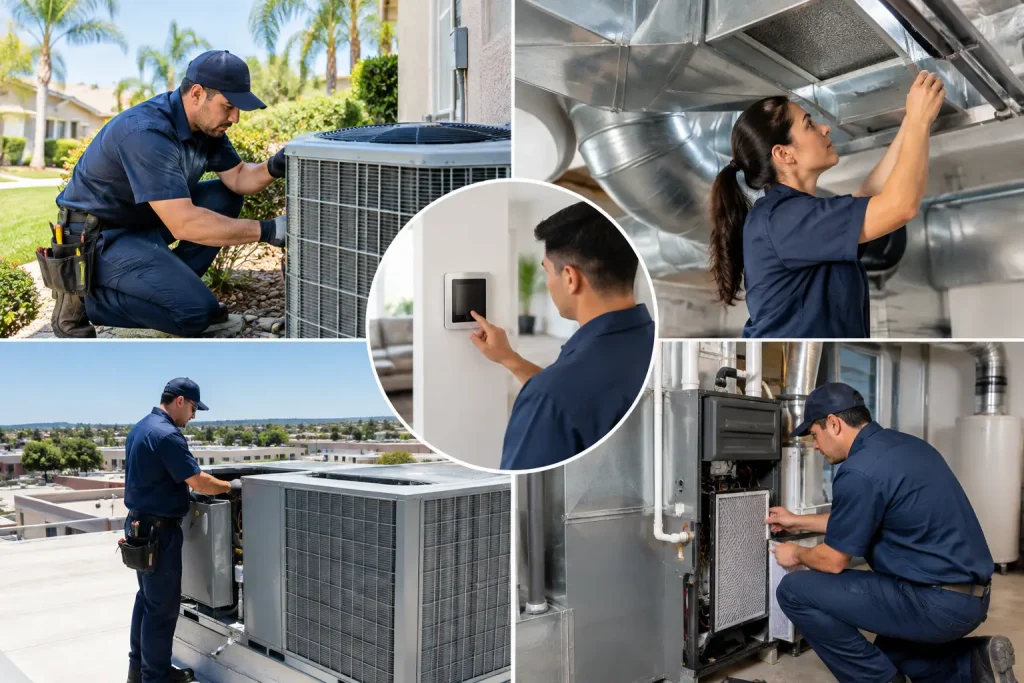
A room that never cools down is frustrating. So is standing under a vent that barely moves air while the AC runs nonstop. These airflow complaint examples can help you explain the problem clearly when you call for service, giving an HVAC technician useful details from the start.
Airflow problems do not always mean the same thing. A dirty filter, a blocked return, leaky ductwork, a blower issue, closed dampers, or an improperly sized system can all create comfort problems. The pattern matters: whether it affects one room or the whole property, whether it started suddenly, and whether the system is cooling at all.
Airflow Complaint Examples You Can Use
1. “The AC is running, but barely any air is coming from the vents.”
This is one of the clearest complaints to report. It may point to a clogged air filter, a restriction in the duct system, a blower motor problem, or an issue with the indoor unit. Check whether the filter is visibly dirty and whether furniture, rugs, or curtains are blocking return vents. If the filter has been changed and airflow remains weak throughout the home, service is the next step.
2. “One room is hot, but the rest of the house feels comfortable.”
A single warm room often suggests a room-specific airflow problem. The supply vent may be closed or blocked, the duct branch serving that room could have a leak or disconnection, or the room may simply receive more heat from sun exposure than the system can offset.
Second-floor bedrooms, rooms over garages, and spaces with large west-facing windows commonly have different cooling needs. The answer may involve ductwork, insulation, airflow balancing, or system capacity. A technician should assess the full picture before recommending a fix.
3. “The bedrooms do not get enough air when the doors are closed.”
A closed bedroom door can change how air moves through a home. Supply air enters the room, but it still needs a path back to the return side of the HVAC system. If that return path is limited, pressure can build up in the bedroom and reduce effective airflow.
Mention this detail when scheduling service. It helps distinguish a duct issue from an air circulation issue caused by the home’s layout. Keeping doors open may provide temporary relief, but a technician can identify whether airflow balancing or return-air improvements are appropriate.
4. “The vents blow strongly at first, then airflow fades.”
Airflow that changes during a cooling cycle deserves attention. The indoor evaporator coil may be freezing, often because of restricted airflow, a dirty filter, or another AC problem that needs diagnosis. You may also notice reduced cooling, ice on refrigerant lines, or water near the indoor equipment after the system shuts down.
Turn the system off if you see ice or hear unusual mechanical noises, then call for help. Continuing to operate a frozen system can lead to more stress on its components.
5. “Air is coming out, but it is not cold enough.”
This is partly an airflow complaint and partly a cooling-performance complaint. The fan may be moving air normally, while the AC is not removing enough heat from it. Causes can range from a dirty coil to thermostat settings, refrigerant-related concerns, or equipment that cannot keep up with the heat load.
Tell the technician whether the air feels mildly cool, room temperature, or warm. Also mention whether the problem affects every vent. Those details help narrow the diagnosis without guessing.
6. “Some vents have strong airflow, and others have almost none.”
Uneven airflow is often more revealing than weak airflow everywhere. It can indicate a duct restriction, disconnected duct section, closed balancing damper, crushed flex duct, or debris around a particular vent. In some homes, the system may have been poorly balanced from the beginning.
Do not force vent covers open or reach into ductwork to investigate. Note which rooms are affected and whether the issue is new. A simple map of the problem areas can save time during the service visit.
7. “The return vent seems to be pulling very little air.”
Return vents are just as important as supply vents. They draw indoor air back to the equipment so it can be filtered and conditioned again. A return that seems weak may be associated with a dirty filter, blockage, undersized return ductwork, or a blower issue.
Avoid covering return vents with furniture, storage bins, or decorative items. Unlike supply vents, returns should generally remain fully open to support proper circulation.
8. “The air is loud at the vent, but the room still is not comfortable.”
Loud airflow does not always equal good airflow. Whistling, rushing, or banging sounds can occur when air is forced through restricted ducts, poorly sized grilles, or closed dampers. The noise may also come from loose duct connections or equipment components.
Describe the sound as accurately as possible and say when it occurs. Does it happen only when cooling starts? Is it limited to one vent? Does it sound like a whistle, rattle, or thump? Those distinctions matter.
9. “The airflow has gotten weaker over the past few weeks.”
A gradual decline often points to buildup or wear rather than a sudden failure. A filter that has not been changed, dust accumulation on internal components, or a blower problem can slowly reduce comfort and efficiency. You may notice longer cooling cycles or rising utility bills at the same time.
Regular maintenance can catch many developing airflow concerns before they leave your home uncomfortable during a hot Modesto summer. If the change is noticeable, it is worth scheduling an inspection rather than waiting for a complete breakdown.
10. “The AC works downstairs, but upstairs gets almost no airflow.”
Heat naturally rises, so upstairs rooms are already more challenging to cool. When airflow is also weak upstairs, the issue could involve duct design, insulation, system zoning, return-air capacity, or an equipment issue. Closing vents downstairs to force more air upstairs is usually not a reliable solution and can create pressure problems in the system.
Instead, report the temperature difference and the airflow difference separately. An upstairs room that is hot with strong airflow may need a different solution than one that is hot because almost no air reaches the vent.
11. “The system cycles on and off, and air never seems to circulate long enough.”
Short cycling can make a home feel uneven even when the vents are open. The system may stop before enough conditioned air moves through the house. Thermostat placement, equipment issues, restricted airflow, or an oversized system are possible factors.
This is not a problem to solve by repeatedly changing the thermostat setting. Note how long the system runs, how often it starts, and whether it cools any rooms before shutting off.
12. “There is a musty smell when the airflow starts.”
Odors that appear when the blower turns on can signal moisture, dirt buildup, or concerns inside the air-handling equipment or duct system. A musty smell is not something to ignore, especially if it persists after a filter change. Let the technician know whether the smell is strongest at one vent, throughout the property, or only at startup.
What to Notice Before You Call
You do not need to diagnose the equipment before requesting service. A few observations can make the appointment more productive: which rooms are affected, whether the problem is new, whether the AC is cooling at all, and whether you hear unusual sounds or see ice or water around the indoor unit.
If you manage a rental property or small business, ask occupants whether the problem is constant or tied to certain times of day. Afternoon heat, closed interior doors, recent filter changes, and remodeling work can all provide useful context.
For weak airflow, uneven cooling, or an AC that is running without restoring comfort, YourK AC can inspect the system and explain the practical repair options. Call (209) 604-0405 to schedule help in Modesto or nearby Stanislaus County communities. Clear symptoms lead to a clearer diagnosis, and prompt attention can keep a small airflow issue from becoming a much bigger comfort problem.