When your AC struggles through a Modesto summer or your heating equipment is nearing the end of its service life, the heat pump versus central air decision becomes very real. Both systems can keep a home comfortable, but they handle heating, operating costs, installation needs, and long-term flexibility differently. The right choice depends on your home, existing equipment, utility use, and what is actually causing the current system to fall short.
Heat Pump Versus Central Air: The Core Difference
Central air conditioning moves heat out of your house to cool it. It is typically paired with a furnace, which creates heat by burning fuel or using electricity, then sends warm air through the same ductwork in winter.
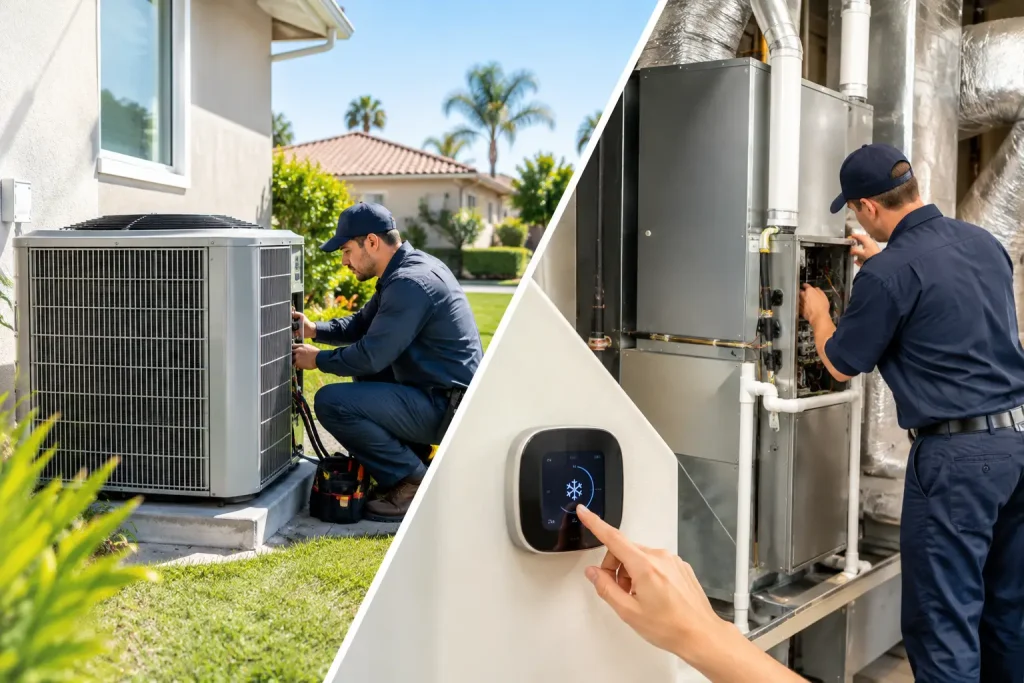
A heat pump also cools your home by moving heat outside. The difference is that it can reverse direction during cooler weather and move available outdoor heat into the home. That means one outdoor system can provide both cooling and heating.
Neither option is automatically better. A central AC system paired with a dependable furnace can be a sensible setup, especially when the furnace is newer and working well. A heat pump may be a strong fit when both the cooling and heating systems need replacement, or when you want to reduce reliance on a fuel-burning furnace.
How Each System Feels in Daily Use
During hot weather, a properly sized central air conditioner and a properly sized heat pump should both cool effectively. Comfort does not come down to the equipment label alone. Correct sizing, refrigerant performance, duct condition, airflow, insulation, and thermostat settings all affect whether your rooms feel consistently cool.
Heat pumps often run for longer, steadier cycles than older conventional systems. That can help maintain even indoor temperatures rather than creating sharp swings between too warm and too cool. Some homeowners appreciate that steady operation, while others notice the system runs more often and assume there is a problem. Longer cycles can be normal when the equipment is working efficiently and matching the home’s demand.
For heating, a furnace usually delivers hotter air at the supply vents. Heat pump air is warm, but it may not feel as hot when you stand directly over a vent. That does not mean the heat pump is underperforming. It is simply delivering heat in a different way.
Is a Heat Pump a Good Choice for Central Valley Weather?
Heat pumps perform well in many California homes because winters are generally milder than those in colder parts of the country. They can provide efficient heating in cool weather while also taking care of summer cooling.
Still, local conditions matter. Homes in and around Modesto face long, intense cooling seasons, so cooling capacity and airflow deserve close attention. If your ducts leak, certain rooms receive weak airflow, or the current system cannot keep up during afternoon heat, replacing equipment without correcting those underlying issues can leave you disappointed.
A heat pump may also be installed as part of a dual-fuel system. In that arrangement, the heat pump handles much of the heating during milder weather, while a furnace supports the home when conditions call for it. This can make sense for homeowners who want heat pump efficiency but prefer the backup comfort of a furnace.
Upfront Cost Is Only One Part of the Decision
A heat pump installation can cost more than replacing an AC condenser alone because it may involve changes to indoor equipment, controls, and electrical requirements. If you are replacing both an aging air conditioner and furnace, however, the comparison becomes more balanced because the heat pump is taking on both jobs.
Operating cost is also not one-size-fits-all. It depends on electricity and gas rates, thermostat habits, the efficiency of the equipment, insulation, duct losses, and how much heating your property needs. A highly efficient system cannot make up for an attic full of air leaks or ducts that are poorly connected.
Before deciding, ask for a clear evaluation of the full system rather than a quote based only on the existing unit’s size. Bigger is not always better. Oversized equipment can cool too quickly, cycle on and off frequently, and leave indoor humidity and airflow less consistent. Equipment that is too small may run continuously and still struggle during peak heat.
When Central Air May Be the Better Fit
Central air can be the practical choice when your furnace is in good shape, your ducts are compatible, and your primary concern is replacing a failing AC unit. It can also be a straightforward option for homeowners who prefer to keep separate heating and cooling equipment.
Choose the condition of your furnace honestly. If it is older, needs frequent repairs, has uneven heating, or is nearing replacement itself, installing only a new air conditioner may postpone a larger decision rather than solve it. Coordinating equipment replacement can sometimes avoid duplicate labor and disruption later.
Central air also remains a familiar, reliable solution for properties where the existing HVAC layout is functioning well. The best choice is often the one that fixes the comfort issue without adding unnecessary complexity.
When a Heat Pump Is Worth Serious Consideration
A heat pump deserves a close look when both your air conditioner and furnace are aging, when you want one system for year-round comfort, or when energy efficiency is a high priority. It can be especially appealing for homeowners planning to stay in the property and wanting to modernize the full HVAC setup at once.
It is also worth considering if your current heating system creates inconsistent comfort or if you want a system that can be paired with a dual-fuel approach. A professional assessment should review the home’s cooling load, heating needs, existing ductwork, indoor unit, thermostat compatibility, and electrical capacity before anyone recommends a final configuration.
Do not make the decision based on a neighbor’s system or a quick online calculator. Two homes on the same street can have very different insulation, sun exposure, window performance, duct layouts, and occupancy patterns.
Repair First or Start Planning Replacement?
If your current AC is not cooling, the immediate issue may be repairable. Dirty components, airflow restrictions, thermostat problems, worn electrical parts, refrigerant concerns, or a failing blower can all affect performance. A technician should diagnose the cause before you assume that a heat pump or new central air system is the answer.
Replacement becomes more reasonable when repairs are recurring, the equipment is aging, comfort problems keep returning, or a major component fails and the system has a history of trouble. The condition of the furnace matters just as much as the outdoor AC unit when comparing a new central air system with a heat pump.
For property managers, consistency is often the deciding factor. A lower-cost repair may be appropriate when it restores dependable service. But repeated failures can create tenant discomfort, emergency calls, and downtime that outweigh the short-term savings.
Questions to Ask Before You Choose
A useful HVAC consultation should leave you with practical answers, not pressure. Ask whether the existing ducts can support the proposed system, whether the indoor equipment should be replaced at the same time, and how the system will be sized for your property.
You should also ask what comfort issue the recommendation is meant to solve. Is the goal lower cooling costs, more reliable heating, better airflow to a back bedroom, replacement of aging equipment, or all of the above? The answer helps determine whether central air, a heat pump, or a dual-fuel setup is the most sensible investment.
If your current system is failing or you are weighing repair against replacement, YourK AC can evaluate the equipment and explain the options in clear terms. The right system should fit your property and your comfort priorities, not just fill the space where the old unit sat.
A good replacement decision starts with an accurate diagnosis. Whether you choose a heat pump or central air, focus on proper sizing, honest system condition, and a plan that keeps your home comfortable when the next stretch of extreme weather arrives.