
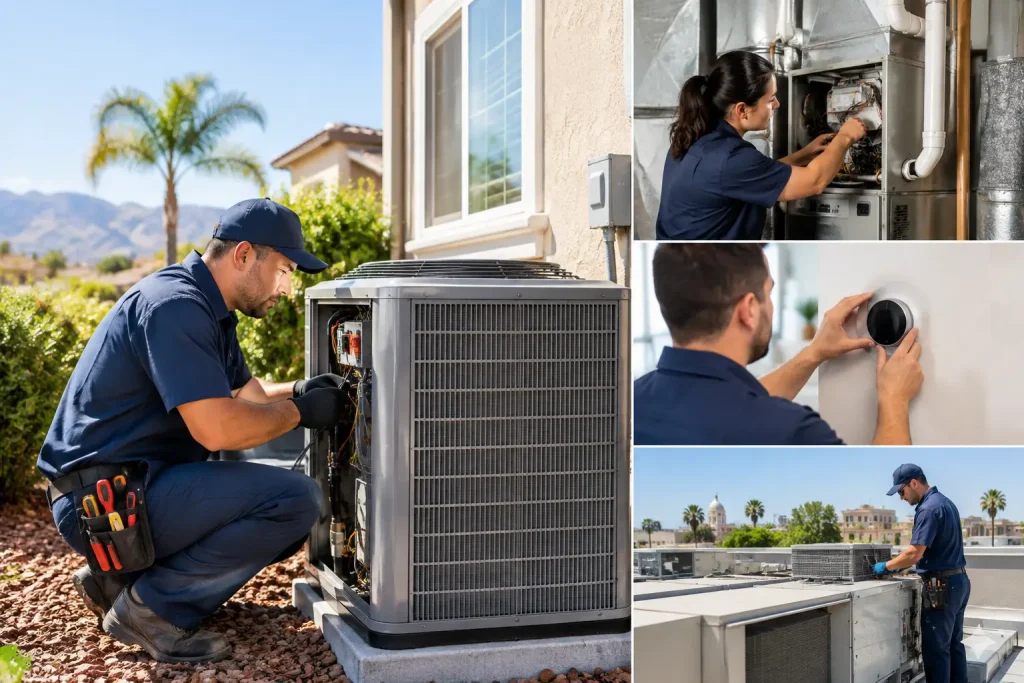
A new air conditioner can feel urgent when Modesto temperatures climb, but installation should not move so fast that required approvals are skipped. HVAC permit requirements Modesto property owners encounter are designed to confirm that replacement and new equipment are installed safely, sized appropriately, and ready for inspection. For homeowners, property managers, and business owners, handling the permit correctly helps prevent delays when it matters most.
When Is an HVAC Permit Required in Modesto?
Whether a permit is required depends on the scope of work, the equipment involved, and the local jurisdiction serving the property. In general, installing or replacing major heating and cooling equipment commonly requires a mechanical permit. This can include a new central air conditioner, furnace, heat pump, packaged rooftop unit, ductwork changes, or an equipment relocation.
A straightforward repair is different. Replacing a failed capacitor, correcting a refrigerant issue, cleaning a system, or performing routine maintenance does not usually involve a permit. The line changes when the work becomes an installation, a replacement, or a modification to the system that affects safety, ventilation, ducting, or electrical connections.
There are exceptions, which is why assumptions create trouble. A like-for-like replacement may still require a permit even if the new unit goes in the same place. Commercial projects can involve additional review based on building use, unit size, roof access, occupancy, and ventilation needs. A qualified local HVAC contractor can identify the likely permit path before installation begins.
Why HVAC Permit Requirements in Modesto Matter
A permit is not simply a piece of paperwork. It creates a documented process for verifying the parts of an HVAC project that are easy to miss when a system is installed in a rush.
Inspectors may look at equipment placement, required clearances, condensate drainage, duct connections, combustion venting for gas heating equipment, and accessibility for future service. They may also verify that the installed system aligns with approved plans and applicable energy requirements. These checks protect comfort, but they also protect the property and the people using it.
Skipping a permit can create problems later. A homeowner may face questions during a sale or refinance. A property manager may have difficulty documenting that a replacement was completed properly. If the work must be opened up or corrected after the fact, the project can become more disruptive than it needed to be. The short-term temptation to avoid the process is rarely worth the long-term uncertainty.
What the Permit Process Usually Looks Like
For most replacement projects, the contractor begins by reviewing the existing system and the property. That evaluation should cover more than the model number on the old unit. A system that struggled to cool evenly, ran constantly, or failed prematurely may have sizing, airflow, duct, insulation, or placement issues that should be addressed before a new unit is selected.
The permit application typically identifies the property, the contractor, and the proposed equipment. Depending on the job, supporting information may include equipment specifications, efficiency information, duct details, or calculations used to determine proper sizing. For larger commercial jobs or projects with significant alterations, the documentation may be more involved.
Once the permit is issued, installation can proceed according to the approved scope. An inspection is generally scheduled after the work reaches the required stage or is complete. If the inspector identifies an item that needs correction, a reputable contractor addresses it promptly and coordinates the next step. This is normal project control, not a sign that something has gone wrong.
Who Pulls the Permit?
In many professionally managed HVAC installations, the licensed contractor handles the permit application and inspection coordination. This gives the property owner a clearer chain of responsibility and helps ensure that the application matches the equipment and work actually being installed.
Before authorizing a replacement, ask who will obtain the permit, whether permit and inspection coordination are included in the project scope, and what documents you will receive at completion. Clear answers are a practical sign that the contractor is planning the job properly.
Property owners sometimes choose to pull a permit themselves. That may be possible in certain situations, but it can also place more responsibility on the owner for paperwork, scheduling, and ensuring the installation follows the approved scope. For busy homeowners and commercial property managers, contractor-led permitting is often the less stressful route.
Common Details That Can Affect Approval
The equipment itself is only one part of the project. A new high-efficiency system may require changes that were not present with older equipment, such as updated condensate handling or different venting arrangements. A heat pump conversion can raise separate questions about the existing electrical service and disconnecting means. Duct repairs or additions may also be reviewed when they are part of the installation.
Location matters too. Outdoor condensers need appropriate clearance for airflow and service access. Rooftop units need safe access and suitable support. Indoor equipment must be installed where it can be serviced without creating safety concerns. In commercial spaces, ventilation and occupancy requirements can add another layer of review.
These are not reasons to delay a needed replacement. They are reasons to start with a complete assessment instead of choosing equipment based only on what is currently installed. A fast install is valuable when the AC is down, but a complete install is what supports dependable performance after the technician leaves.
How to Avoid Permit-Related Delays
The best time to discuss permits is before equipment is ordered or installation is scheduled. Tell the contractor about previous additions, garage conversions, major remodeling, recurring comfort issues, and any known access limitations. Those details can affect system design and the amount of documentation needed.
Keep the project information in one place. Your contract or written scope should identify the equipment being installed, the expected work, and who is responsible for permitting and inspection coordination. After completion, retain the final permit record, inspection approval, equipment model and serial numbers, and warranty information with your home or building records.
If your system fails during extreme heat or cold, call for service right away. Emergency service can restore safety and comfort or provide a clear diagnosis, while the replacement and permitting steps are handled correctly. There is a difference between responding quickly and cutting corners. You deserve both urgency and professional follow-through.
A Better Start for Your Replacement Project
Permit requirements can change based on the property and the exact job, so the most reliable answer comes from reviewing your system before work begins. YourK AC helps Modesto homeowners and businesses evaluate replacement needs, explain the installation scope in plain language, and move forward with dependable heating and cooling service.
When comfort cannot wait, choose a contractor who treats the permit process as part of doing the job right – not as an afterthought. That approach helps protect your property, supports a cleaner installation, and gives you more confidence every time you turn the system on.