A cooling system that quits during a Central Valley heat wave is not a minor inconvenience. Neither is a furnace that blows cold air on a chilly night. Residential heating and cooling is what keeps your home livable through the seasons, protects indoor air quality, and helps prevent a small mechanical issue from turning into a stressful emergency.
For most homeowners, the goal is simple: dependable comfort without surprise breakdowns, confusing recommendations, or unnecessary costs. Getting there usually comes down to three things – responding early when something changes, keeping up with professional maintenance, and knowing when repair no longer makes practical sense.
Residential Heating and Cooling Is More Than Temperature
Your HVAC system has one job from your perspective: make the house feel comfortable when you need it to. Behind that simple result, however, your air conditioner, furnace or heat pump, thermostat, ductwork, filters, and safety controls all need to work together.
When one part is struggling, the signs often show up elsewhere. A clogged filter can reduce airflow and make the system run longer. A worn component can cause unusual sounds or uneven temperatures. Leaky ductwork can send conditioned air into spaces where it does not help your family at all. Ignoring these issues can mean higher utility bills, less reliable performance, and added wear on equipment.
The good news is that most systems give warnings before a complete failure. Homeowners who act on those warnings have more options than those who wait until the system stops in the middle of extreme weather.
Signs Your Home Needs HVAC Service
A system does not have to shut down completely before it needs professional attention. Changes in performance are often the first signal that something is wrong.
If rooms are noticeably warmer or colder than others, your system may have an airflow, duct, thermostat, or equipment issue. Longer-than-normal run times, weak airflow from vents, frequent cycling, and unexpected increases in energy use are also worth checking. These problems can have several causes, so a qualified technician should diagnose them instead of relying on guesswork.
Pay attention to sounds and smells as well. Banging, grinding, rattling, squealing, or persistent buzzing can point to mechanical concerns. Musty odors may indicate moisture or air quality issues, while burning odors and gas smells require immediate attention. If you smell gas, leave the area, avoid operating switches or equipment, and contact the appropriate emergency utility resource before scheduling HVAC service.
During summer, an AC unit blowing warm air or freezing up needs prompt evaluation. During heating season, cold air from vents, an unreliable pilot or ignition cycle, and a furnace that repeatedly turns off should not be brushed aside. A fast service call can protect comfort and may prevent further damage.
Repair, Maintenance, or Replacement?
The right decision depends on the age of the system, the type of problem, its repair history, and how efficiently it is operating. There is no honest one-size-fits-all answer.
When Repair Is the Practical Choice
Repair is often appropriate when the equipment is still in generally good condition and the issue is isolated. A failed capacitor, thermostat problem, worn motor component, clogged drain line, or ignition issue may be repairable without replacing the entire system.
A professional diagnosis matters because several problems can produce similar symptoms. For example, poor cooling may be related to airflow, refrigerant performance, electrical controls, or thermostat communication. Replacing parts without confirming the cause can waste time and money.
A trustworthy HVAC technician should explain what was found, why it affects performance, and what the repair is intended to correct. You deserve clear options, not pressure.
When Replacement Deserves a Serious Look
Older equipment with recurring breakdowns can become expensive and unreliable to keep running. Replacement may also make sense when the system no longer keeps up with your home, requires a major repair, or operates inefficiently enough that comfort and energy costs remain a daily frustration.
New equipment can improve efficiency, humidity control, airflow, and consistency between rooms. Still, bigger is not automatically better. An oversized system can cycle too quickly, while an undersized system may run constantly without reaching the desired temperature. Proper sizing should account for the home itself, including square footage, insulation, windows, layout, duct condition, and household needs.
The best replacement conversation starts with your comfort problems, not a generic equipment recommendation. A local contractor should help you understand the trade-offs between short-term repair costs, long-term reliability, and the features that actually matter for your household.
Why Maintenance Pays Off in Modesto
Modesto summers put serious demand on air conditioning systems. When an AC has been sitting through cooler months or operating with restricted airflow, the first stretch of high temperatures can expose problems quickly. Heating equipment also needs attention before colder nights arrive, especially if it has not been inspected since the previous season.
Professional maintenance is not about finding reasons to replace equipment. It is about checking the system’s condition, identifying developing issues, cleaning key components, verifying safe operation, and helping the equipment run as efficiently as possible.
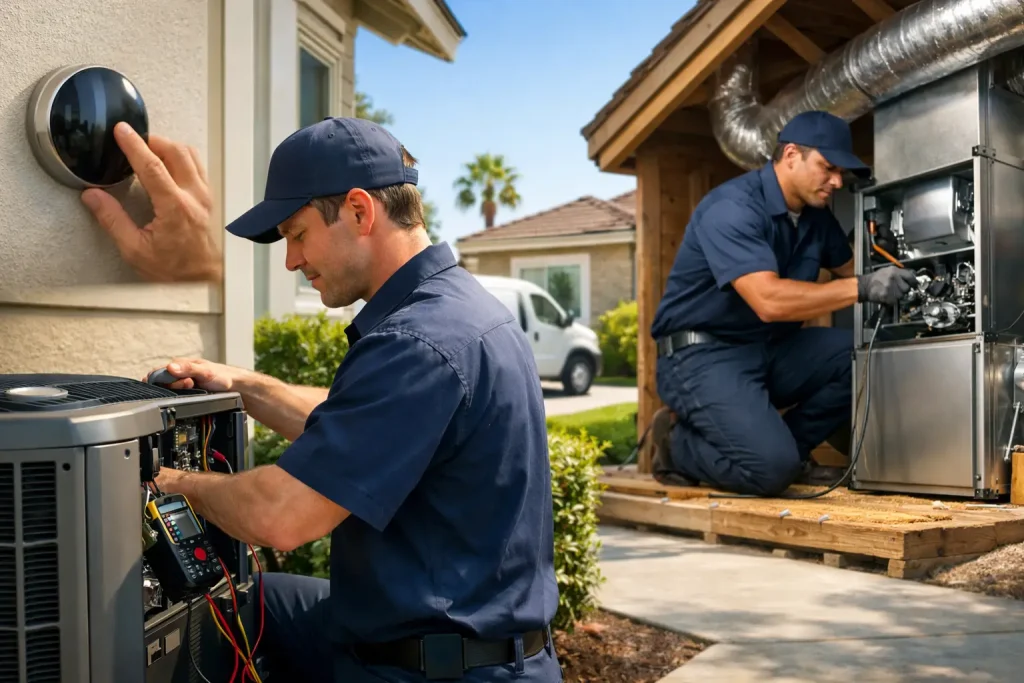
A seasonal visit commonly focuses on items such as system operation, electrical connections, airflow, filters, thermostat performance, condensate drainage, and heating safety controls. The exact work depends on the type and condition of your equipment.
Homeowners can help between appointments by replacing filters on an appropriate schedule, keeping outdoor equipment clear of leaves and debris, and keeping supply and return vents unobstructed. Those basic steps support airflow, but they do not replace professional service. Refrigerant work, electrical diagnosis, combustion testing, and internal repairs should be left to certified HVAC technicians.
Comfort Problems Are Sometimes Whole-Home Problems
Not every heating or cooling complaint begins inside the air conditioner or furnace. Duct leaks, poor insulation, sun exposure, thermostat location, and closed or blocked vents can all affect how a home feels.
A second-floor bedroom that stays hot may need more than a thermostat adjustment. A living room that feels drafty in winter could be dealing with air leakage or uneven airflow. These situations call for a closer look at the whole comfort system rather than repeated adjustments that do not solve the root cause.
Indoor humidity matters too. Air that is too humid can make a home feel warmer than the thermostat setting suggests. Air that is too dry can feel uncomfortable during heating season. The right solution depends on what an inspection reveals, which is why a careful evaluation is more valuable than a quick assumption.
What to Expect From a Reliable HVAC Visit
When your system is down, you need a technician who respects the urgency without creating more stress. A professional visit should begin with listening to what you have noticed: when the issue started, what the system is doing, and whether the problem is constant or intermittent.
The technician should then inspect and test the equipment, explain the findings in clear language, and discuss realistic next steps. For repairs, that means knowing what is wrong before authorizing work. For replacement, it means receiving recommendations based on your property and comfort needs, not a rushed sales pitch.
For homeowners, property managers, and small business owners, communication is part of the service. You need to know what is happening, what the options are, and what you can do next. That is especially true when a breakdown happens after hours or during severe weather.
Don’t Wait for the Next Breakdown
The best time to address a system that is running louder, cycling more often, or struggling to maintain temperature is before it quits entirely. Scheduling service early can give you more flexibility and reduce the chance of facing a major comfort problem when demand is highest.
If your heating or cooling system is showing signs of trouble, YourK AC can help evaluate the issue and recommend a practical path forward. Whether you need routine maintenance, a repair, a new installation, or 24/7 emergency HVAC support, the next helpful step is a clear diagnosis from a local team that treats your comfort like it matters.