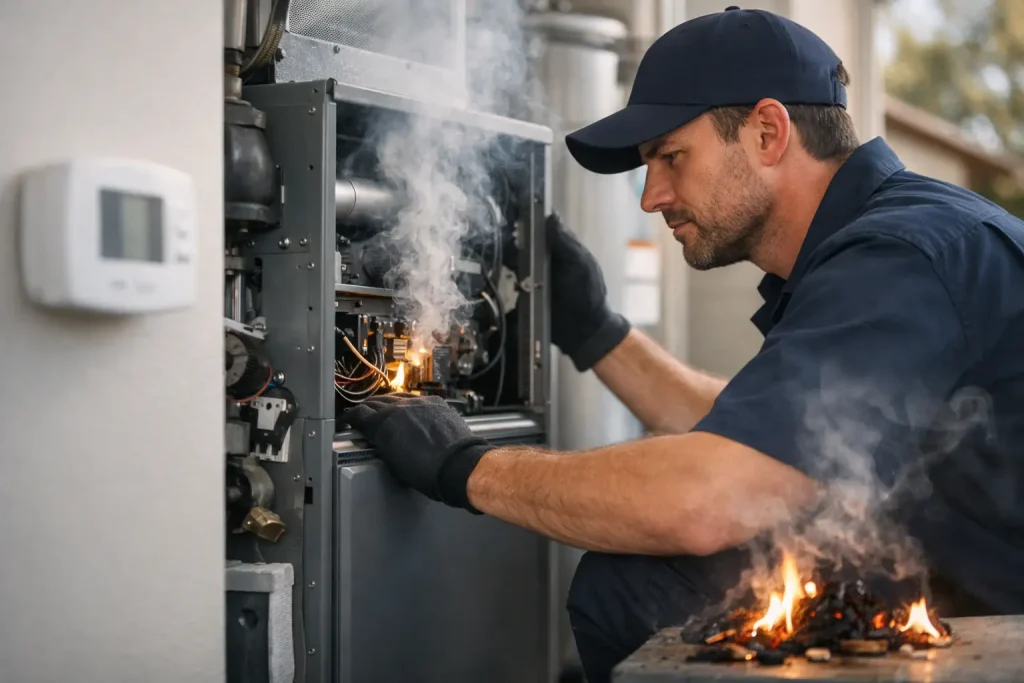
That first blast of warm air can bring an unpleasant surprise: a burning smell moving through the house or business. If you are asking why heater smells burning, the answer may be as simple as dust on the system after a long break. But some odors point to an overheated part, an airflow problem, or a safety concern that should not wait.
The key is to notice what the smell resembles, how long it lasts, and whether it comes with smoke, unusual sounds, or a system shutdown. When in doubt, turn the heat off and have a qualified HVAC technician inspect it. A quick response can protect your equipment, your comfort, and the people inside the property.
Why Your Heater Smells Burning
A heater does not create one universal “burning” smell. Different causes leave different clues. The most common reason is dust burning off the heat exchanger, electric heating elements, or other hot surfaces when the heater runs for the first time in months.
This seasonal dust odor is usually light, dry, and short-lived. It should fade after the system has run for a short period and should not be accompanied by visible smoke. Opening a window briefly may help clear the odor, but keep an eye on the system while it is operating.
If the smell is strong, gets worse, returns every time the heat starts, or causes irritation, it is not something to dismiss as normal dust. Shut the system down and arrange service. Heating equipment works under high temperatures, and repeated operation with a developing problem can cause more extensive damage.
What the Burning Smell May Be Telling You
Dust after seasonal startup
In Modesto, heating systems can sit unused for much of the year. Dust collects on internal components and in the ducts, then burns away when heat returns. This is common at the beginning of the heating season, especially if the furnace has not been professionally maintained recently.
A normal dust smell should clear fairly quickly. If it remains after more than one heating cycle, check whether the air filter is overdue for replacement. A clogged filter restricts airflow and can make a furnace run hotter than it should.
A dirty or blocked air filter
Your air filter does more than keep dust out of the air. It helps the HVAC system maintain the airflow needed to operate safely and efficiently. When it is packed with dust, the furnace may overheat, and you may notice a hot, burning odor along with weaker airflow or frequent cycling.
Homeowners and property managers can replace the correct, accessible filter according to the manufacturer’s recommendations. If a new filter does not solve the issue, do not keep restarting the heater. The restriction or overheating problem may be elsewhere in the system.
Electrical overheating
An odor similar to burning plastic, hot wiring, or melting insulation needs prompt attention. Electric furnaces, heat pumps, blower motors, capacitors, and control components can overheat when parts wear out or electrical connections fail.
Turn the heater off at the thermostat. If you see smoke, hear buzzing or popping, or notice the smell becoming stronger, turn off power to the HVAC system if it is safe to do so and contact an HVAC professional right away. Do not remove panels or attempt to repair internal electrical components yourself.
An overheating blower motor
The blower moves heated air through the ductwork. A failing motor, worn belt on an older unit, or restricted airflow can cause the motor to overheat. The smell may seem strongest near supply vents or the indoor unit, and the system may struggle to push air through the building.
Ignoring a blower issue can leave you without heat and may put added stress on other parts of the system. A technician can identify whether the concern involves the motor, capacitor, wheel, filter, duct airflow, or another component affecting performance.
A foreign object near the heat source
Sometimes the answer is surprisingly simple: an item has fallen into a floor register, is resting too close to a wall heater, or is blocking a return vent. Plastic toys, paper, storage boxes, fabric, and pet hair can create a distinct burning odor when exposed to heat.
Keep the area around heating equipment clear. Never store combustible materials near a furnace, and do not block registers or returns with furniture, rugs, or inventory. For commercial properties, this check matters in mechanical closets and storage areas where items can accumulate over time.
Oil, exhaust, or gas-related odors
A gas furnace should not smell like gas during normal operation. If you smell rotten eggs, sulfur, or a strong fuel odor, leave the building if necessary, avoid flames and electrical switches, and contact the gas utility or emergency services from a safe location. Do not try to locate the leak yourself.
A sharp exhaust-like odor, soot around vents, yellow or flickering burner flames, headaches, dizziness, or nausea can also signal a combustion or venting issue. Get fresh air, shut the heating system off if it is safe, and call for professional help. Carbon monoxide is odorless, so working carbon monoxide detectors are essential anywhere fuel-burning equipment is used.
When a Burning Heater Smell Is an Emergency
A faint dusty smell on the first cold morning is one thing. The following signs call for immediate action:
- Visible smoke coming from vents, the furnace cabinet, or electrical components
- A burning plastic, rubber, or wiring smell that does not quickly fade
- Repeated system shutdowns, tripped breakers, buzzing, sparking, or popping sounds
- Gas odors, soot, or symptoms that may indicate carbon monoxide exposure
- A smell that becomes stronger each time the heater turns on
Turn the system off and avoid trying to force it to run. For a suspected gas leak or fire risk, prioritize getting people to a safe place and contact the appropriate emergency resource. For HVAC faults that are not an immediate gas or fire emergency, fast professional service can prevent a minor repair from turning into a full system failure.
What You Can Safely Check Before Calling
There are a few basic observations that help speed up diagnosis without taking risks. Look at the thermostat setting, confirm that nothing is blocking vents or the furnace area, and check whether the accessible air filter is visibly dirty. Note when the odor starts, where it is strongest, and whether the heater stays on or shuts down.
Do not open the furnace cabinet, touch internal wiring, reset a tripped breaker repeatedly, or continue running a system that smells like melting material or produces smoke. Those details are best handled by a certified HVAC technician with the proper tools and training.
For businesses and managed properties, let occupants know the system is being checked and keep them away from the equipment room. A clear report of the odor, timing, affected areas, and any alarms or error messages can help the service visit move more efficiently.
Preventing Burning Smells Before Heating Season
Most heater odor calls are easier to prevent than to repair. Regular heating maintenance gives a technician the opportunity to inspect burners, electrical connections, safety controls, blower components, filters, and airflow before the system is under heavy demand.
Maintenance is particularly valuable for aging systems, rental homes, and commercial spaces where equipment may run longer or serve more people. It also gives you a clearer picture of whether a repair is sensible or whether planning for replacement would be more practical. The right choice depends on the system’s condition, repair history, efficiency, and the needs of the property.
Replacing filters on schedule, keeping returns clear, and scheduling service before the first cold stretch can reduce surprise breakdowns. It will not eliminate every issue, but it gives your heater a better chance of starting the season cleanly and operating as intended.
Get a Fast Answer From a Local HVAC Team
When the smell is more than temporary dust, waiting can make an uncomfortable situation more serious. YourK AC provides heating repair, maintenance, and emergency HVAC support for homeowners and businesses in Modesto and surrounding communities. A trained technician can determine whether the odor is normal seasonal buildup or a problem that needs repair, then explain the next step clearly.
Your heater should bring steady warmth, not leave you guessing about safety. If the odor persists, worsens, or comes with smoke, gas smells, or unusual system behavior, turn the heat off and get it checked before the next heating cycle.