When your AC quits during a Modesto heat wave, comfort disappears fast. This home AC maintenance guide is built to help you avoid that kind of surprise, keep energy costs under control, and catch small problems before they turn into expensive repairs.
A lot of cooling issues do not start with a major part failure. They start with restricted airflow, dirty coils, clogged drains, or a system that has been working harder than it should for months. Regular maintenance will not stop every breakdown, but it does give your system a much better chance of making it through the hottest part of the year without trouble.
Why a home AC maintenance guide matters
Most homeowners only think about air conditioning when it stops working. That is understandable, but it is also when your options get narrower. A minor issue in spring can often be handled quickly and affordably. The same issue in mid-summer can lead to higher repair costs, longer wait times, and a very uncomfortable house.
Routine AC care helps in a few practical ways. It improves airflow, supports better indoor comfort, and can reduce wear on major components. In many cases, it also helps lower monthly utility bills because the system does not have to run as long to cool the home.
There is a trade-off, though. Basic upkeep is worth doing, but it is not a replacement for professional service. Homeowners can handle a few simple tasks safely. Electrical testing, refrigerant issues, capacitor problems, and deeper mechanical faults should be left to a licensed technician.
The basic home AC maintenance guide every homeowner should follow
The most important habit is checking your air filter regularly. In many homes, that means once a month during heavy cooling season. If the filter is dirty, replace it. A clogged filter restricts airflow, makes the system work harder, and can contribute to frozen coils or uneven cooling.
It also helps to keep the area around your indoor vents and return registers clear. Furniture, rugs, and stored items can block airflow more than people realize. If one room always feels warmer than the rest, start there before assuming the entire AC system is failing.
Outside, the condenser unit needs breathing room. Leaves, weeds, grass clippings, and debris can build up around the cabinet and reduce performance. Give the unit some open space and gently clear visible debris from the fins and base area. If the fins are bent or the unit looks heavily impacted by dirt, that is a good time to schedule service instead of forcing a DIY fix.
Your thermostat deserves attention too. If the settings are wrong, the batteries are weak, or the thermostat is reading temperature inaccurately, the whole system can seem unreliable. Sometimes what feels like an AC issue is actually a control issue.
What you can safely do yourself
Home maintenance should stay simple and low-risk. Replacing the filter, checking vents, clearing debris around the outdoor unit, and making sure the drain line is not obviously overflowing are all reasonable tasks for most property owners.
If your condensate drain line backs up, you may notice water around the indoor unit or signs of moisture near the drain pan. In some cases, a wet-dry vacuum can help clear a minor blockage at the drain line outlet. Still, if the line keeps clogging or you see water damage, it is smarter to call for service than to keep guessing.
You can also pay attention to warning signs. Strange noises, weak airflow, short cycling, warm air from the vents, and unexplained humidity indoors are all signs that your AC needs more than basic upkeep. Maintenance works best when it is preventive, not delayed until the system is already failing.
What should be left to a professional
Some parts of AC maintenance are not safe or effective for a homeowner to handle without training. Refrigerant checks, electrical inspections, motor testing, capacitor replacement, and coil cleaning beyond light surface debris all fall into that category.
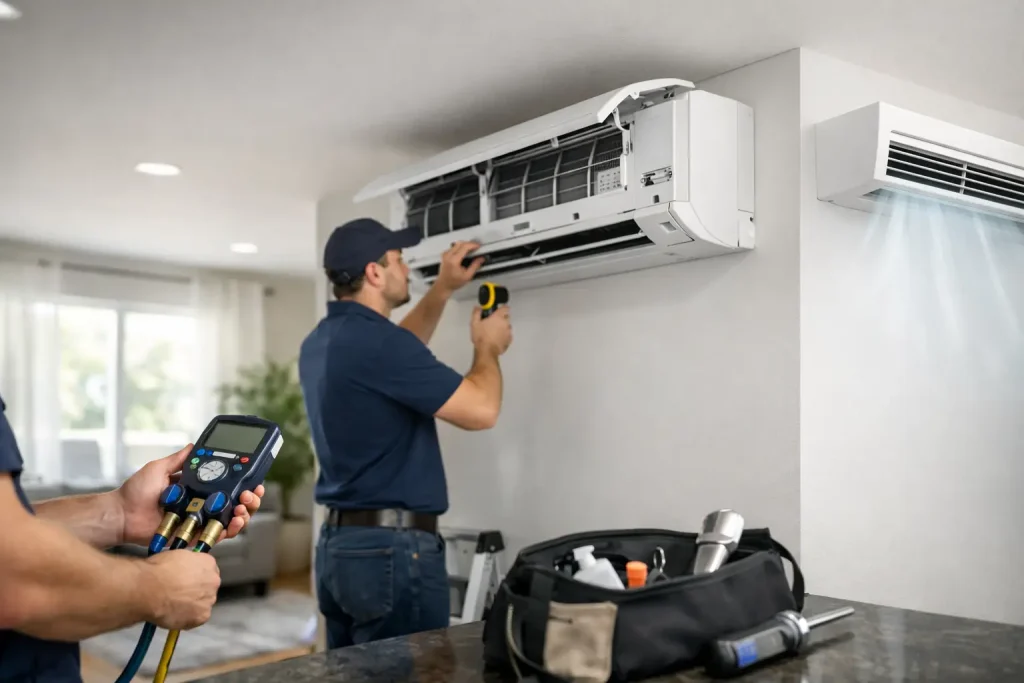
A professional tune-up typically includes inspecting the system for wear, checking electrical connections, testing components, cleaning critical parts, and verifying that the unit is operating within the right range. That kind of service can reveal problems you would not catch by looking at the system from the outside.
This matters even more for older systems. Once an AC is aging, one weak component can strain another. A unit may still cool the home, but not efficiently and not reliably. That is where maintenance becomes less about convenience and more about avoiding a mid-season failure.
Seasonal timing makes a difference
If you wait until the first 100-degree stretch to think about maintenance, you are already behind. The best time to schedule AC service is before peak summer demand arrives. Spring is ideal because the system can be inspected and cleaned before it is under constant stress.
That does not mean maintenance is useless later in the year. If you missed the early window, it is still better to service the system now than ignore it. An AC working with a dirty filter, blocked coil, or struggling electrical component does not usually fix itself. It keeps operating until something gives out.
For rental properties and small commercial spaces, timing matters even more because a cooling issue affects tenants, staff, and customers fast. Preventive maintenance usually costs far less than urgent repair calls, lost productivity, or occupant complaints.
Signs your AC may need repair, not just maintenance
A good home AC maintenance guide should be honest about the line between upkeep and repair. If your system is blowing warm air, tripping breakers, making buzzing or grinding sounds, freezing up, or failing to keep up with the thermostat setting, maintenance alone may not solve it.
High humidity indoors is another common signal. Your AC should remove some moisture while it cools. If the house feels sticky even when the system is running, there may be an airflow issue, a drain problem, or a larger performance problem developing.
Watch your energy bills too. A sudden increase without a clear change in usage often means the system is losing efficiency. Sometimes that is a maintenance issue. Sometimes it points to worn parts, duct leakage, or an aging unit that is nearing the end of its useful life. It depends on the system condition, age, and repair history.
Maintenance helps, but age still matters
Many homeowners ask the same question: if I keep up with maintenance, how long should my AC last? The honest answer is that regular service helps, but it does not guarantee a certain lifespan. Usage patterns, installation quality, local climate, and previous repairs all play a role.
In a hot Central Valley climate, AC systems work hard for long stretches. That kind of demand can shorten the life of a unit compared with a milder region. A well-maintained older system may still be dependable, but if repairs are becoming frequent or cooling is inconsistent, replacement may start making more financial sense than continued patchwork.
That is not always an urgent decision. Sometimes a repair and tune-up buy you several more seasons. Other times, investing in a newer, more efficient system is the smarter move. A trustworthy HVAC company should walk you through both options clearly, without pushing you into a bigger job than you need.
A practical maintenance routine for busy property owners
If you want a realistic plan, keep it simple. Check the filter monthly during cooling season. Keep vents open and unblocked. Clear the outdoor unit as needed. Pay attention to changes in airflow, sound, and temperature. Then schedule professional maintenance at least once a year, ideally before summer.
That routine is manageable for most homeowners, property managers, and small business owners. It does not take much time, and it gives you a better chance of catching issues early. For local properties dealing with long, hot summers, that kind of consistency matters.
If your system already seems off, do not wait for a full shutdown. Fast action usually means simpler repairs, lower cost, and less time stuck in an uncomfortable building. For Modesto-area property owners who want dependable cooling without the guesswork, YourK AC can help keep the system running the way it should.
A little attention now is usually a lot cheaper than an emergency later, and your AC tends to tell you when it needs help if you know what to look for.