
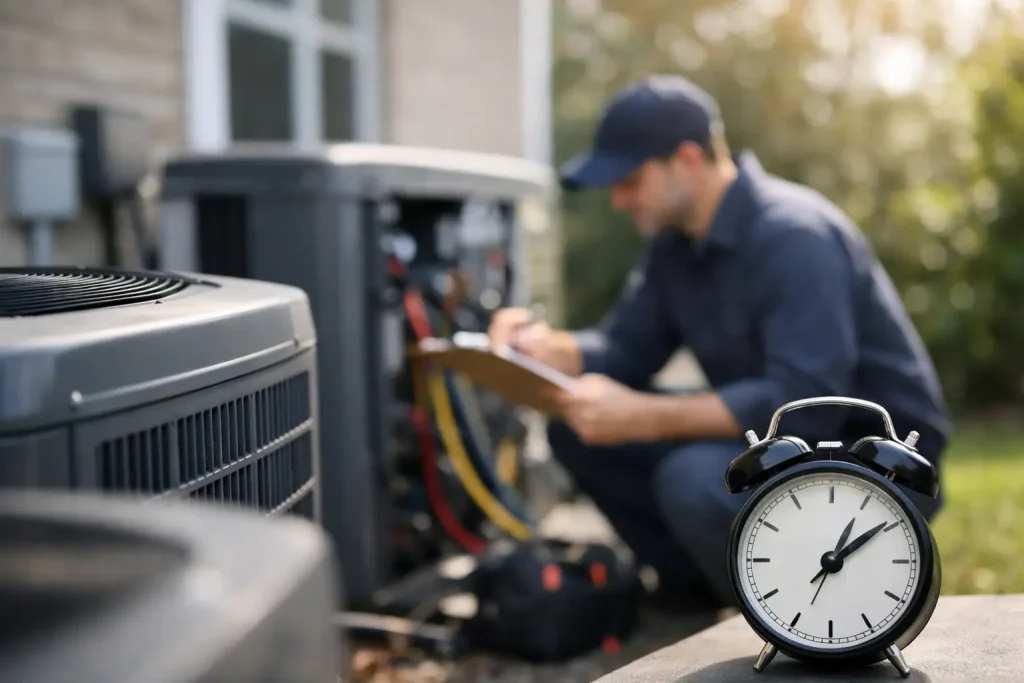
If your AC barely keeps up by late afternoon, your furnace needs frequent repairs, or your energy bills keep climbing for no clear reason, you are probably asking the right question: what is the best time to replace HVAC system equipment? For most homes and small commercial properties, the answer is not just about age. It is about timing the replacement before a full breakdown forces you into a rushed, expensive decision.
In Modesto, that timing matters. Summers put serious strain on cooling systems, and cold snaps can expose a heating system that has been hanging on for too long. Replacing at the right moment can save money, reduce stress, and help you avoid losing comfort when you need it most.
When is the best time to replace HVAC system equipment?
For many property owners, the best time to replace HVAC system components is during the off-season, usually early spring or fall. Those are the months when heating and cooling demand is lower, scheduling is often easier, and you have more time to compare options instead of making a same-day decision in the middle of an emergency.
That said, calendar timing is only part of it. A system that is old, unreliable, or costing too much to keep alive should not be pushed through another high-demand season just because the date looks convenient. If your AC is on its last legs in May, waiting until October can turn a manageable replacement into a midsummer breakdown.
The better way to look at it is this: the right time is when your current system is showing clear signs that repair is becoming the less practical option.
The signs it is time to replace, not repair
Most HVAC systems do not fail all at once. They usually give you a stretch of warning signs first. The challenge is that many owners keep paying for one repair at a time, hoping to squeeze out another year.
Age is one of the biggest indicators. If your air conditioner or heat pump is around 10 to 15 years old, or your furnace is 15 to 20 years old, replacement should be on the table. Some systems last longer with strong maintenance, but efficiency drops and repair needs usually rise with age.
Frequent breakdowns are another sign. One repair may be worth it. Two or three repairs in a short span is a pattern. If you are calling for service every season, your system is no longer dependable. That is especially true for landlords, property managers, and small business owners who cannot afford tenant complaints or downtime.
Rising utility bills matter too. An aging HVAC system often has to run longer to do the same job. If your usage habits have not changed much but your bills keep increasing, inefficiency may be the reason.
Uneven temperatures are also a warning. Hot and cold spots, weak airflow, excess humidity, or rooms that never feel comfortable can point to a system that is no longer sized or performing correctly. In some cases, ductwork or thermostat issues are part of the problem. In others, the equipment itself is simply worn out.
Then there is the cost question. A common rule of thumb is simple: if a repair is expensive and your system is already near the end of its expected life, replacement is often the smarter long-term move. Paying a major repair bill on old equipment can feel like saving money in the moment, but it often delays the inevitable.
Why spring and fall are usually the smartest seasons
There is a reason HVAC companies often recommend planning replacements before extreme weather hits. In spring, you can replace an aging AC before triple-digit heat puts it under pressure. In fall, you can address heating problems before cold nights turn them urgent.
This off-season window gives you practical advantages. You are less likely to be making a decision while your family is sweating through a heat wave or your building occupants are stuck without heat. You also have a better chance of reviewing equipment options, discussing energy efficiency, and choosing what fits your property and budget.
Installation scheduling can also be smoother. During peak summer and winter demand, emergency calls naturally take priority. If your system fails in the middle of a Modesto heat spell, the need is immediate, but your choices may feel rushed. Planning ahead gives you control.
When waiting makes sense, and when it does not
Not every aging system needs immediate replacement. If your unit is older but still reliable, repair costs are modest, and performance is strong, a repair may still make sense. This is where an honest inspection matters. You want a clear assessment of condition, not a blanket recommendation.
But there are times when waiting is the riskier choice. If your system uses outdated refrigerant, needs a major component replacement, or is already struggling through extreme weather, delaying can backfire. The same is true if you own a rental or run a small business where comfort problems can lead to unhappy tenants, staff complaints, or customer disruption.
A planned replacement almost always beats an emergency replacement. It gives you time to protect your budget, your schedule, and your peace of mind.
How Modesto weather affects replacement timing
Local climate changes the equation. In Modesto, AC systems work hard for long stretches of hot weather. That means a unit that seems fine in March can quickly show its age by July. If your cooling system is already weak in spring, replacing it before summer usually makes more sense than hoping it survives another season.
Heating still matters too. While winters are not as demanding as summer, overnight lows can be cold enough to expose a furnace or heat pump that has become unreliable. Fall is usually the ideal time to address those concerns before you are relying on heat every day.
For many local property owners, the safest move is to schedule an evaluation before the season changes. That gives you a clearer picture of whether your system is ready or nearing the point where replacement is the better call.
Repair versus replacement: what actually saves money?
This is where many people get stuck. A repair has a lower upfront cost, so it feels like the cheaper option. Sometimes it is. But the least expensive decision today is not always the lowest-cost decision over the next few years.
If a newer system has one isolated issue, repairing it is often reasonable. If an older system needs a costly part, runs inefficiently, and still may not solve comfort problems, replacement often gives you better value. Lower energy bills, fewer service calls, more reliable performance, and warranty protection all matter.
There is also the hidden cost of waiting too long. Emergency replacement can mean missed work, rushed decisions, and urgent discomfort for your household or tenants. Those costs are real, even if they do not show up on the invoice.
A trustworthy HVAC contractor should be able to walk you through both sides clearly. You should know what a repair is likely to fix, how long it may buy you, and whether replacement is the more practical investment.
What to do before your system fails
If you suspect your HVAC system is nearing the end, do not wait for a complete shutdown. Schedule an inspection while the system is still running. That gives a technician the chance to evaluate performance, identify safety or efficiency issues, and help you decide whether repair or replacement makes more sense.
It also helps to think about your goals. Some owners want the lowest short-term cost. Others want better efficiency, fewer breakdowns, or more even comfort throughout the property. The right replacement timing depends in part on what you need the new system to do.
For homeowners, that may mean a quieter system and lower utility bills. For property managers, it may mean reducing maintenance calls. For small business owners, it may mean avoiding a comfort issue that affects employees or customers.
If you are already seeing warning signs, getting ahead of the problem is usually the best move. A local team like YourK AC can evaluate the condition of your current equipment and give you a straight answer based on age, performance, and repair history.
The best replacement timing is the point where you still have options. Once the system fails in extreme weather, those options get smaller fast. If your HVAC system is showing its age, acting early can spare you a lot of heat, stress, and extra cost later.
Comments are closed.