
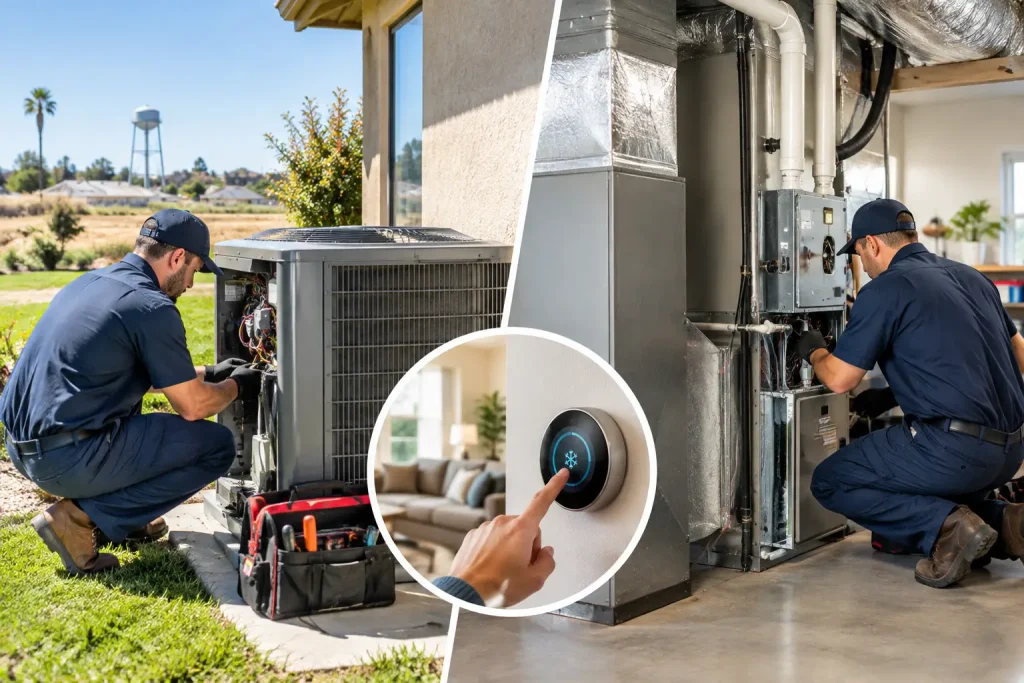
A heating system replacement is rarely something homeowners plan for at a convenient time. When an older unit becomes unreliable, runs loudly, or leaves rooms cold, the decision often comes down to one question: heat pump versus furnace. Both can keep a Modesto home comfortable, but they do it differently – and the better choice depends on your home, your existing equipment, and how you use heating and cooling year-round.
Heat Pump Versus Furnace: The Key Difference
A furnace creates heat by burning fuel, usually natural gas, and distributes that heat through ductwork. It is a heating-only system, so it needs a separate air conditioner for summer cooling.
A heat pump moves heat rather than producing it through combustion. During winter, it draws available heat from the outdoor air and transfers it indoors. During summer, it reverses direction and works like a central air conditioner, moving indoor heat outside.
That difference matters in the Central Valley. Modesto winters are generally mild compared with many parts of the country, while summer cooling is a major part of home comfort. A heat pump can provide both services in one system, which makes it a practical option for many local properties. A furnace can still be the right call, especially when you already have a newer AC system or prefer the powerful heat a gas furnace can deliver during cold snaps.
When a Heat Pump Makes Sense
For homeowners replacing both an aging furnace and air conditioner, a heat pump deserves serious consideration. It combines heating and cooling in a single outdoor-and-indoor system, reducing the number of major pieces of equipment that need to be replaced and maintained.
Efficient heating for a mild climate
Heat pumps tend to perform especially well where winters are not severe. Since they transfer heat instead of generating it, they can use less energy than conventional electric resistance heating. In a climate with many moderate winter days, that efficiency can make a noticeable difference in monthly operating costs.
Modern systems are also designed to operate in cooler weather than older heat pumps. Still, efficiency can decrease as outdoor temperatures fall. On the coldest nights, some homes may need supplemental heat, depending on the system design and insulation level.
One system for heating and cooling
A heat pump is a strong fit for people who want to replace their complete HVAC system at once. It provides dependable air conditioning in the summer and heating in the winter, using the same core equipment and duct system.
For a homeowner tired of managing an aging AC unit and a separate furnace, that simplicity is appealing. It can also be helpful for smaller commercial spaces and rental properties where straightforward operation and consistent comfort are priorities.
A good option when gas is not the priority
A heat pump does not rely on a gas line to heat the home. That may be attractive if you prefer an all-electric HVAC approach or are planning broader energy upgrades. Before installation, a qualified HVAC technician should evaluate the home’s ductwork, insulation, airflow, and electrical capacity so the equipment is matched correctly to the property.
A heat pump that is too large can cycle on and off too often. One that is too small may struggle during extreme conditions. Proper sizing matters more than simply choosing the highest-efficiency model on paper.
When a Furnace Is the Better Choice
Furnaces remain a dependable choice across Modesto and surrounding communities. They are familiar, powerful, and often make the most sense when a home has natural gas service and a central air conditioner that is still in good condition.
Fast, high-temperature heat
A gas furnace produces hotter supply air than a typical heat pump. Many homeowners notice that difference when standing near a vent. If you prefer a strong blast of warm air on a cold morning, a furnace may feel more responsive.
That does not automatically mean it is the best system for every house. Comfort is also shaped by duct condition, thermostat settings, insulation, air leaks, and whether every room receives balanced airflow. A well-designed heat pump can provide steady, comfortable heat, even if the air coming from the vents does not feel as hot.
A practical replacement for an existing setup
If your AC system is relatively new but your furnace is failing, replacing the furnace alone may be the most sensible path. There is no need to replace working cooling equipment simply to switch system types.
Likewise, homes with established gas infrastructure may find that a new high-efficiency furnace is a straightforward upgrade. The right installation should account for safe venting, correct airflow, compatible controls, and the condition of the existing ductwork.
Performance during colder weather
While Modesto does not experience the deep winter conditions found in colder states, overnight temperatures can still drop. A furnace delivers consistent heating output regardless of outdoor air temperature. That reliability is one reason some homeowners choose a furnace, particularly in homes that lose heat quickly or have rooms that are difficult to keep warm.
What About a Dual-Fuel System?
A dual-fuel system combines a heat pump with a gas furnace. The heat pump handles heating during milder weather, while the furnace takes over when outdoor conditions make gas heat the more effective choice.
This setup can offer an excellent balance of efficiency and cold-weather performance. It is not necessary for every home, and it usually involves a larger upfront project than replacing one piece of equipment. But for homeowners replacing both heating and cooling equipment, it is worth discussing with an HVAC professional.
The value of dual fuel depends on how the home is used, current utility costs, equipment condition, and the level of comfort you expect in every season. A proper assessment can show whether the added complexity makes sense for your property.
Factors That Should Drive Your Decision
The heat pump versus furnace decision should not be based on a neighbor’s system or a single online recommendation. The right answer is specific to your home.
Start with your current setup. If both your furnace and AC are near the end of their service life, a heat pump or dual-fuel system may provide a cleaner long-term replacement plan. If only the furnace has failed and the AC is still operating efficiently, furnace replacement may be the more practical option.
Next, consider your comfort priorities. Do you want one system that heats and cools? Is consistent, lower-temperature heat acceptable, or do you strongly prefer hotter air from the vents? Are some rooms already hard to heat or cool? These details help determine whether equipment changes alone will solve the problem or whether airflow and duct improvements should be part of the conversation.
Energy use matters, but it should be evaluated realistically. High-efficiency equipment can reduce waste, yet no system performs at its best with leaky ducts, clogged filters, neglected maintenance, or poor insulation. Ongoing care protects comfort and helps prevent the unexpected breakdowns that always seem to happen during the hottest or coldest week of the year.
Installation Quality Matters as Much as Equipment
The best HVAC system can still disappoint if it is installed incorrectly. Accurate load calculations, equipment sizing, refrigerant setup, duct inspection, and thermostat configuration all affect performance, efficiency, and equipment life.
Before recommending a replacement, a technician should look beyond the model number. They should ask about uneven temperatures, humidity, utility concerns, past repair history, and whether your home has changed since the current system was installed. An addition, remodeled room, new windows, or changes in occupancy can alter the heating and cooling needs of the building.
For a property manager or small business owner, reliability is especially important. An equipment decision should consider operating hours, occupancy patterns, maintenance access, and how quickly a comfort issue can disrupt tenants, customers, or staff.
Make the Decision Before the System Fails
Waiting until a furnace quits on a cold night can limit your options and add stress to an already urgent situation. If your system is older, needs frequent repairs, makes unusual noises, or cannot maintain consistent comfort, schedule an evaluation before it becomes an emergency.
YourK AC can inspect your current heating and cooling equipment, explain the trade-offs in plain language, and recommend a solution based on your property rather than a one-size-fits-all sales pitch. Whether a heat pump, furnace, or dual-fuel system fits best, the goal is the same: dependable comfort when your home or business needs it most.