
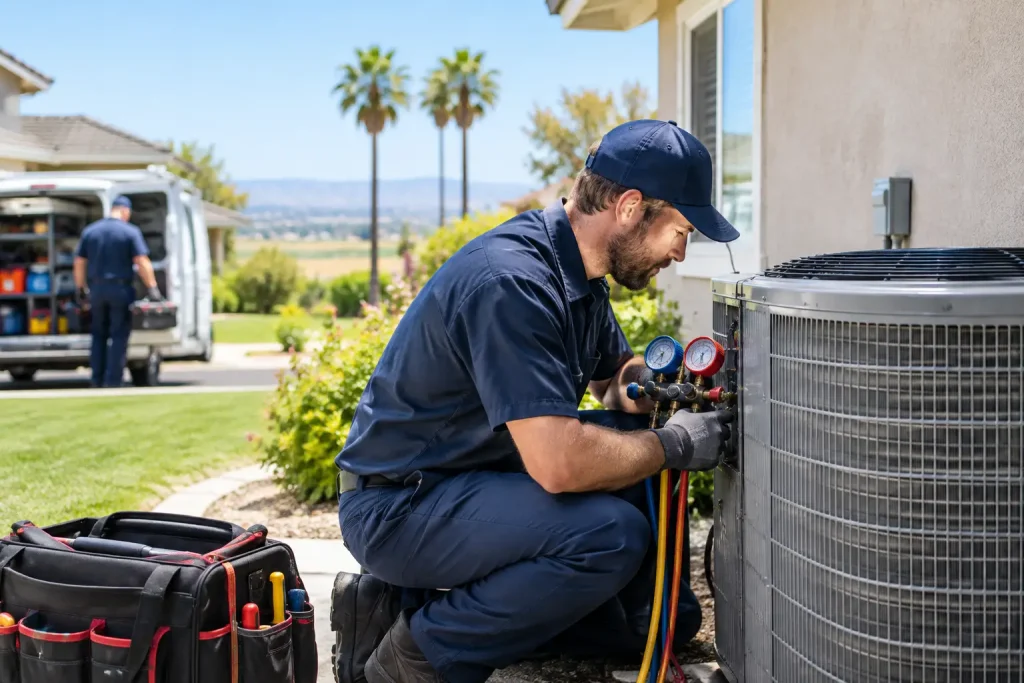
A refrigerant issue can feel like a simple repair until you hear that your system uses an older refrigerant or that new equipment uses something different. HVAC refrigerant changes are affecting replacement decisions across the country, but they do not mean every existing air conditioner suddenly needs to be replaced. What matters is the age, condition, and repair needs of your specific system.
For homeowners, property managers, and business owners, the practical question is straightforward: can your current equipment be repaired reliably, or is it time to plan for a newer system? A qualified HVAC technician can help you make that call without pressure, based on your comfort needs, equipment condition, and long-term operating costs.
Why HVAC Refrigerant Changes Are Happening
Refrigerant is the material inside an air conditioning or heat pump system that moves heat out of your home or building. It is essential to cooling, but not all refrigerants have the same environmental impact.
Older systems commonly used R-22, often known as Freon. Production and import of R-22 for new use ended in the United States years ago because of its effect on the ozone layer. Many systems installed more recently use R-410A, which does not have the same ozone concern but has a higher global warming potential than newer alternatives.
Current HVAC refrigerant changes are tied to federal requirements that reduce the use of higher-global-warming-potential refrigerants in newly manufactured equipment. New residential and light commercial cooling equipment is moving toward lower-impact refrigerants. You may hear names such as R-454B or R-32 when discussing new systems.
This shift is mainly about newly manufactured equipment. It does not make a properly operating R-410A system illegal to own or use. It also does not mean a technician can simply swap a new refrigerant into an old system. Air conditioners are designed, rated, and safety-tested for a specific refrigerant. Using the wrong one can damage equipment, create safety concerns, and void manufacturer requirements.
What This Means for Your Current AC System
If your air conditioner is cooling well, has no major leaks, and receives regular maintenance, there may be no urgent reason to replace it solely because of refrigerant regulations. Continue taking care of the system, change filters as needed, and schedule professional service before Modesto’s hottest weather puts it under maximum strain.
The situation changes when an older unit develops a significant refrigerant leak, needs a major compressor repair, or breaks down repeatedly. Refrigerant is not a fuel that gets used up during normal operation. If the level is low, there is usually a leak or another system problem that needs attention. Adding refrigerant without identifying the cause may restore cooling temporarily, but it does not solve the underlying issue.
For systems using R-22, repair decisions can be especially difficult. Supplies are limited, and repairs may become less practical as the equipment ages. A technician should inspect the system, explain the condition of the major components, and help you compare a targeted repair with replacement planning. The right answer depends on the size of the leak, the age of the equipment, its maintenance history, and how reliably it has been keeping the property comfortable.
R-410A systems remain serviceable. However, as the market transitions to newer equipment, availability and cost conditions can change over time. That does not mean every repair is a poor choice. It means it is smart to consider the full picture when a large repair is needed on an aging unit.
New Refrigerants Require New Equipment
One of the most common misconceptions is that a newer refrigerant can be installed in any existing AC unit. In most cases, that is not true.
Newer refrigerants operate under different pressures and have different equipment, oil, component, and safety requirements. Some are classified as mildly flammable, which means the systems designed for them include specific safeguards and installation standards. This is normal for properly manufactured and professionally installed equipment, but it is one more reason refrigerant work should always be handled by trained, certified technicians.
When it is time to replace an air conditioner or heat pump, your contractor can recommend equipment built for current refrigerant standards. A properly matched system includes more than the outdoor unit. The indoor coil, refrigerant line sizing, controls, airflow, electrical connections, and installation quality all affect comfort and efficiency.
Trying to keep an old indoor component with a new outdoor unit can create performance problems if the equipment is not compatible. A lower upfront cost may look appealing, but mismatched equipment can lead to reduced efficiency, repeat service calls, and uneven cooling. A clear installation recommendation should explain what is being replaced, why it is necessary, and what options fit your property.
Signs It Is Time to Ask About Replacement
You do not need to wait for a complete failure to start a replacement conversation. Planning ahead is often less stressful than making a decision during a heat wave, when comfort is already on the line.
Consider asking for an equipment evaluation if your AC is more than 10 to 15 years old, needs frequent repairs, struggles to cool the building evenly, runs for long periods without reaching the thermostat setting, or has a confirmed refrigerant leak. Rising utility bills and excessive indoor humidity can also point to an efficiency or performance issue.
For commercial properties, the decision may involve more than comfort. An unreliable cooling system can affect employees, customers, tenants, equipment, and daily operations. Property managers may benefit from documenting equipment age, repair history, and anticipated replacement needs before a failure becomes an emergency.
Replacement is not automatically the right choice whenever a unit needs service. A newer system with a minor, repairable issue may have many useful years ahead. The goal is to make a practical decision with clear information, not to replace equipment prematurely.
Questions to Ask During an HVAC Refrigerant Consultation
A good service visit should leave you with answers, not confusion. If refrigerant changes are part of the discussion, ask which refrigerant your existing system uses and whether the unit has a leak or another mechanical problem. Ask whether the recommended repair addresses the root cause and what the expected condition of the rest of the system is.
If replacement is being considered, ask which refrigerant the new equipment uses, whether the indoor and outdoor components are properly matched, and how the proposed system fits the size and layout of your property. It is also reasonable to ask about efficiency, maintenance needs, warranty coverage, and any changes you may notice in comfort or humidity control.
The best recommendation is not always the biggest system or the most complicated option. Oversized equipment can cycle on and off too quickly, while undersized equipment may run constantly during peak heat. Proper sizing and installation matter just as much as the refrigerant inside the unit.
Protect Your System Through the Transition
Regular maintenance remains one of the most useful ways to protect an existing air conditioner. During a professional tune-up, a technician can check refrigerant performance, inspect electrical components, clean critical areas, verify airflow, and identify wear before it causes a breakdown.
Homeowners can also help by keeping supply vents open, replacing filters on schedule, and keeping the outdoor unit clear of leaves, grass, and stored items. These steps do not replace professional service, but they support airflow and reduce unnecessary strain.
If your system stops cooling, ice forms on refrigerant lines, or you notice hissing sounds, water around the indoor equipment, or a sudden jump in energy use, schedule service promptly. Waiting can turn a manageable issue into a larger repair, especially during the summer cooling season.
YourK AC helps Modesto-area homeowners and businesses assess refrigerant concerns, repair eligible systems, and plan efficient replacements when the time is right. The most helpful next step is simple: get a clear diagnosis, understand your options, and choose the solution that restores dependable comfort for your property.