
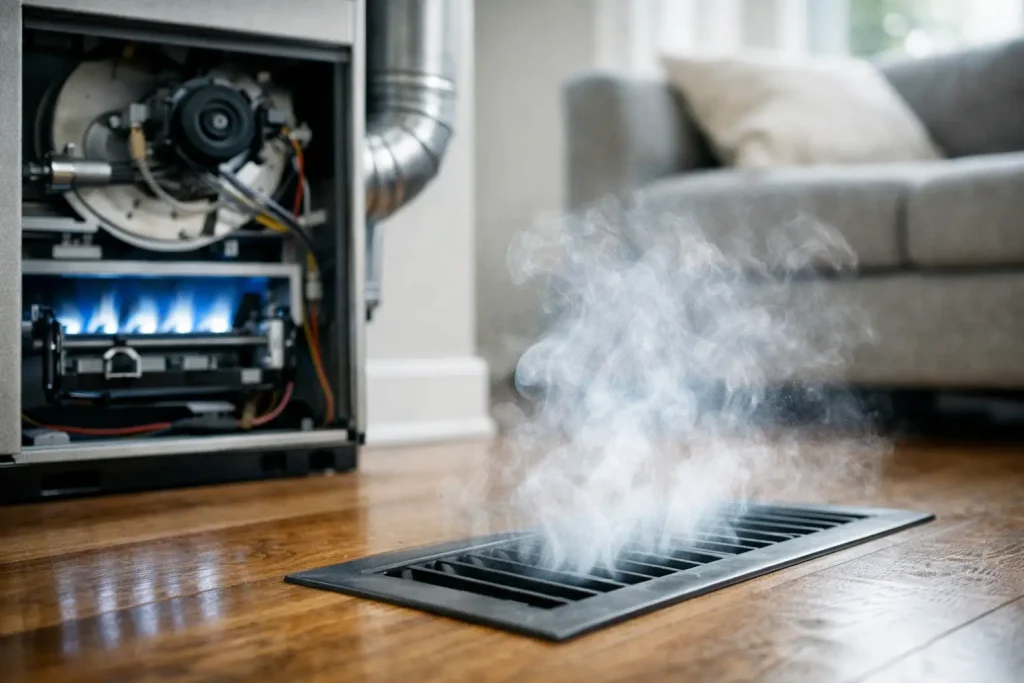
You notice the heat is on, the thermostat says the furnace is running, and yet the air coming through the vents feels cold. If you’re asking, why is my furnace blowing cold air, the answer could be something simple – or a sign your system needs professional repair before the problem gets worse.
In Modesto, a furnace that stops heating properly is more than a nuisance. It can make your home uncomfortable fast, especially at night or during a cold stretch. The good news is that some causes are easy to rule out on your own. Others need a trained HVAC technician to fix them safely.
Why is my furnace blowing cold air? Start with the obvious
Before assuming the worst, check the thermostat. It sounds basic, but incorrect thermostat settings are one of the most common reasons a furnace seems to blow cold air. Make sure the thermostat is set to Heat, not Fan or Cool, and double-check the temperature setting.
If the fan is switched from Auto to On, the blower can keep running even when the furnace is not actively heating. That means you may feel room-temperature air coming through the vents between heating cycles. Many homeowners describe that air as cold, even though the furnace itself may be working normally.
It is also worth checking the batteries if your thermostat uses them. Weak batteries can cause communication issues or erratic furnace behavior. If the display is dim, blank, or not responding, replace the batteries first.
A dirty air filter can cause cold air problems
A clogged air filter restricts airflow, and that can create a chain reaction inside the system. When the furnace cannot move enough air, it may overheat. Most modern furnaces have a safety feature that shuts the burners off when overheating happens. The blower may continue to run, but without heat.
This is one of the most common service calls during winter, and it is one of the easiest problems to prevent. If the filter looks dirty, replace it. If you cannot remember the last time it was changed, that is a strong sign it is overdue.
Some systems need a new filter every 1 to 3 months, but it depends on the filter type, pets, indoor air quality, and how often the system runs. A property with high dust levels or multiple occupants may need more frequent changes.
The pilot light or ignition system may have failed
Older furnaces often use a pilot light, while newer models use electronic ignition. If either one fails, the burners will not ignite, and the furnace may blow unheated air.
With an older system, a pilot light can go out because of drafts, dirt buildup, or a faulty thermocouple. With a newer furnace, the issue could be the igniter itself, a flame sensor problem, or a control board issue. This is where DIY troubleshooting starts to have limits. Gas furnace components need careful handling, and guessing can lead to bigger repair costs or safety concerns.
If your furnace tries to start, clicks, or runs the blower without producing heat, ignition failure is a real possibility. That is a good time to bring in a certified technician.
Why is my furnace blowing cold air after a few minutes?
If the furnace starts warm and then turns cold, overheating is often the reason. Restricted airflow from a dirty filter, blocked vents, or blower issues can cause the heat exchanger area to get too hot. The furnace will shut off the burners to protect itself, but the fan may stay on.
Another possibility is a dirty flame sensor. The flame sensor confirms that gas burners are operating correctly. If it is coated in residue, the furnace may light briefly and then shut down. To you, it feels like the system cannot stay hot for more than a moment.
This kind of short cycling should not be ignored. Even if the furnace occasionally heats the house, repeated shutdowns put extra strain on the system and usually get worse over time.
Leaky ducts can make warm air feel cold
Sometimes the furnace is producing heat, but the air reaching your rooms does not feel warm enough. Duct leaks are a common reason, especially in older homes or commercial spaces. If heated air escapes into the attic, crawl space, or inside walls, the airflow coming out of the vents may feel weak and cool.
This issue can be easy to miss because the furnace still sounds like it is working. You may also notice uneven temperatures from room to room or higher utility bills without a clear explanation.
Duct issues usually need a professional inspection. The fix may be minor, or it may involve sealing sections of ductwork that have opened up over time.
Your condensate line may be clogged
High-efficiency furnaces produce condensation as part of normal operation. If the condensate drain line becomes blocked, the furnace may shut down as a protective measure. In some cases, the blower keeps running, which makes it seem like the furnace is blowing cold air for no reason.
This is not always something a homeowner will spot right away. You might see water near the unit, notice error codes, or hear the system trying to start without completing a cycle. Because condensate issues can involve drainage, sensors, and internal components, professional service is usually the safest route.
Gas supply problems can stop the heat
If the furnace is not getting gas, it cannot produce warm air. This can happen if the gas valve is closed, the utility supply has been interrupted, or a component inside the furnace is preventing normal burner operation.
If you smell gas, leave the area and follow proper safety steps immediately. Do not try to force the furnace to run. If there is no gas odor but the system still will not heat, a technician can check the supply, valve, igniter, and safety controls to find the real cause.
Gas-related furnace issues are not the place for trial and error. Fast service matters, but safe service matters more.
What you can check before calling for repair
There are a few things worth looking at before scheduling service. Make sure the thermostat is set correctly, replace the filter if it is dirty, confirm the furnace switch is on, and check your circuit breaker. Also look at the vents around your home to make sure they are open and not blocked by furniture or rugs.
If that does not solve it, the problem is likely inside the system. At that point, continuing to reset the furnace or let it run can lead to more wear, higher energy bills, and a greater chance of a full breakdown.
When to call a furnace professional
A furnace blowing cold air once may be a thermostat setting. A furnace blowing cold air repeatedly usually means something needs attention. If the unit is making unusual noises, shutting off early, failing to ignite, or not keeping the house comfortable, it is time for service.
For homeowners and property managers, speed matters. So does getting a straight answer. A proper furnace diagnosis should identify the issue clearly, explain what needs repair, and help you avoid unnecessary replacement if the system can still be restored reliably.
If your heat is inconsistent, your system is older, or the problem keeps returning, a repair visit can also reveal whether maintenance has been overlooked. In many cases, routine service catches the exact problems that lead to cold air complaints in the first place.
A dependable HVAC company should be able to respond quickly, explain the repair in plain language, and get your heat back without wasting your time. That is exactly what matters most when the house is cold and the furnace is not doing its job.
If you are in Modesto or the surrounding area and your furnace is not heating the way it should, getting it checked early is the best move. A small issue today is often a much simpler repair than a no-heat emergency tomorrow.