
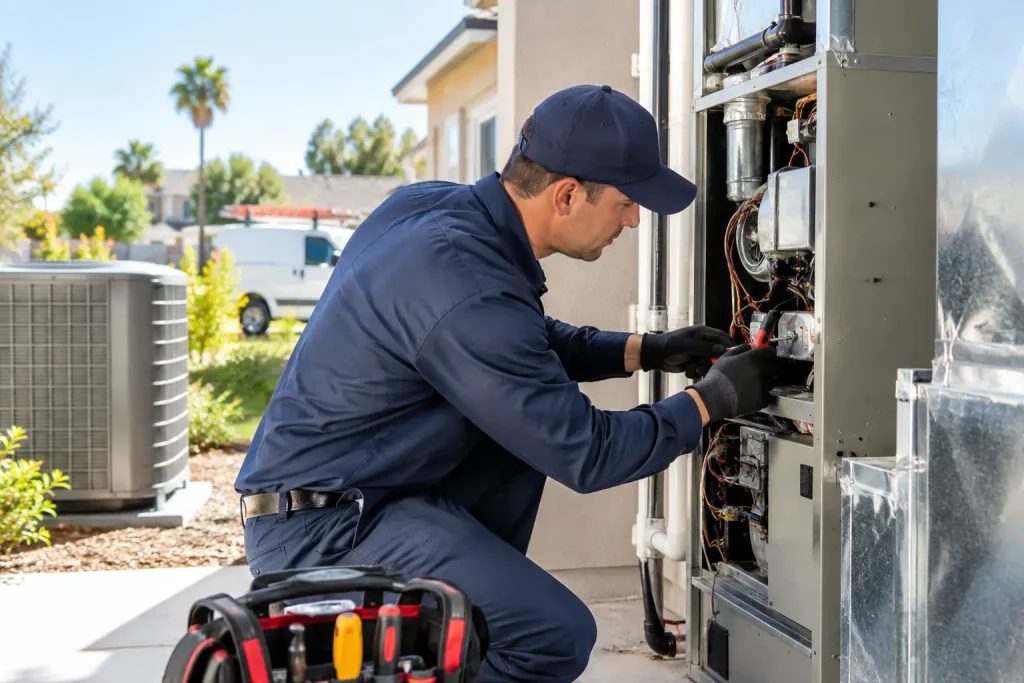
A furnace often gives subtle warnings before it stops heating altogether: a new rattle at startup, rooms that never quite warm up, or a utility bill that rises without a clear reason. This furnace tune up checklist helps homeowners and property managers catch those issues early, understand what a maintenance visit should cover, and know when to call for professional heating service.
A tune-up is not simply a quick look at the thermostat. It is preventative care for a system that relies on fuel, electricity, moving parts, airflow, and safety controls working together. For homes and small commercial properties in Modesto, scheduling service before consistently cold weather arrives can help avoid a disruptive no-heat call when the furnace is needed most.
Start With the Basics You Can Check Safely
Before a technician arrives, there are a few simple, homeowner-safe checks that can reveal obvious causes of poor heating. These steps do not replace professional service, and they should never involve opening sealed equipment panels, working with gas connections, or altering wiring.
First, confirm the thermostat is set to Heat and that its temperature setting is above the current room temperature. If the thermostat uses batteries, replace them if the display is dim, blank, or inconsistent. Then make sure the furnace switch is on and the electrical panel does not show a tripped breaker.
Next, look at the air filter. A clogged filter restricts airflow, makes the blower work harder, and can contribute to overheating or uneven temperatures. Replace a disposable filter if it is visibly loaded with dust or if it has reached the recommended replacement interval. Use the filter size and type specified for your system. A filter that is too restrictive can create its own airflow problems.
Walk through the property and check that supply vents are open and unobstructed by furniture, rugs, storage, or drapes. It may be tempting to close vents in unused rooms, but shutting off too many can reduce proper airflow through the system. If some rooms remain much colder than others, make a note for the technician rather than trying to force a fix.
Finally, check the area around the indoor furnace. Keep it clear of boxes, paint, cleaning products, and other stored items. Furnaces need adequate clearance for safe operation and service access.
Furnace Tune Up Checklist for Professional Service
A qualified furnace tune-up should be thorough enough to address safety, performance, and reliability. The exact scope depends on the furnace type, age, condition, and manufacturer recommendations, but a professional visit commonly includes the following work:
- Inspect the furnace for visible wear, corrosion, loose connections, water around the unit, and signs of overheating.
- Check the thermostat’s operation and confirm the system responds correctly to heating calls.
- Inspect or replace the air filter when needed and evaluate airflow through the equipment.
- Clean accessible components that can collect dust, including blower areas where appropriate.
- Check the blower motor, wheel, and related components for unusual noise, vibration, or wear.
- Inspect belts on systems that use them and identify cracking, fraying, or improper tension.
- Test safety controls and limit switches designed to shut the equipment down under unsafe conditions.
- Inspect the burner assembly and ignition sequence on gas furnaces.
- Evaluate the flame appearance and combustion-related operation when applicable.
- Inspect the venting system for damage, blockage concerns, loose connections, or corrosion.
- Check the heat exchanger for conditions that warrant further evaluation.
- Test the condensate drain and related components on high-efficiency furnaces.
- Measure system operation to identify performance issues before they turn into a breakdown.
This work matters because many furnace failures start as smaller issues. A weak igniter, dirty sensor, blocked drain, worn blower component, or restricted filter may not stop the system immediately. Left unaddressed, it can lead to unreliable heating, reduced efficiency, or a complete shutdown.
Safety Checks Deserve Extra Attention
Gas furnaces require particular care. Combustion and venting problems are not something to troubleshoot through trial and error. If you smell gas, leave the area, avoid switches or open flames, and follow your gas utility’s emergency instructions. If a carbon monoxide alarm sounds, get everyone outside and contact emergency services or the appropriate emergency resource.
During maintenance, a technician should look for signs that the furnace is operating and venting as intended. That can include inspecting accessible vent connections, checking burner and ignition operation, and evaluating components tied to safe shutdown. The right approach depends on the equipment and what is found during inspection.
Carbon monoxide alarms are also an important layer of home safety. Place and maintain them according to the manufacturer’s instructions and local requirements. An alarm is not a replacement for furnace maintenance, but it can provide critical warning if dangerous conditions develop.
Warning Signs That Should Not Wait
Routine maintenance can often be scheduled at a convenient time. Some symptoms deserve faster attention, particularly when heat is unreliable or a safety concern is possible.
Call for professional heating service if your furnace cycles on and off repeatedly, blows cool air, makes loud banging or grinding noises, or leaves parts of the property noticeably colder than others. Frequent breaker trips, water pooling around a high-efficiency furnace, burning odors that do not quickly fade, or a yellow burner flame can also point to a problem that needs inspection.
A furnace that runs constantly without reaching the thermostat setting may have an airflow issue, thermostat issue, duct concern, equipment problem, or simply be undersized for the demand. The cause cannot be identified reliably from one symptom alone. A technician can test the system and explain whether a repair, adjustment, or longer-term recommendation makes sense.
Age matters, but it is not the only factor. An older furnace may still be a reasonable candidate for repair if the issue is isolated and the system has been maintained. On the other hand, repeated breakdowns, escalating repair needs, uneven comfort, and declining efficiency may justify a conversation about replacement options. A good service visit should give you clear findings, not pressure.
What to Do Before the Appointment
A little preparation helps make a maintenance call more productive. Clear a path to the furnace, thermostat, and electrical panel if needed. If the unit is in an attic, garage, closet, or crawlspace, make sure the access area is safe and reachable.
Write down what you have noticed: when the problem occurs, whether it is constant or intermittent, which rooms feel affected, and any unusual sounds or odors. If the furnace has displayed an error code, take a photo of it before resetting anything. These details can shorten the diagnostic process and help the technician focus on patterns that are easy to miss during a brief visit.
For rental homes and commercial properties, ask occupants whether they have noticed comfort problems, airflow concerns, or unusual cycling. Property managers can also keep a record of filter changes and prior repairs. That history is useful when deciding how to maintain an aging system responsibly.
How Often Should You Schedule a Tune-Up?
For most properties, annual furnace maintenance is a practical baseline. Scheduling it before the main heating season gives you time to address any issues found without waiting for a breakdown. A system with heavy use, advanced age, indoor air quality concerns, or a history of repairs may benefit from closer attention.
If your home uses both a furnace and central air conditioning, it is wise to plan maintenance around each system’s busiest season. Heating service in fall and cooling service before summer can help keep comfort equipment ready for the temperature swings common in the Central Valley.
Maintenance Protects Comfort, Not Just Equipment
The value of a furnace tune-up is not limited to the furnace itself. Reliable heat protects day-to-day comfort for families, tenants, customers, and employees. It can also help property owners catch manageable repairs before a system failure creates a larger disruption.
If your furnace is making unusual noises, heating unevenly, or has been skipped for a season or two, arrange a professional inspection rather than waiting for the first cold night to expose the problem. YourK AC can help homeowners and property managers understand their furnace’s condition and take the next practical step toward dependable heat.